
Manufacturing AI Mistakes to Avoid Before You Start
List manufacturing AI mistakes and controls for unclear use case, messy data, unsafe automation, no owner, weak security and unreviewed recommendations.
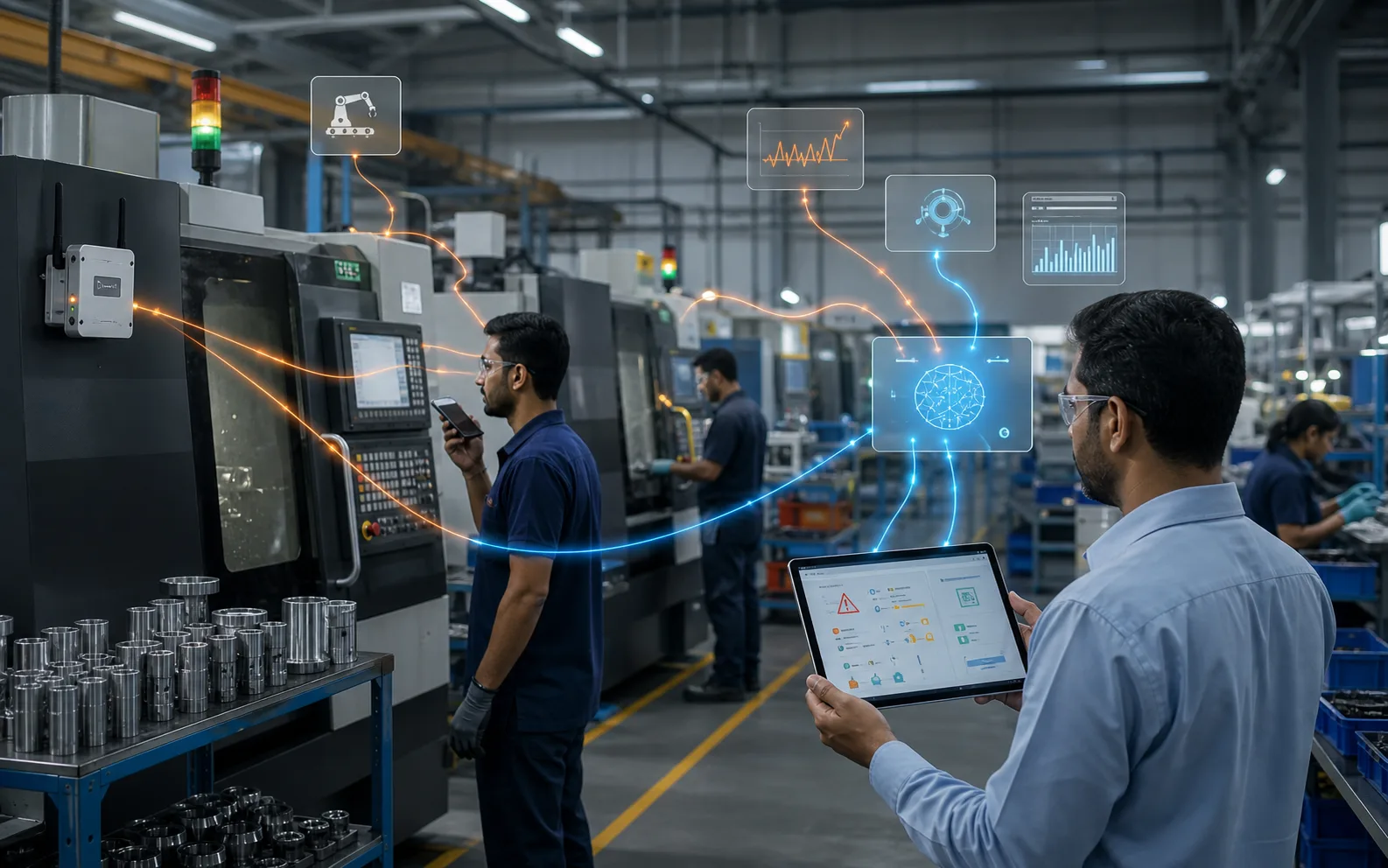
AI projects fail when factories buy a promise instead of controlling the workflow. The common problems are predictable: unclear use case, messy records, unsafe automation, no daily owner and weak review.
Optiwise is built to keep AI inside manufacturing records, role permissions and action workflows. That reduces risk, but the project still needs operating discipline.
Direct answer
Avoid manufacturing AI mistakes by choosing one use case, checking data, keeping approvals, assigning an owner and reviewing every recommendation path.
Factory example
A factory asks AI to plan production without current stock, approved BOMs or open purchase orders. The recommendation looks confident but misses reality. The fix is not a better prompt; it is controlled records and an owner who reviews the plan.
Worksheet for the decision
| Area | What to check | Why it matters |
|---|---|---|
| Mistake | Control | undefined |
| Starting with vague “AI for everything” | Pick one workflow and owner | undefined |
| Using messy item and stock data | Clean the fields needed for the decision | undefined |
| Letting AI approve operational changes alone | Keep human approvals for purchases, quality and dispatch | undefined |
| Ignoring security and roles | Limit access by role and record type | undefined |
| No pilot acceptance rule | Define pass/fail before launch | undefined |
| No record of recommendations | Keep action history and reasons | undefined |
How Optiwise supports this workflow
- Use role permissions and module-specific agents.
- Connect AI recommendations to real production, purchase, inventory and quality records.
- Keep approvals and audit history around actions.
Use the related Optiwise workflows for AI agents, production, inventory, purchasing, quality and industrial IoT.
Implementation notes
A useful control is a recommendation log. Record the question, answer, source records, user decision and follow-up action. This makes review possible when a recommendation is wrong or ignored. It also protects good ideas from disappearing into chat history. If the AI tool cannot preserve action history, keep high-risk workflows inside the operating system.
Source and control checks
For AI risk and governance language, compare your project controls with the NIST AI Risk Management Framework. For connected device access and security planning, also review CISA cybersecurity performance goals where applicable.
Before using the recommendation, confirm the record owner, source timestamp, approval rule and missing-data handling. Keep customer results, savings numbers, safety certification and regulatory claims out of the page unless there is separate evidence for that exact claim.
Buyer review before rollout
Before rollout, review one finished transaction from start to end. Check the source record, the recommended action, the approval step, the person who accepted or rejected it and the operational result. This review catches weak data, vague ownership and unsafe automation before the workflow reaches more users. Keep the pilot narrow until the team can explain the recommendation in plain factory language.
FAQs
What is the first mistake to avoid?
Do not start with a broad tool search. Start with one manufacturing decision and the records behind it.
Should AI recommendations be logged?
Yes. Record what was suggested, who approved it and what action was taken.

Related Posts
Is AI Worth the Investment for My Factory?
Learn how to decide if AI is worth the investment for your factory by evaluating use cases, data readiness, costs, risks, ROI, and operational impact.
13 Jun 2026Read more →What's the Difference Between AI and Regular Automation?
Understand the difference between AI and regular automation in manufacturing, with practical examples for workflows, decisions, alerts, and predictive operations.
13 Jun 2026Read more →What Are the Risks of Using AI in Manufacturing?
Understand the risks of AI in manufacturing, including bad data, wrong recommendations, safety issues, security, job fear, over-automation, and implementation failure.
13 Jun 2026Read more →How Does IoT Enable Remote Monitoring of Equipment?
Learn how IoT enables remote monitoring of manufacturing equipment through sensors, gateways, dashboards, alerts, maintenance visibility, and secure access.
13 Jun 2026Read more →