
Should I Be Scared About My Job? An Honest Assessment
An honest assessment of AI job risk, how to evaluate your role, which tasks are exposed, and what practical steps you can take now.

Should I Be Scared About My Job? An Honest Assessment
You should take AI seriously, but fear alone will not help. The better response is assessment and action.
Some jobs will change quickly. Some tasks will be automated. Some roles will become more valuable because AI makes skilled people more effective.
Your risk depends on what your work actually involves.
Ask These Questions
- How much of my work is repetitive?
- How much is rules-based?
- How much requires judgment?
- How much requires physical presence?
- How much depends on trust or relationships?
- How much involves accountability?
- Am I learning AI tools?
The answers reveal your exposure.
Higher-Risk Work
Work is more exposed if it is repetitive, digital, predictable, and easy to evaluate.
More Resilient Work
Work is more resilient if it requires context, judgment, physical skill, leadership, negotiation, safety, or trust.
What to Do Now
- Learn basic AI tools
- Build domain expertise
- Improve data literacy
- Ask for training
- Move toward problem-solving
- Use AI to improve your current work
Manufacturing Perspective
In manufacturing, AI will change reporting, planning, follow-ups, and monitoring. But people remain important for machines, quality, safety, customers, suppliers, and decisions.
Where AICAN Optiwise Fits
AICAN Optiwise helps teams use AI as support, not mystery. By surfacing operational priorities, it helps workers and managers understand how AI changes daily work.
FAQ
Should I be scared of AI?
Be alert, not frozen. Assess your tasks and start learning.
What jobs are most at risk?
Repetitive, predictable, information-heavy jobs face higher exposure.
Can I reduce my risk?
Yes, by learning AI tools and moving toward judgment-based work.
Is manufacturing safe from AI?
Not fully, but many roles remain human-led because physical operations and judgment matter.
Final Thought
Fear is a signal, not a strategy.
Use it as the reason to learn, adapt, and become harder to replace.

Related Posts

Will AI Create More Jobs Than It Destroys?
Explore whether AI will create more jobs than it destroys, with a practical view of manufacturing, automation, new roles, reskilling, and business transformation.
13 Jun 2026Read more →Manufacturing AI vs. Hiring More Workers
Compare manufacturing AI with hiring more workers and learn when automation, better systems, training, or additional people are the right answer.
7 Jun 2026Read more →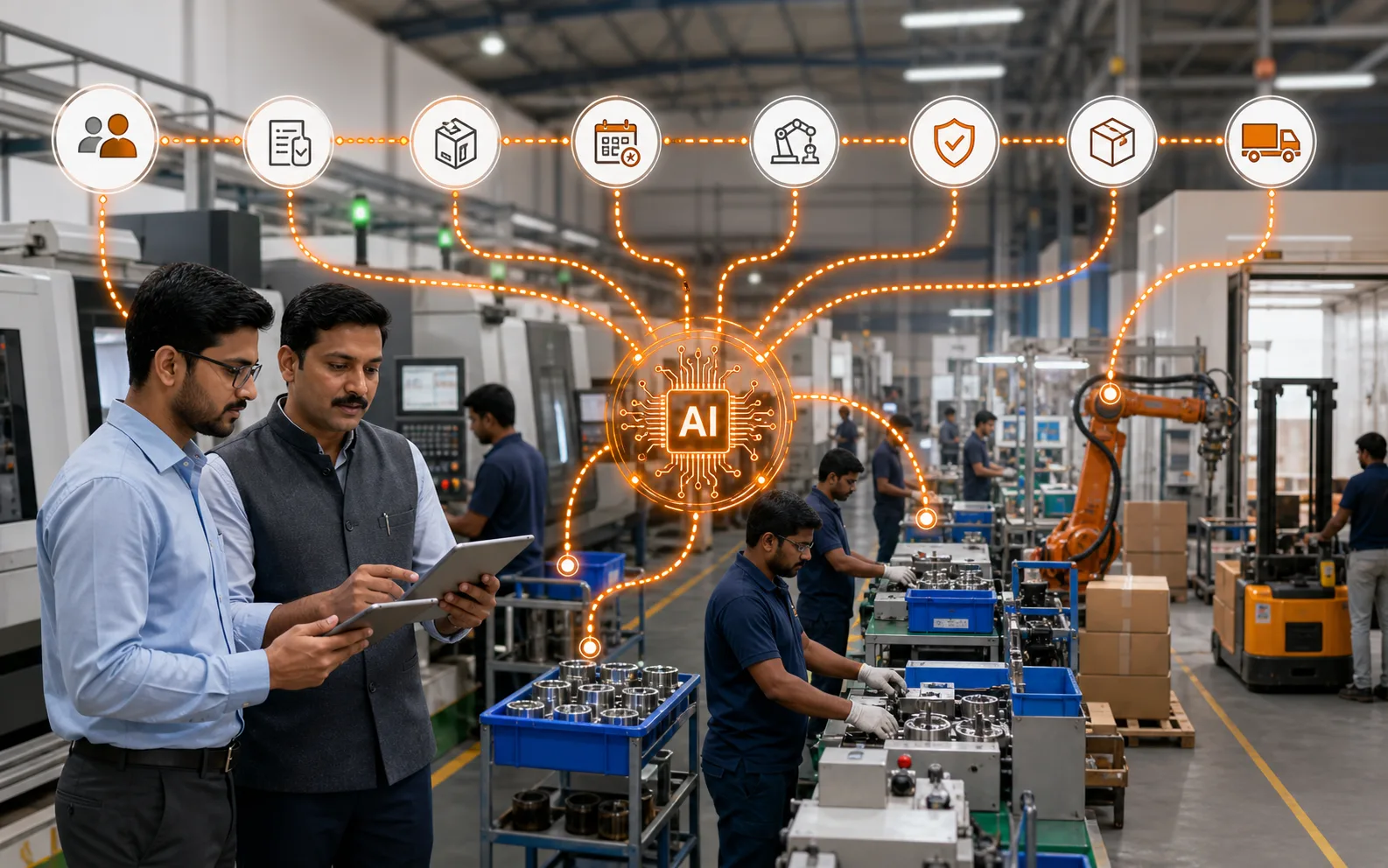
Will AI Replace My Production Planning Job?
Understand how AI affects production planning jobs, what tasks may change, and how planners can become more valuable with AI-supported scheduling and visibility.
6 Jun 2026Read more →Do I Need Special Skills to Use AI in Manufacturing?
Learn what skills manufacturing teams need to use AI, including process knowledge, data discipline, prompt clarity, review judgment, ERP understanding, and change readiness.
6 Jun 2026Read more →