
Should I Learn AI to Keep My Job?
Learn why AI skills matter for job security, what level of AI knowledge is enough, and how workers can use AI tools without becoming data scientists.

Should I Learn AI to Keep My Job?
Yes, you should learn how to use AI tools if your work involves information, decisions, customers, operations, or reporting. You do not necessarily need to become an AI engineer. But AI fluency will become a normal workplace skill.
The goal is not to fear AI. The goal is to become useful with it.
What AI Fluency Means
AI fluency means you can:
- Ask clear questions
- Use AI tools for routine work
- Interpret outputs
- Verify important results
- Apply AI suggestions to real tasks
- Understand limitations
This is different from building AI models.
Why Learning AI Helps Job Security
People who use AI well can become faster, better informed, and more useful. People who ignore AI may find routine parts of their work automated by others.
What to Learn First
Start with practical uses:
- Summarizing reports
- Drafting emails
- Preparing checklists
- Reviewing data
- Prioritizing follow-ups
- Understanding dashboards
- Creating standard operating notes
Manufacturing Examples
A production manager can use AI to review delays. A sales person can use AI to summarize customer history. A purchase person can use AI to prioritize supplier follow-ups.
Do You Need Coding?
Not for most roles. Coding helps for technical careers, but many workers need AI usage skills, domain knowledge, and judgment.
Where AICAN Optiwise Fits
AICAN Optiwise brings AI into manufacturing workflows through AI agents that support sales, purchase, inventory, production, quality, dispatch, and finance visibility. Workers who learn to use these insights become more valuable.
FAQ
Do I need to learn machine learning?
Not unless your career goal is technical AI work. Most people need practical AI tool usage.
Can older workers learn AI?
Yes. Domain experience is valuable when paired with AI fluency.
What is the fastest way to start?
Use AI for real work: summaries, follow-ups, reports, and planning.
Will AI skills be mandatory?
In many roles, basic AI fluency will become expected.
Final Thought
Learning AI is less about protecting one job title and more about protecting your usefulness.
The people who adapt early will have more options.

Related Posts
Will AI Create More Jobs Than It Destroys?
Explore whether AI will create more jobs than it destroys, with a practical view of manufacturing, automation, new roles, reskilling, and business transformation.
13 Jun 2026Read more →Manufacturing AI vs. Hiring More Workers
Compare manufacturing AI with hiring more workers and learn when automation, better systems, training, or additional people are the right answer.
7 Jun 2026Read more →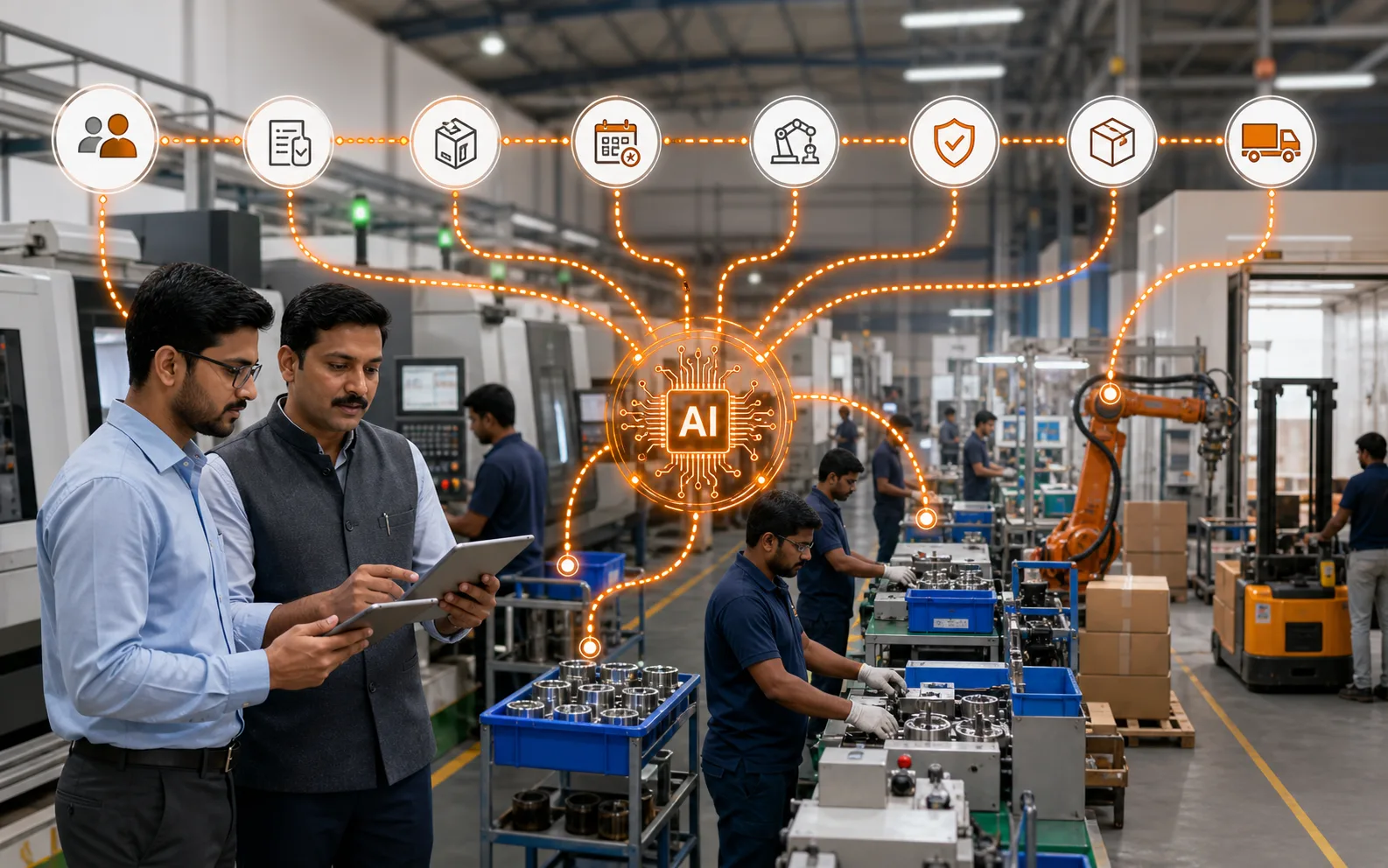
Will AI Replace My Production Planning Job?
Understand how AI affects production planning jobs, what tasks may change, and how planners can become more valuable with AI-supported scheduling and visibility.
6 Jun 2026Read more →Do I Need Special Skills to Use AI in Manufacturing?
Learn what skills manufacturing teams need to use AI, including process knowledge, data discipline, prompt clarity, review judgment, ERP understanding, and change readiness.
6 Jun 2026Read more →