
Smart Manufacturing | Optiwise
Learn what smart manufacturing means, how SMEs can adopt it gradually, and how ERP, data, automation, and connected workflows improve factory decisions.
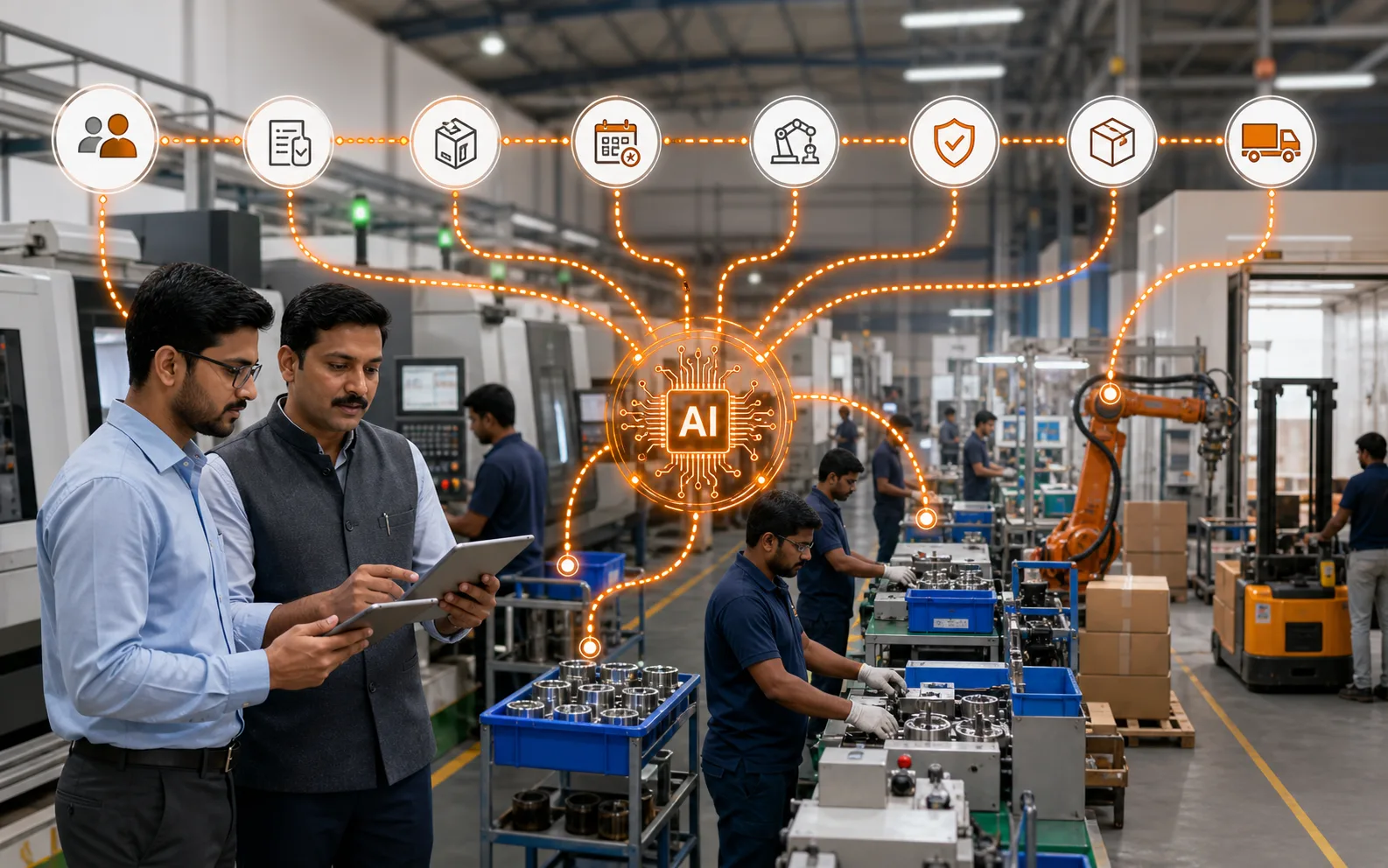
Smart Manufacturing: A Practical Roadmap for Manufacturing SMEs
Smart manufacturing is often presented as a futuristic idea filled with robots, sensors, artificial intelligence, and fully automated factories. That image can make SMEs feel the concept is too expensive or too far away.
In reality, smart manufacturing starts much earlier. It begins when a factory moves from scattered manual updates to connected, usable, timely information. It starts when owners can see pending orders, material shortages, production status, rejection, dispatch readiness, and reports without chasing every department.
For SMEs, smart manufacturing should not mean buying technology for show. It should mean using the right digital systems to make better operational decisions.
This guide explains smart manufacturing, benefits, examples, technologies, adoption roadmap, and how AICAN Optiwise helps SMEs move toward connected manufacturing.
What Is Smart Manufacturing?
Smart manufacturing is the use of connected systems, data, automation, and digital workflows to improve manufacturing decisions and execution.
It may include:
- ERP systems
- shop-floor data capture
- inventory visibility
- production dashboards
- quality tracking
- machine monitoring
- IoT sensors
- automation
- analytics
- AI-supported planning
The goal is to make manufacturing more visible, responsive, efficient, and controlled.
Smart Manufacturing Does Not Start With Robots
Many SMEs assume smart manufacturing requires expensive automation. But automation without process visibility can simply automate confusion.
A smarter path is:
- Clean data
- Connected workflows
- Better reporting
- Process discipline
- Automation where it gives clear ROI
For many SMEs, ERP is the foundation of smart manufacturing because it connects sales, purchase, inventory, production, dispatch, and reporting.
Benefits of Smart Manufacturing
Smart manufacturing helps SMEs:
- improve production visibility
- reduce manual follow-up
- improve inventory accuracy
- reduce delays
- detect bottlenecks earlier
- improve quality tracking
- reduce wastage
- improve customer commitments
- support faster decisions
- improve scalability
The benefit is not only technology. It is better control.
Examples of Smart Manufacturing
Inventory Visibility
Teams can see available stock, shortages, and slow-moving items in real time or near real time.
Production Tracking
Work orders show status by stage: planned, in progress, completed, rejected, or pending.
Quality Alerts
Rejection reasons are captured and reviewed for improvement.
Connected Purchase Planning
Purchase decisions are based on stock, production requirements, and supplier status.
Dispatch Readiness
Sales and dispatch teams can see what is ready, pending, or delayed.
Management Dashboards
Owners can review key operational indicators without waiting for manual reports.
Smart Manufacturing Technologies
SMEs may use different technologies depending on maturity:
- ERP
- barcode scanning
- QR-based tracking
- IoT sensors
- machine monitoring
- digital quality checks
- production dashboards
- mobile data entry
- analytics
- AI-assisted forecasting
The right technology depends on the problem being solved.
SME Roadmap for Smart Manufacturing
Step 1: Digitize Core Processes
Start with sales orders, purchase, inventory, production, dispatch, and reports.
Step 2: Clean Master Data
Item codes, BOM, suppliers, customers, and units must be reliable.
Step 3: Connect Departments
Avoid isolated software. Sales, purchase, stores, production, and dispatch should share data.
Step 4: Capture Shop-Floor Data
Record work order progress, output, rejection, and WIP.
Step 5: Use Dashboards
Turn data into decisions through reports and alerts.
Step 6: Add Automation Gradually
Use barcode, sensors, or machine integration where it clearly improves speed, accuracy, or control.
Common Mistakes
Buying Technology Without Process Discipline
Digital tools need clean processes and user adoption.
Trying to Automate Everything at Once
SMEs should phase adoption based on business impact.
Ignoring Data Quality
Bad data creates bad decisions faster.
Focusing Only on Machines
Smart manufacturing also includes purchase, inventory, quality, dispatch, and reporting.
No Change Management
Teams need training and ownership.
How AICAN Optiwise Helps
AICAN Optiwise helps SMEs build the foundation for smart manufacturing by connecting core operational workflows.
It helps with:
- sales order visibility
- purchase planning
- inventory control
- production tracking
- WIP visibility
- dispatch readiness
- reports and dashboards
- management decision support
This creates a practical path toward smarter operations without forcing unnecessary complexity from day one.
Smart Manufacturing KPIs
Track:
- on-time delivery
- production plan adherence
- inventory accuracy
- stockout incidents
- machine or process bottlenecks
- rejection rate
- rework quantity
- purchase delay
- dispatch readiness
- order fulfilment cycle time
Founder’s Note
At AICAN, we believe smart manufacturing for SMEs should feel practical, not intimidating. The first step is not a robot. It is reliable visibility.
AICAN Optiwise helps manufacturers build that visibility across sales, purchase, inventory, production, and dispatch so smarter decisions become part of daily work.
FAQs
What is smart manufacturing?
Smart manufacturing uses connected systems, data, automation, and digital workflows to improve factory decisions and execution.
Is smart manufacturing only for large companies?
No. SMEs can adopt smart manufacturing gradually by digitizing core workflows and improving data visibility.
What is the first step toward smart manufacturing?
The first step is usually reliable operational data through connected workflows such as ERP, inventory, purchase, production, and dispatch.
Does smart manufacturing require IoT?
Not always. IoT can help, but SMEs should first build process discipline and data visibility.
How does Optiwise support smart manufacturing?
Optiwise by AICAN connects sales, inventory, purchase, production, dispatch, and reports to help SMEs move toward smarter manufacturing.

Related Posts
A Manufacturing Alternative to SAP: Optiwise
Run your factory in Optiwise, a manufacturing alternative to SAP Business One with connected operations, AI agents and no-code workflows.
14 Jun 2026Read more →How Do I Know If My Manufacturing Business Really Needs an ERP?
A practical guide for manufacturers to identify when spreadsheets, manual follow-ups, and disconnected systems are no longer enough — and when ERP becomes an operational necessity.
14 Jun 2026Read more →Production Management System Optimized | Optiwise
Learn best practices for optimizing a production management system across planning, scheduling, material readiness, quality, and reporting.
12 Jun 2026Read more →
What Is the Best ERP for Pharmaceutical Manufacturing?
Learn how to choose the best ERP for pharmaceutical manufacturing, with guidance on batch control, quality workflows, traceability, inventory, documentation, and GMP discipline.
10 Jun 2026Read more →