
What Is Smart Textile Manufacturing?
Learn what smart textile manufacturing means, including ERP, IoT, machine monitoring, WIP visibility, quality control, job work tracking, analytics, and connected planning.
What Is Smart Textile Manufacturing?
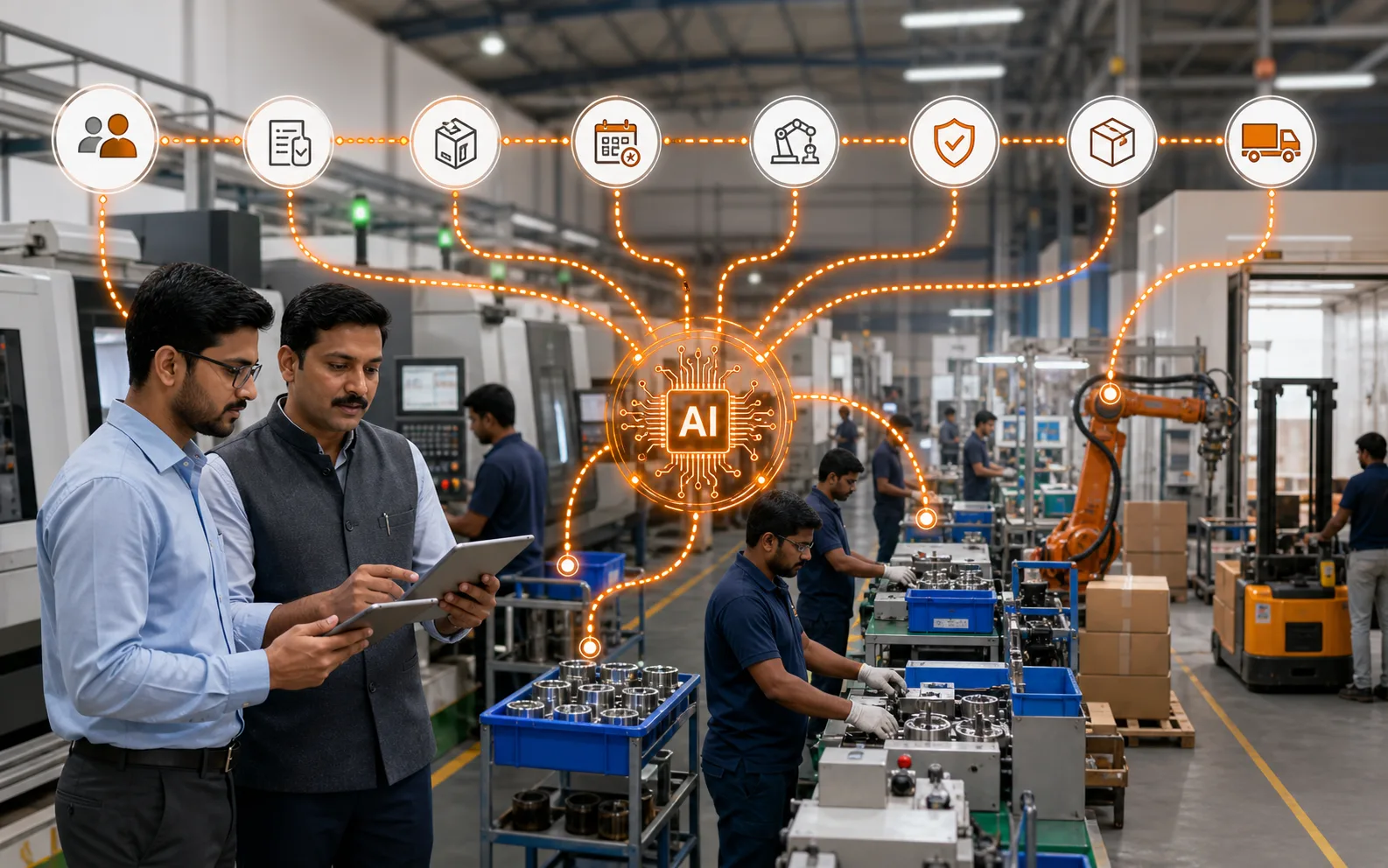
Smart textile manufacturing means using connected systems, ERP, IoT, machine data, WIP tracking, quality records, planning tools, and analytics to run textile operations with better visibility and control.
It is not about installing technology for show. A textile factory becomes smart when the right people can see the right signals early enough to act: material shortages, machine stoppages, job work delays, quality holds, WIP bottlenecks, and shipment risk.
AICAN Optiwise helps manufacturers build this connected operating layer across inventory, production, quality, purchase, sales, finance, and reporting.
Smart starts with connected data
Many textile factories already have data, but it is scattered. Orders are in Excel. Stock is in another file. Machine output is on paper. Job work follow-up is on phone calls. Quality records sit separately.
Smart manufacturing connects these records.
The goal is to create one working view of:
- Orders
- Material availability
- Machine capacity
- Production status
- WIP
- Job work
- Quality
- Costing
- Dispatch readiness
ERP is the foundation
ERP gives structure to textile operations. It connects orders, inventory, production, purchase, quality, finance, and dispatch.
For textiles, ERP should manage:
- Yarn and fabric inventory
- Lot, shade, GSM, width, roll, or style attributes
- Production planning
- Machine allocation
- WIP stages
- Job work
- Quality inspection
- Costing
- Dispatch
- Reports and dashboards
Without ERP, IoT data may remain disconnected from business decisions.
IoT adds machine visibility
IoT can monitor looms, spindles, processing machines, stitching lines, and utilities.
It can capture:
- Running status
- Stoppage
- Runtime
- Output
- Speed
- Alarms
- Energy usage
- Downtime patterns
This helps supervisors and managers see production issues earlier.
WIP visibility reduces hidden delays
Smart textile manufacturing requires stage-wise visibility. The factory should know where every order or lot is.
ERP should show:
- Yarn issued
- Weaving in progress
- Fabric produced
- Dyeing pending
- Processing in progress
- Job work pending
- Inspection pending
- Rework
- Dispatch ready
This reduces the “where is this order?” problem.
Quality data should be actionable
Quality records should not sit in notebooks. Smart manufacturing connects quality defects with machines, lots, operators, processes, and orders where relevant.
Track:
- Defect type
- Defect frequency
- Rework
- Rejection
- Shade variation
- Lot-wise quality
- Machine-wise defect trend
This helps prevent repeated issues.
Analytics should guide decisions
Smart manufacturing dashboards should show exceptions and priorities.
Useful signals include:
- Orders at risk
- Machines below target
- WIP stuck by stage
- Job work overdue
- Material shortage
- Quality holds
- Downtime trend
- Cost variance
- Dispatch pending
The point is not more reports. The point is faster decisions.
Where Optiwise fits
Optiwise can help textile manufacturers move toward smart manufacturing by connecting ERP workflows with production visibility, inventory, quality, job work, dispatch, finance, and reporting.
A practical approach can start with:
- Clean masters
- Order and material tracking
- Production planning
- WIP visibility
- Job work control
- Quality checkpoints
- Machine monitoring where needed
- Dashboards for exceptions
AICAN helps manufacturers digitize in a way that supports real factory work.
Founder’s Note
Smart manufacturing is not about having the most screens. It is about knowing what needs attention before it becomes expensive. At AICAN, we believe textile factories become smarter when data moves from memory and follow-up calls into one reliable operating system. Learn more at About AICAN.
FAQs
What is smart textile manufacturing?
Smart textile manufacturing uses ERP, IoT, machine monitoring, WIP tracking, quality data, planning tools, and analytics to improve visibility and control in textile operations.
Is IoT required for smart textile manufacturing?
IoT is useful but not always the first step. Many factories should begin with ERP, clean masters, WIP tracking, and production visibility before adding machine integration.
What is the role of ERP in smart textiles?
ERP connects orders, inventory, production, quality, job work, finance, dispatch, and reporting. It gives business context to machine and production data.
What should smart textile dashboards show?
They should show material shortages, machine stoppages, WIP delays, quality holds, job work overdue, order risk, downtime, cost variance, and dispatch readiness.
How should a textile factory start digitization?
Start with the highest pain area: inventory accuracy, production planning, WIP visibility, job work tracking, quality records, or machine downtime. Then expand step by step.

Related Posts
A Manufacturing Alternative to SAP: Optiwise
Run your factory in Optiwise, a manufacturing alternative to SAP Business One with connected operations, AI agents and no-code workflows.
14 Jun 2026Read more →How Do I Know If My Manufacturing Business Really Needs an ERP?
A practical guide for manufacturers to identify when spreadsheets, manual follow-ups, and disconnected systems are no longer enough — and when ERP becomes an operational necessity.
14 Jun 2026Read more →Production Management System Optimized | Optiwise
Learn best practices for optimizing a production management system across planning, scheduling, material readiness, quality, and reporting.
12 Jun 2026Read more →
What Is the Best ERP for Pharmaceutical Manufacturing?
Learn how to choose the best ERP for pharmaceutical manufacturing, with guidance on batch control, quality workflows, traceability, inventory, documentation, and GMP discipline.
10 Jun 2026Read more →