
Can I Start with One Vision Camera and Expand Later?
Learn how manufacturers can begin with one computer vision camera, prove value, and scale later across lines, products, plants, dashboards, and quality workflows without rework.
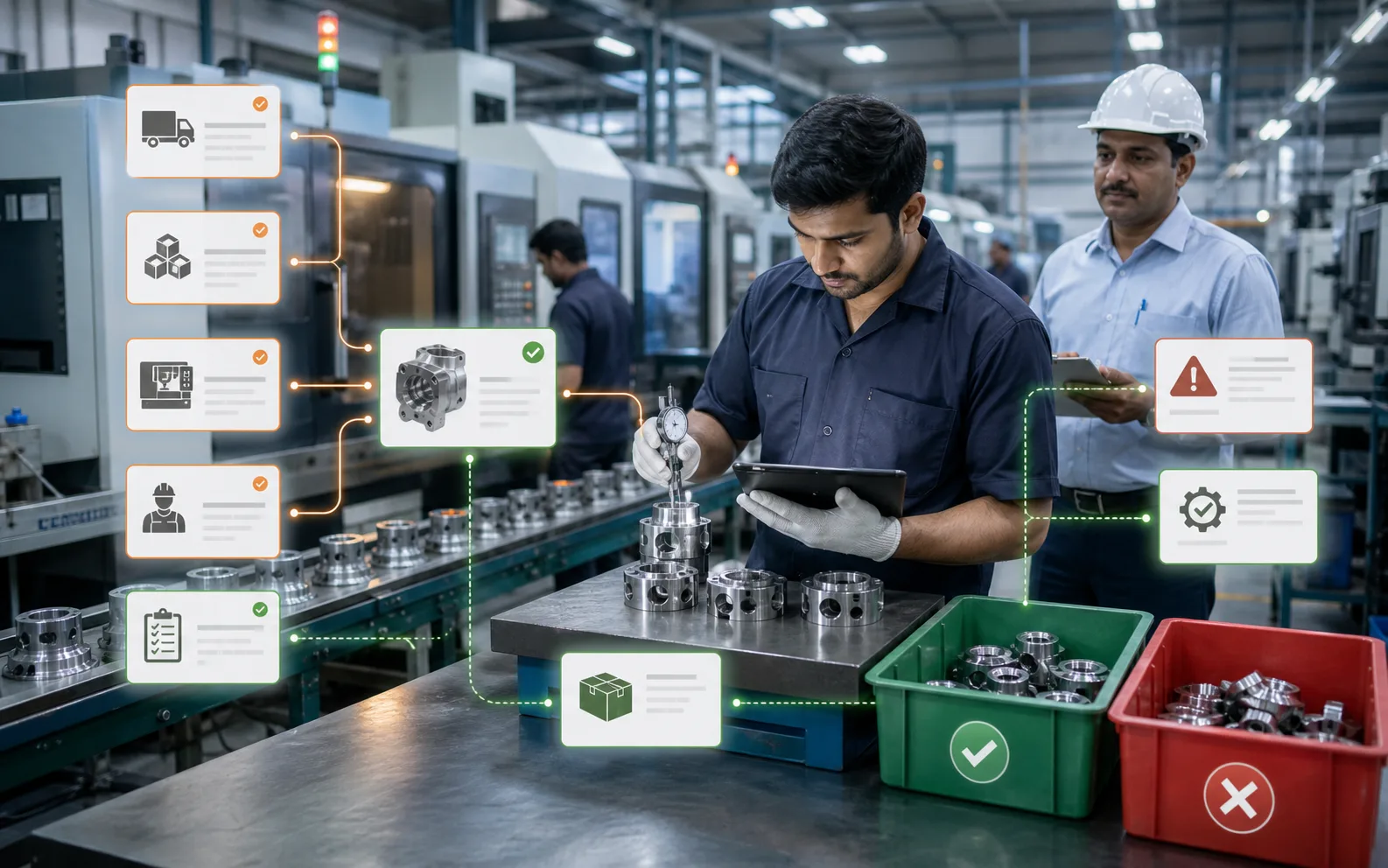
Yes, you can start with one vision camera. In many factories, that is the smartest way to begin.
A full computer vision rollout across every line sounds attractive on paper. In reality, most manufacturers are better served by starting with one clear, valuable use case.
One camera can prove the inspection logic, reveal practical shop-floor issues, build operator trust, and show whether the business case is real. Once the first deployment is stable, expansion becomes easier and less risky.
The key is to design the first camera as a pilot, not as an isolated experiment that cannot scale.
Choose the first use case carefully
The first camera should solve a real production pain. It should not be selected only because the line is convenient.
Good first use cases often have:
- Clear defect definition
- Visible inspection condition
- Repetitive manual checking
- High cost of missed defects
- Stable product presentation
- Supportive production team
- Measurable baseline
- Practical reject workflow
For example, label presence, cap presence, count verification, barcode readability, wrong orientation, missing component, or packaging mismatch can make good starting points if the conditions are right.
Avoid starting with the most complex defect in the factory unless it is also the highest-value and you have the right support.
Define success before installation
Before installing the camera, decide what success means.
Success may include:
- Reduced manual inspection load
- Fewer escaped defects
- Lower rework
- Better count accuracy
- Faster quality review
- Better evidence during complaints
- Stable false reject rate
- Operator adoption
- Smooth integration with production records
Without success criteria, the pilot becomes subjective. One person says it worked, another says it created work, and nobody has a clean answer.
Design the pilot with scale in mind
Even if the first phase uses only one camera, think ahead.
Ask:
- Will the same architecture work on other lines?
- Can recipes be managed centrally?
- Can inspection results connect to production data?
- Can dashboards compare multiple lines later?
- Can user roles support more teams?
- Can images and records be stored consistently?
- Can support handle expansion?
If the first camera is installed as a standalone box with no data strategy, scaling later may require rework.
Keep hardware standards consistent
Scaling becomes easier when you define standards early.
That does not mean every camera must be identical. But it helps to standardise where possible:
- Camera brands or industrial classes
- Lighting types
- Enclosure approach
- Mounting method
- Network architecture
- Edge device standards
- Naming conventions
- Recipe structure
- Maintenance checklist
Standards reduce training effort and make future support easier.
Connect data early, even if the workflow is simple
A pilot camera can produce useful inspection data. Do not leave that data trapped on one local screen.
At minimum, decide how results will be reviewed: accepted count, rejected count, defect category, timestamps, batch context, and image evidence where needed.
This is where AICAN Optiwise can support a scalable approach. If the pilot connects to production and quality workflows early, the factory can expand without rebuilding the data foundation later.
Train the first team like future trainers
The first operators, quality leads, supervisors, and maintenance people become internal references for later rollout.
Train them well. Let them report issues. Let them help refine SOPs. Capture what confused them. Use those lessons before adding more cameras.
A good first rollout creates champions. A rushed first rollout creates resistance.
What to learn during the pilot
The first camera should answer practical questions:
- Is the defect clearly detectable?
- Is lighting stable across shifts?
- Are false rejects acceptable?
- Do operators follow the workflow?
- Does quality trust the evidence?
- Does maintenance know basic checks?
- Does the reject process work physically?
- Does the dashboard help supervisors?
- Is the business impact measurable?
These answers are more valuable than a polished demo.
When should you expand?
Expand after the first system is stable. Stability means the system works across normal production, operators understand it, quality trusts it, maintenance can support it, and the business value is visible.
Do not expand while the first line is still full of unresolved false rejects, unclear workflows, or support confusion.
A staged rollout may look like:
- Phase 1: One camera, one line, one use case
- Phase 2: Same use case across similar lines
- Phase 3: Add new inspection types
- Phase 4: Connect dashboards across lines
- Phase 5: Standardise multi-plant rollout
Where expansion often fails
Expansion fails when the pilot was treated as a temporary setup.
Common issues include:
- No naming or recipe standards
- No documented SOP
- No integration plan
- No support model
- No maintenance ownership
- No image/data retention policy
- No baseline ROI measurement
- No change-control process
These are not camera problems. They are rollout design problems.
Where AICAN Optiwise fits
AICAN Optiwise helps manufacturers scale computer vision by connecting inspection results to production, inventory, quality, dispatch, and management views. One camera can become one part of a broader operating system instead of a disconnected pilot.
AICAN works with manufacturers who want practical, staged digitization. You can learn more at About AICAN.
Founder's Note
Starting small is not the same as thinking small. A good pilot is built with the discipline of a future rollout. It proves value, exposes reality, and gives the team confidence to scale.
The first camera should teach the factory how to use the next ten.
FAQs
1. Is one camera enough to prove ROI?
Yes, if the use case is meaningful and baseline metrics are tracked. One camera can prove inspection value before wider rollout.
2. Should we start with the hardest inspection problem?
Not always. Start with a valuable, visible, measurable use case that can build confidence and produce clear learning.
3. Can one system expand to multiple lines later?
Yes, if architecture, data, recipes, user roles, support, and maintenance standards are planned early.
4. What should we avoid in the first pilot?
Avoid isolated setups with no data strategy, no SOP, no baseline, and no owner. They become difficult to scale.
5. How does Optiwise help with scaling?
Optiwise helps connect inspection results to wider factory workflows, making multi-line visibility and action easier as deployment expands.

Related Posts

Kanban System | Optiwise
Learn how a Kanban system works in manufacturing, where it helps, where it fails, and how Optiwise connects Kanban signals with inventory, purchase, and production planning.
12 Jun 2026Read more →Erp In Operations Management | Optiwise
Learn how ERP improves operations management by connecting planning, inventory, purchase, production, quality, dispatch, finance, and reporting.
12 Jun 2026Read more →ERP for FMCG Companies in India
A practical guide to ERP for FMCG companies in India, covering distributor orders, batch tracking, expiry, inventory, production, schemes, costing, and reporting.
11 Jun 2026Read more →
Optiwise, Odoo, Acumatica and Business Central for Manufacturing
Compare manufacturing workflows in Optiwise, Odoo, Acumatica and Dynamics 365 Business Central. See what your factory can run in Optiwise.
11 Jun 2026Read more →