
Is AI Going to Make Factory Jobs More Interesting or Boring?
Understand how AI changes factory work, which tasks become less repetitive, and how manufacturers can make AI adoption improve job satisfaction.
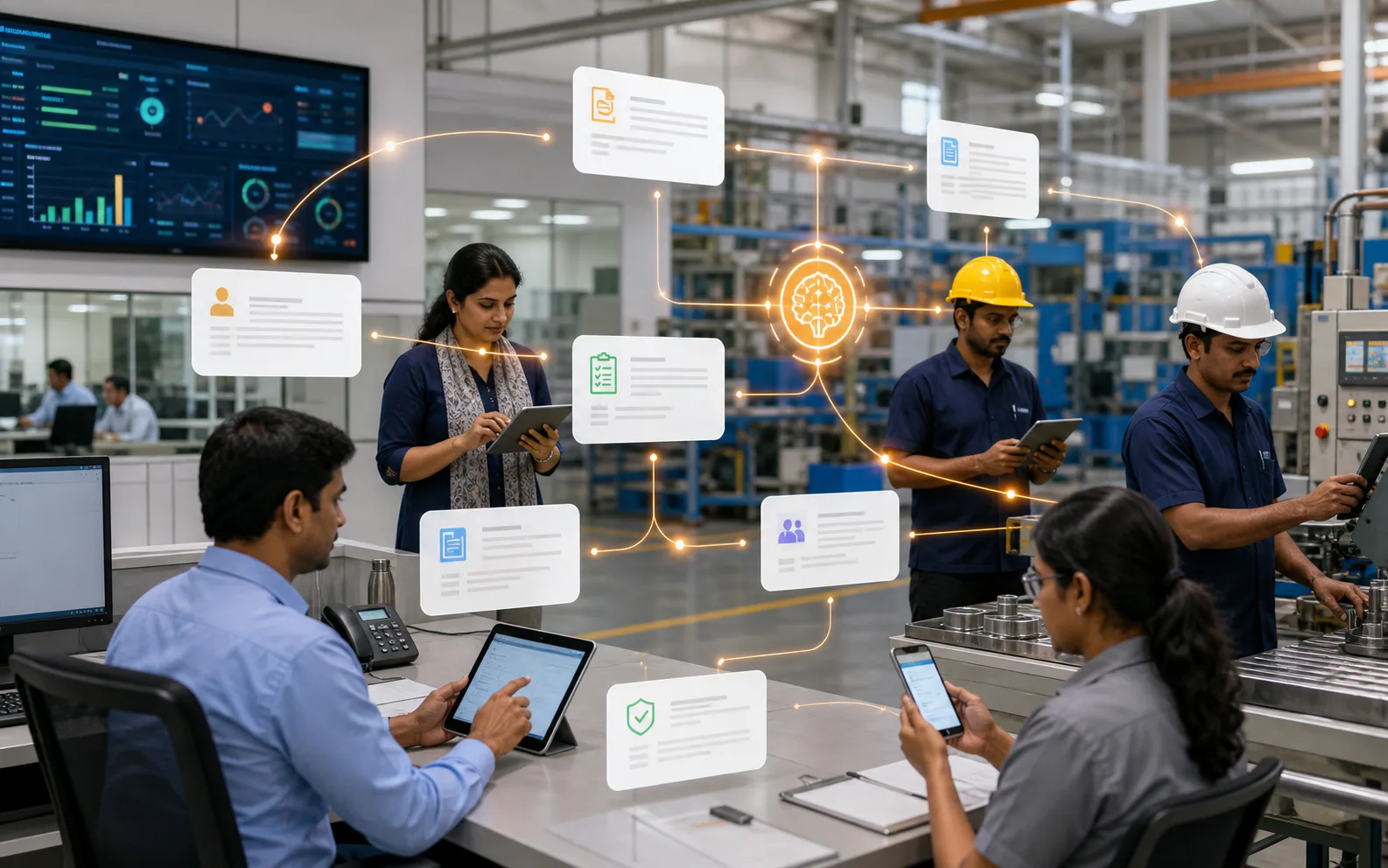
Is AI Going to Make Factory Jobs More Interesting or Boring?
AI can make factory jobs more interesting if it removes repetitive coordination and gives workers better tools to solve real problems. It can make jobs more boring if management uses it only to monitor people, reduce judgement, and force workers into rigid screen updates without explaining the value.
AI driven factory management changes the nature of work. Manual reporting, repeated follow-ups, and routine checking may reduce. More time can shift toward problem-solving, exception handling, quality improvement, maintenance planning, and cross-department coordination.
Whether this feels better or worse depends on implementation.
What Becomes Less Interesting
Tasks like copying numbers, chasing status, preparing routine reports, checking the same stock repeatedly, or calling multiple departments for updates may reduce. These tasks may be familiar, but they are often frustrating.
AI and automation can remove some of this low-value work.
What Can Become More Interesting
Workers may spend more time understanding alerts, solving bottlenecks, improving quality, preventing downtime, and making better decisions. Supervisors can focus on action instead of only collecting updates.
This can make roles more skilled and more meaningful.
The Risk of Over-Monitoring
If AI is used only to track workers, adoption may feel controlling. People may become anxious, defensive, or less willing to report honest problems.
Factories should use AI to improve systems, not only judge individuals.
Training Changes the Experience
A worker who is trained well feels more confident. A worker who is suddenly forced to use a system without context feels burdened.
Good training explains why updates matter and how they reduce future pressure.
Where AICAN Optiwise Fits
AICAN Optiwise supports connected workflows across production, inventory, purchase, sales, finance, reporting, IoT readiness, and AI. This can help teams move away from scattered follow-ups and toward clearer responsibilities and action.
Explore aican.co.in and About AICAN to learn about AICAN’s shopfloor-rooted approach.
Founder’s Note
AICAN’s founder-led belief is that factory technology should respect people. When AI removes unnecessary confusion, workers can use more of their experience and judgement. That is a better future than simply making work more controlled.
Good systems should make good workers feel stronger.
FAQ
Will AI make factory jobs boring?
It depends on implementation. AI can reduce repetitive tasks and make jobs more problem-solving oriented, or it can feel restrictive if used poorly.
Which tasks become more interesting?
Exception handling, process improvement, quality analysis, maintenance planning, and data-based supervision can become more important.
How can management improve job satisfaction with AI?
Explain the purpose, train users, reduce manual burden, and use AI to improve processes rather than blame people.
Will workers need new skills?
Yes. Dashboard use, accurate updates, alert response, and process thinking will become more important.
Final Thought
AI will not automatically make factory work better or worse. The outcome depends on whether the factory uses AI to support people or simply control them.
Next step: Explore AICAN Optiwise to see how connected workflows can make factory work clearer and more meaningful.

Related Posts

Will AI Create More Jobs Than It Destroys?
Explore whether AI will create more jobs than it destroys, with a practical view of manufacturing, automation, new roles, reskilling, and business transformation.
13 Jun 2026Read more →Manufacturing AI vs. Hiring More Workers
Compare manufacturing AI with hiring more workers and learn when automation, better systems, training, or additional people are the right answer.
7 Jun 2026Read more →
Will AI Replace My Production Planning Job?
Understand how AI affects production planning jobs, what tasks may change, and how planners can become more valuable with AI-supported scheduling and visibility.
6 Jun 2026Read more →Do I Need Special Skills to Use AI in Manufacturing?
Learn what skills manufacturing teams need to use AI, including process knowledge, data discipline, prompt clarity, review judgment, ERP understanding, and change readiness.
6 Jun 2026Read more →