
Will AI Replace My Factory Job? What You Actually Need to Know
A practical explanation of how AI-driven factory management affects jobs, which skills matter, and how workers can prepare without fear.

Will AI Replace My Factory Job? What You Actually Need to Know
AI will change factory jobs, but it will not replace every factory worker. The bigger change is that repetitive tracking, manual reporting, routine checking, and status chasing will reduce. Jobs that depend only on copying data or passing information between departments may shrink. Jobs that require judgement, machine knowledge, process ownership, team coordination, and problem-solving will remain important.
AI driven factory management is about using data and automation to run operations with better visibility. It helps managers see production status, material risk, quality issues, downtime, and dispatch commitments earlier. That can feel threatening if it is introduced poorly, but it can also reduce daily pressure for workers.
The workers who adapt will not need to become software engineers. They will need to become more comfortable with digital workflows, accurate updates, and data-based decisions.
What AI Is Likely to Replace
AI is most likely to reduce repetitive tasks: manual report preparation, repeated follow-up calls, basic data consolidation, simple exception checking, and routine reminders. These tasks take time but do not always use a worker’s real skill.
If your job is mostly about moving information from one place to another, it may change. But that does not mean you have no future. It means you should learn how to manage the system, verify data, close exceptions, and support decisions.
What AI Will Still Need Humans For
Factories need people for judgement. Machines behave differently under real conditions. Materials vary. Customers change priorities. Vendors delay. Operators notice things sensors may not capture. Supervisors understand team capability and shopfloor pressure.
AI can highlight risk, but humans still decide what action makes sense.
Skills That Will Protect Your Career
Learn to update data accurately, read dashboards, understand alerts, record reasons properly, and ask better questions from reports. Build process knowledge. Understand how production, inventory, purchase, quality, and dispatch connect.
Workers who understand both shopfloor reality and digital systems will become more valuable.
How to Respond Instead of Fear
Do not wait for change to happen to you. Ask for training. Volunteer to become a system champion. Learn the workflows that affect your department. Understand how your updates help others.
The safest position is to become someone the factory trusts during the transition.
Where AICAN Optiwise Fits
AICAN Optiwise supports AI driven factory management by connecting production, inventory, purchase, sales, finance, reporting, IoT readiness, and AI workflows. It helps teams work from one operating truth instead of scattered updates.
For workers and managers, this means clearer responsibilities and fewer blind spots. Learn more at aican.co.in and About AICAN.
Founder’s Note
AICAN’s founder-led view is that AI should make factory teams stronger, not invisible. The purpose is to reduce confusion and help people use their experience with better information.
A good factory system respects workers while raising the standard of work.
FAQ
Will AI replace factory workers?
AI may reduce repetitive coordination tasks, but factories will still need people for judgement, supervision, machine knowledge, quality, maintenance, and exceptions.
What factory jobs are safest?
Roles involving process ownership, problem-solving, maintenance, quality, supervision, planning, and data discipline are likely to remain important.
Do workers need coding skills?
No. Most workers need practical digital workflow skills, not coding.
How can I prepare?
Learn dashboards, accurate data entry, exception handling, root-cause thinking, and how your department connects with others.
Final Thought
AI may change your job, but it can also make your work more valuable if you learn how to use it. The future factory needs people who understand both operations and systems.
Next step: Explore AICAN Optiwise to see how AI driven factory management can support people and processes together.

Related Posts
Will AI Create More Jobs Than It Destroys?
Explore whether AI will create more jobs than it destroys, with a practical view of manufacturing, automation, new roles, reskilling, and business transformation.
13 Jun 2026Read more →Manufacturing AI vs. Hiring More Workers
Compare manufacturing AI with hiring more workers and learn when automation, better systems, training, or additional people are the right answer.
7 Jun 2026Read more →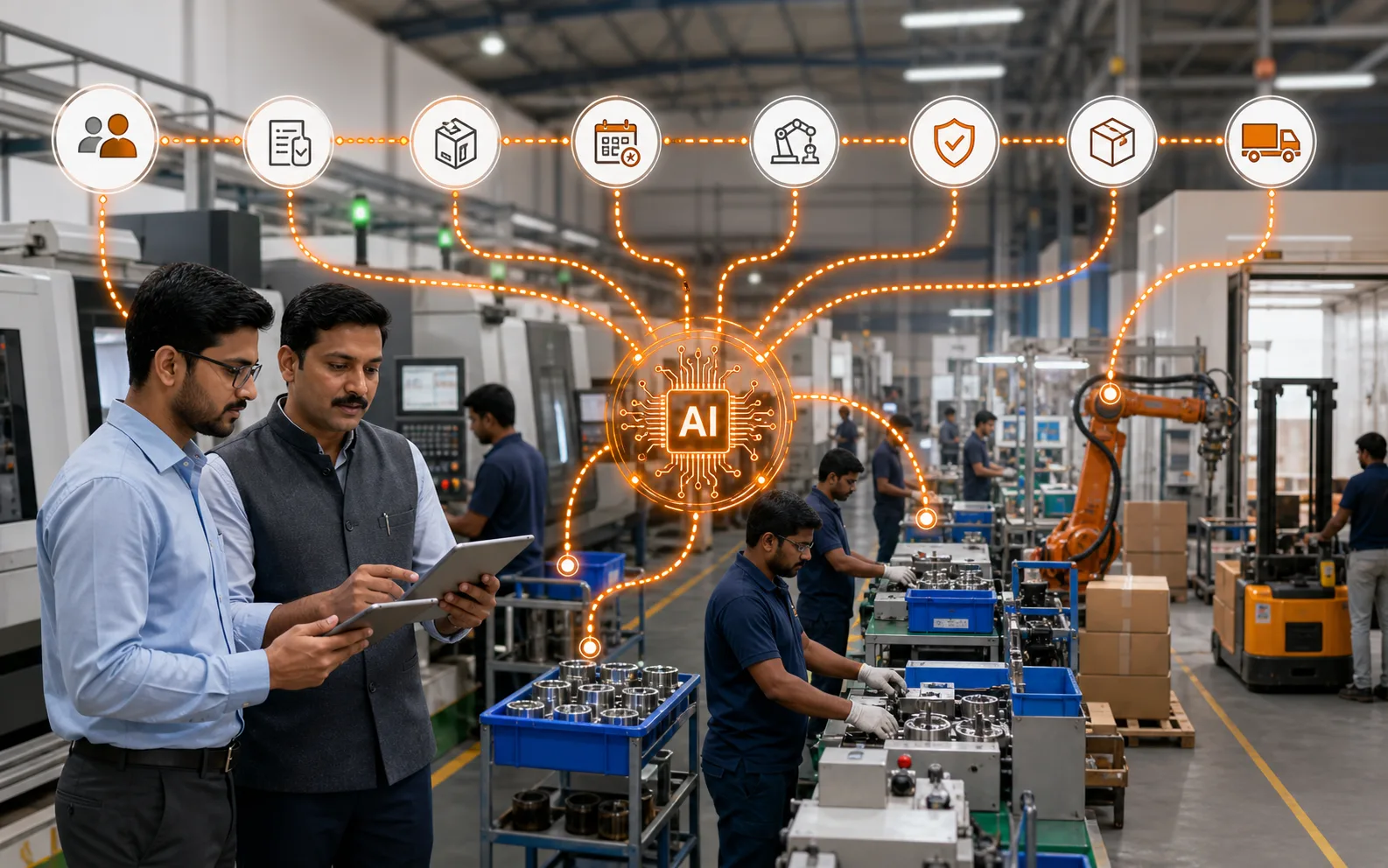
Will AI Replace My Production Planning Job?
Understand how AI affects production planning jobs, what tasks may change, and how planners can become more valuable with AI-supported scheduling and visibility.
6 Jun 2026Read more →Do I Need Special Skills to Use AI in Manufacturing?
Learn what skills manufacturing teams need to use AI, including process knowledge, data discipline, prompt clarity, review judgment, ERP understanding, and change readiness.
6 Jun 2026Read more →