
Will Sensors Replace My Workers?
Understand how industrial sensors affect manufacturing jobs, why they usually support workers rather than replace them, and how roles change with better factory visibility.
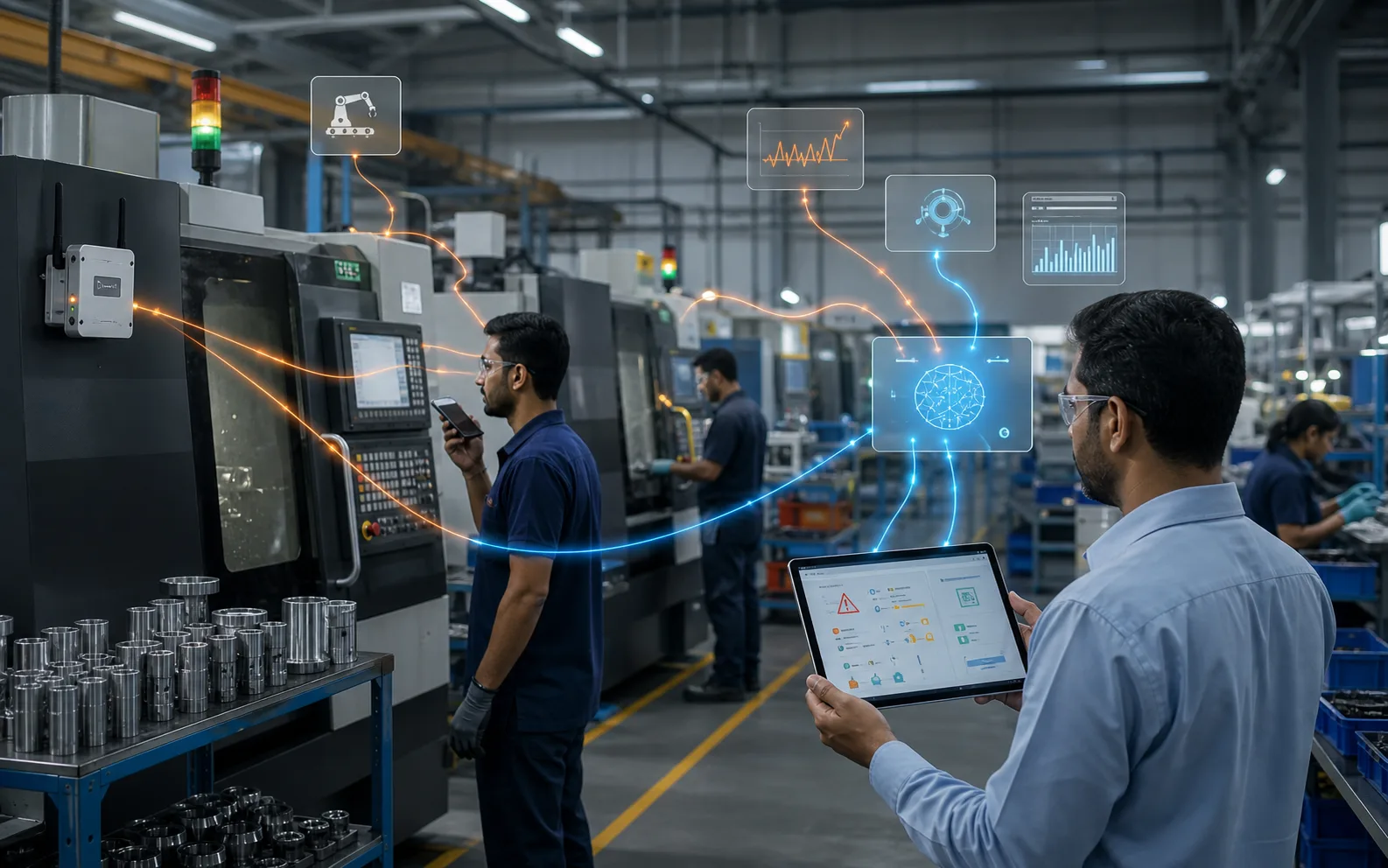
Will Sensors Replace My Workers?
Industrial sensors do not replace workers by themselves.
They replace guesswork, delayed reporting, repeated manual checking, and some avoidable follow-up. That is different from replacing the people who understand machines, materials, quality, customers, and the rhythm of the factory.
A sensor can detect that a machine stopped. It cannot fully understand why the operator was waiting, whether the tool change was difficult, whether material quality was poor, or whether the process needs adjustment. People still provide judgment.
For manufacturers evaluating AICAN Optiwise, sensor-based systems should be introduced as a way to support teams, not threaten them.
Sensors reduce low-value manual work
Many workers spend time on tasks that do not use their skill well.
They check whether machines are running, write numbers in registers, walk to inspect levels, report status repeatedly, or wait for someone to confirm what happened. Sensors can automate parts of this visibility.
That does not remove the need for people. It helps people spend more time on skilled work: operating machines properly, solving problems, improving quality, maintaining equipment, and coordinating production.
Operator roles become more informed
Operators may still run machines, inspect parts, manage changeovers, handle exceptions, and provide context.
With sensors, they may also interact with dashboards, confirm downtime reasons, respond to prompts, and report abnormal readings. Their role becomes more data-aware.
This can improve respect for operator knowledge because sensor data and operator context together create a clearer picture.
Supervisors become less dependent on chasing updates
Supervisors often act as the human information system.
Sensors and dashboards reduce the need for constant status chasing. Supervisors can focus on exceptions: which machine needs attention, which job is behind, which issue keeps repeating, and who needs support.
This improves the supervisor's role rather than removing it.
Maintenance teams get better evidence
Sensors can help maintenance teams see trends, alerts, and machine history.
This does not replace maintenance skill. It gives technicians better starting evidence. A vibration trend, current spike, temperature rise, or pressure drop can help them investigate more effectively.
The technician still diagnoses, repairs, validates, and improves the system.
Jobs may change, but change can be planned
When factories digitize, roles can shift.
Some manual reporting work may reduce. Some new responsibilities may appear: dashboard review, alert response, sensor inspection, data validation, and system upkeep. Employees may need training.
The healthiest approach is to communicate early. Explain what the sensors will measure, how data will be used, and how each role will change.
Fear grows when technology appears without context.
Sensor data should not become surveillance
Workers may resist sensors if they feel the system is only for blame.
Management should use sensor data to improve processes, not simply punish people. If downtime is caused by material delay, bad tooling, poor planning, or machine condition, the data should reveal that. Blaming operators for every loss will damage adoption.
A sensor-based system works best when it helps teams solve problems together.
Where AICAN Optiwise fits
AICAN Optiwise helps manufacturers use sensor and machine data to improve visibility, coordination, and decision-making. The platform is most valuable when factory teams trust it as a support system for better work.
AICAN builds for manufacturers who want technology adoption with practical human understanding. You can learn more at About AICAN.
Founder’s Note
Factories are run by people. Sensors make the work more visible, but people still carry the judgment, accountability, and improvement mindset. The right use of technology should make good workers stronger, not invisible.
FAQs
Will sensors reduce headcount?
Not automatically. Sensors usually reduce manual checking and delayed reporting first. Workforce impact depends on how the company chooses to use automation.
Will operators need new skills?
Yes. They may need to understand dashboards, alerts, downtime reason entry, and basic data discipline.
Can sensors be used unfairly against workers?
They can be misused if management treats data only as blame. Better use focuses on process improvement and root cause.
Do sensors replace maintenance teams?
No. They give maintenance teams better evidence for diagnosis and planning.
How should managers introduce sensors to workers?
Explain the purpose, train by role, show how the system helps daily work, and avoid using data as a blame tool.

Related Posts

Will AI Create More Jobs Than It Destroys?
Explore whether AI will create more jobs than it destroys, with a practical view of manufacturing, automation, new roles, reskilling, and business transformation.
13 Jun 2026Read more →Manufacturing AI vs. Hiring More Workers
Compare manufacturing AI with hiring more workers and learn when automation, better systems, training, or additional people are the right answer.
7 Jun 2026Read more →
Will AI Replace My Production Planning Job?
Understand how AI affects production planning jobs, what tasks may change, and how planners can become more valuable with AI-supported scheduling and visibility.
6 Jun 2026Read more →Do I Need Special Skills to Use AI in Manufacturing?
Learn what skills manufacturing teams need to use AI, including process knowledge, data discipline, prompt clarity, review judgment, ERP understanding, and change readiness.
6 Jun 2026Read more →