
What's the Difference Between AI Agents and Regular Chatbots?
Regular chatbots answer scripted questions, while AI agents can understand context, use tools, take actions, follow workflows, and escalate exceptions.
What's the Difference Between AI Agents and Regular Chatbots?
Regular chatbots usually answer questions. AI agents can often take action.
A basic chatbot may respond to FAQs using scripts or predefined flows. An AI agent can understand context, use connected tools, check data, draft responses, update tasks, route requests, summarize information, and escalate issues when needed.
The difference is not only conversation. It is workflow capability.
Regular Chatbots Are Usually Scripted
Many chatbots follow fixed paths.
They work well for simple FAQs, menu options, and basic support flows. But they struggle when customers ask unexpected questions.
AI Agents Can Use Context
AI agents can use business data, past interactions, customer status, schedules, documents, and workflow rules.
This makes them more flexible.
AI Agents Can Take Actions
Depending on permissions, AI agents can create tasks, draft emails, book appointments, update records, send reminders, or route issues.
This is where operational efficiency improves.
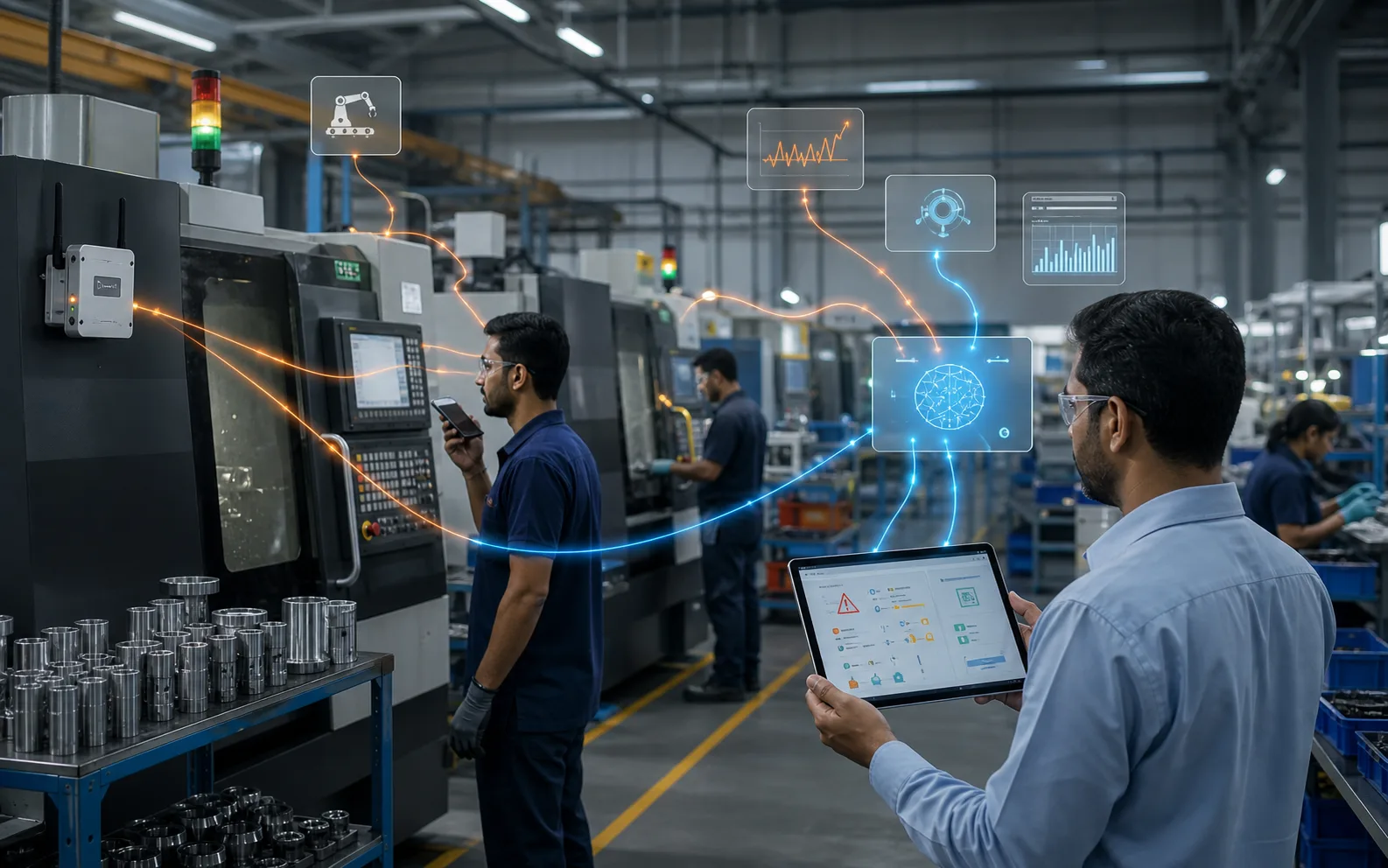
AICAN Optiwise uses AI workflows inside connected operations, where agents can support real business processes rather than only answer questions.
AI Agents Still Need Limits
More capability means more need for control.
Businesses should define what agents can do, what requires approval, and what should be escalated.
Where AICAN Optiwise Fits
AICAN Optiwise helps manufacturers move beyond isolated chatbots toward AI workflows connected with production, inventory, purchase, sales, finance, and reports.
Learn more at About AICAN.
Founder’s Note
A chatbot answers. An agent helps complete work. That difference matters when businesses want real efficiency, not just a conversation window.
But action must come with accountability.
FAQ
Are AI agents the same as chatbots?
No. AI agents can often use tools and perform workflow actions.
Are chatbots still useful?
Yes, for simple FAQs and guided support.
Are AI agents riskier?
They can be if not controlled, because they may take actions.
Which should my business use?
Use chatbots for simple questions and AI agents for workflow automation.
Final Thought
AI agents go beyond regular chatbots by helping work move forward.
The best use is controlled, connected, and measurable. That is the AI workflow direction AICAN supports.

Related Posts
Is AI Worth the Investment for My Factory?
Learn how to decide if AI is worth the investment for your factory by evaluating use cases, data readiness, costs, risks, ROI, and operational impact.
13 Jun 2026Read more →Manufacturing AI Mistakes to Avoid Before You Start
List manufacturing AI mistakes and controls for unclear use case, messy data, unsafe automation, no owner, weak security and unreviewed recommendations.
13 Jun 2026Read more →What's the Difference Between AI and Regular Automation?
Understand the difference between AI and regular automation in manufacturing, with practical examples for workflows, decisions, alerts, and predictive operations.
13 Jun 2026Read more →What Are the Risks of Using AI in Manufacturing?
Understand the risks of AI in manufacturing, including bad data, wrong recommendations, safety issues, security, job fear, over-automation, and implementation failure.
13 Jun 2026Read more →