
What's the Difference Between AI and Regular Automation?
Understand the difference between AI and regular automation in manufacturing, with practical examples for workflows, decisions, alerts, and predictive operations.
What's the Difference Between AI and Regular Automation?
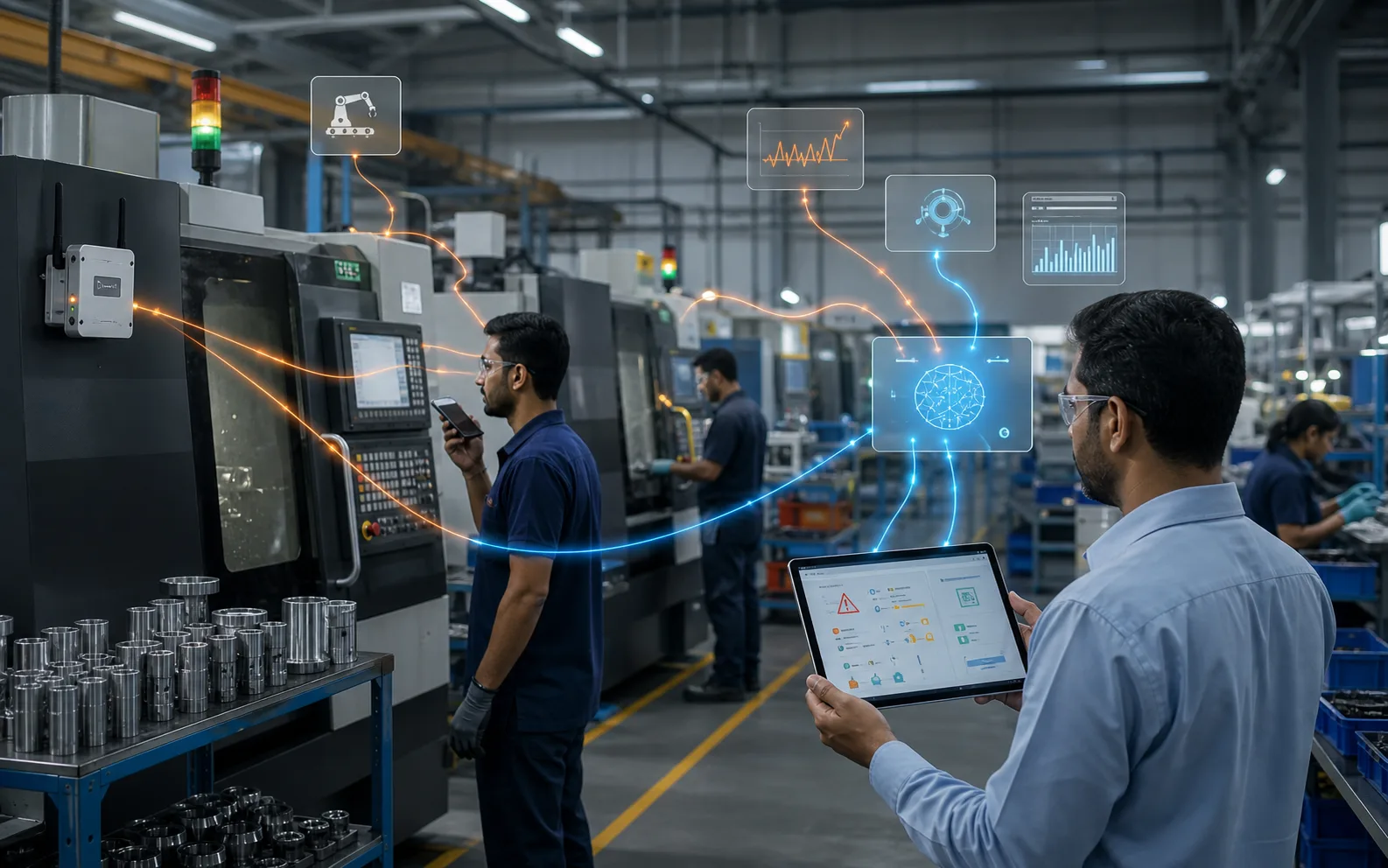
Regular automation follows fixed rules. AI learns from data, identifies patterns, and supports decisions when the answer is not always fixed.
In manufacturing, both are useful. Regular automation is excellent for repeatable workflows: send approval when a purchase order crosses a limit, generate an invoice after dispatch, or notify stores when stock falls below minimum. AI is useful when conditions vary: predicting machine risk, forecasting demand, spotting defect patterns, or summarizing production exceptions.
The best factory systems use both.
Regular Automation Works With Rules
Regular automation follows “if this, then that” logic. If stock is below reorder level, create an alert. If an order is approved, release it to production. If payment is overdue, notify finance.
These workflows are reliable because the rules are known in advance.
AI Works With Patterns
AI is helpful when the system needs to interpret patterns. For example, a machine may not be below a fixed threshold, but its behavior may resemble past failure conditions. A customer may not be officially delayed yet, but production and material signals may show risk.
AI can highlight these possibilities before a fixed rule triggers.
Automation Executes; AI Recommends
Regular automation often performs a defined action. AI often recommends, predicts, summarizes, or prioritizes.
In high-risk manufacturing decisions, AI should usually support human review rather than act alone.
Examples in Manufacturing
Regular automation can route purchase approvals, update stock after material issue, create dispatch documents, and send reminders.
AI can forecast demand, identify slow-moving stock, predict downtime risk, detect quality trends, and summarize production delays.
Why the Difference Matters
If you use regular automation for a problem that needs judgment, the system may become rigid. If you use AI for a simple rule, you may add unnecessary complexity.
Choosing correctly saves cost and improves adoption.
Where AICAN Optiwise Fits
AICAN Optiwise supports connected manufacturing workflows where automation and AI can work together across production, inventory, purchase, sales, finance, and reporting.
AICAN helps manufacturers use the right type of technology for the right operational problem. Learn more at About AICAN.
Founder’s Note
Not every problem needs AI. Some problems need a clear rule and a reliable workflow.
The smart factory is not the one using AI everywhere. It is the one that knows when to automate, when to predict, and when to let people decide.
FAQ
Is AI the same as automation?
No. Automation follows fixed rules, while AI learns from data and supports pattern-based decisions.
Which is better for manufacturing?
Both are useful. Automation is better for repeatable processes, while AI is better for prediction and complex patterns.
Can AI act automatically?
It can for low-risk tasks, but high-impact actions should include human approval.
Should I automate before using AI?
Often yes. Clear workflows and connected data make AI more effective.
Final Thought
AI and automation are different tools. Use automation for known rules and AI for changing patterns. Together, they can make manufacturing operations faster and smarter.

Related Posts
Is AI Worth the Investment for My Factory?
Learn how to decide if AI is worth the investment for your factory by evaluating use cases, data readiness, costs, risks, ROI, and operational impact.
13 Jun 2026Read more →Manufacturing AI Mistakes to Avoid Before You Start
List manufacturing AI mistakes and controls for unclear use case, messy data, unsafe automation, no owner, weak security and unreviewed recommendations.
13 Jun 2026Read more →What Are the Risks of Using AI in Manufacturing?
Understand the risks of AI in manufacturing, including bad data, wrong recommendations, safety issues, security, job fear, over-automation, and implementation failure.
13 Jun 2026Read more →How Does IoT Enable Remote Monitoring of Equipment?
Learn how IoT enables remote monitoring of manufacturing equipment through sensors, gateways, dashboards, alerts, maintenance visibility, and secure access.
13 Jun 2026Read more →