
What Support Will I Get Implementing AI in My Factory?
Understand what implementation support manufacturers should expect for AI systems, including workflow mapping, data readiness, training, rollout, and post-go-live help.
What Support Will I Get Implementing AI in My Factory?
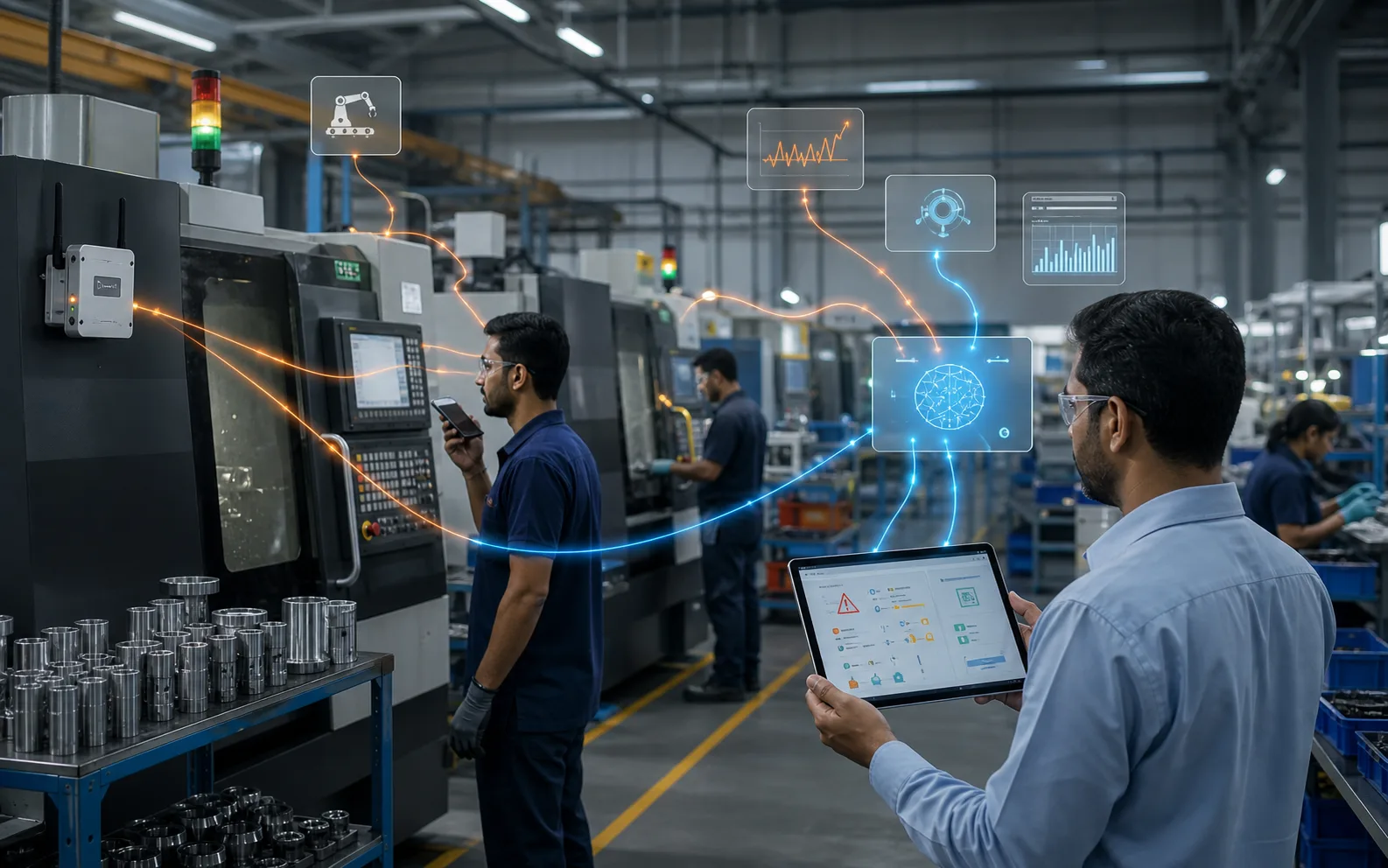
AI implementation support should go far beyond software installation. A factory needs help understanding workflows, preparing data, training users, setting responsibilities, testing outputs, and improving adoption after go-live. Without this support, even a strong AI system can fail in daily use.
Manufacturing is too operationally sensitive for a casual rollout. Production cannot stop because users are confused. Inventory cannot become unreliable because data migration was rushed. Supervisors cannot trust alerts unless they understand how the system works.
Artificial intelligence in manufacturing succeeds when technology and implementation support move together.
Workflow Mapping
The first support area is workflow mapping. The implementation team should understand how orders enter the system, how production is planned, how materials are issued, how quality is checked, how purchase follow-ups happen, and how dispatch is managed.
This mapping reveals gaps between the factory’s current process and the system workflow. It also helps decide what should be configured, standardized, or improved before go-live.
Data Preparation
AI needs reliable data. Implementation support should include help with item masters, BOMs, stock data, customer and vendor masters, production records, quality categories, and other critical information.
Data preparation is often where projects become messy. A good partner will help identify what data is essential now and what can be improved later.
Role-Based Training
Training should be specific to each role. Operators do not need the same training as owners. Store teams, production supervisors, purchase teams, quality teams, and managers each need different workflows.
Good training uses the factory’s real examples and explains why each update matters. Users should understand both the screen and the decision behind it.
Go-Live and Stabilization
Go-live support is critical. The first few weeks reveal real issues: missed entries, unclear responsibilities, wrong master data, user hesitation, and workflow exceptions. The vendor should help correct these quickly.
Stabilization is where adoption becomes real. The system must move from demo mode to daily operating discipline.
Post-Implementation Review
After go-live, manufacturers should review outcomes. Are users updating data on time? Are alerts useful? Are reports trusted? Are managers acting on exceptions? Are the original business goals being measured?
Support should include refinement, not just launch.
Where AICAN Optiwise Fits
AICAN Optiwise is built for Indian manufacturing workflows across production, inventory, purchase, sales, finance, reporting, IoT readiness, and AI. Implementation should help manufacturers connect these workflows in a way that fits their actual operating reality.
Manufacturers can explore Optiwise at aican.co.in and learn more about the shopfloor-rooted AICAN story at About AICAN. Specific implementation support should be discussed with the AICAN team based on factory scope and modules.
Founder’s Note
AICAN’s founder-led view is that implementation is not a side activity. It is where manufacturing software becomes useful or fails. A good system must be supported by people who understand factory pressure, not only technical configuration.
AI adoption should feel guided, practical, and accountable.
FAQ
What support should an AI manufacturing vendor provide?
Expect workflow mapping, data preparation, configuration, role-based training, go-live support, issue resolution, and post-implementation review.
How long does implementation support last?
It depends on scope. A focused rollout may stabilize in weeks, while broader transformation can take months.
Who should be involved from the factory side?
Owners, department heads, supervisors, stores, purchase, production, quality, finance, and IT or system admins should be represented as needed.
What is the biggest implementation risk?
Poor adoption. Even good software fails if users are not trained, data is weak, and management does not enforce process discipline.
Final Thought
AI implementation is not only about going live. It is about building a factory rhythm where teams trust the system and use it to make better decisions every day.
Next step: Visit AICAN Optiwise to discuss how connected manufacturing workflows can be implemented in your factory.

Related Posts
Is AI Worth the Investment for My Factory?
Learn how to decide if AI is worth the investment for your factory by evaluating use cases, data readiness, costs, risks, ROI, and operational impact.
13 Jun 2026Read more →Manufacturing AI Mistakes to Avoid Before You Start
List manufacturing AI mistakes and controls for unclear use case, messy data, unsafe automation, no owner, weak security and unreviewed recommendations.
13 Jun 2026Read more →What's the Difference Between AI and Regular Automation?
Understand the difference between AI and regular automation in manufacturing, with practical examples for workflows, decisions, alerts, and predictive operations.
13 Jun 2026Read more →What Are the Risks of Using AI in Manufacturing?
Understand the risks of AI in manufacturing, including bad data, wrong recommendations, safety issues, security, job fear, over-automation, and implementation failure.
13 Jun 2026Read more →