
What's the Difference Between AI and Traditional Vision Systems?
Understand the difference between AI-based computer vision and traditional rule-based vision systems, including when to use each, their strengths, limits, data needs, and factory use cases.
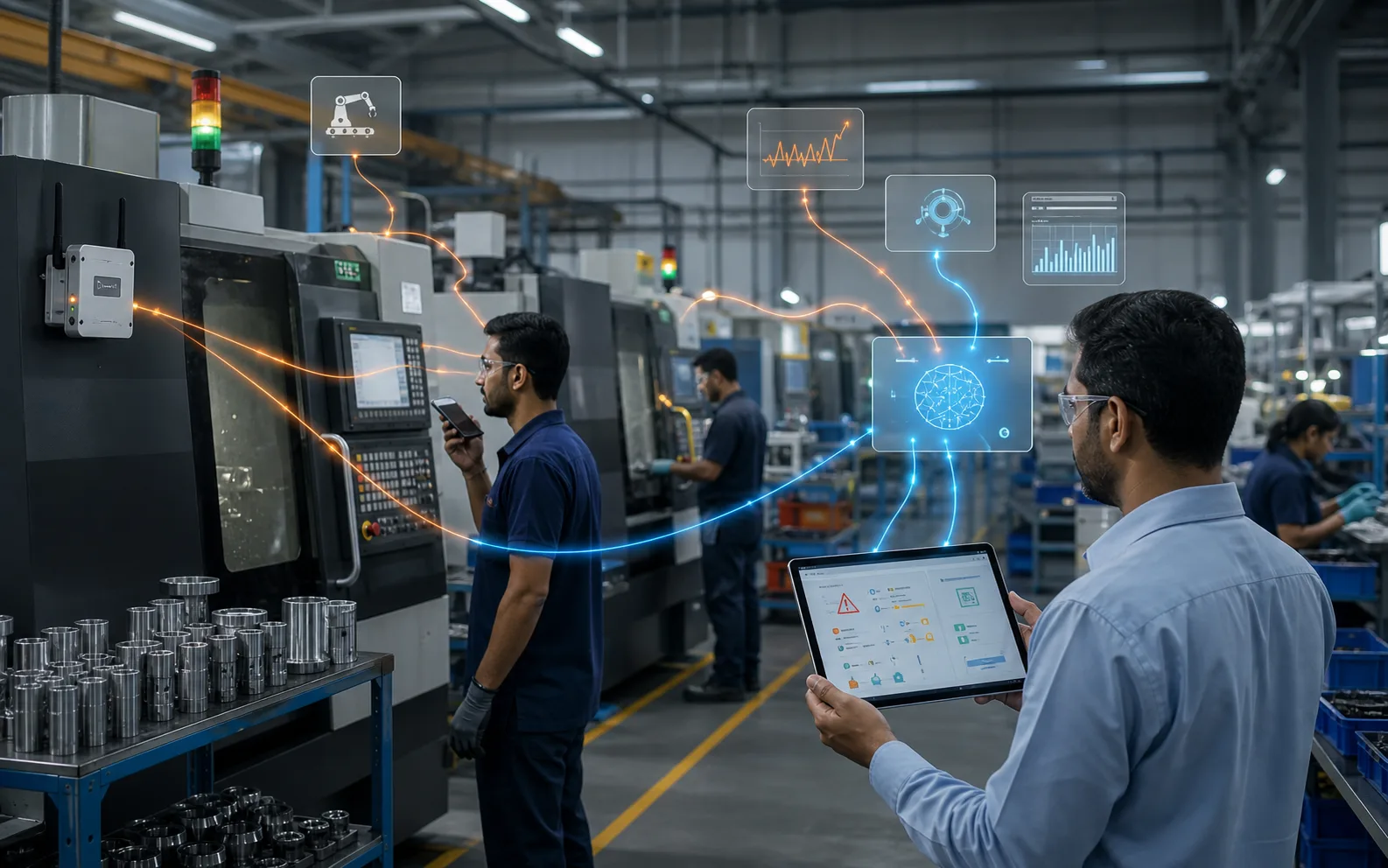
Traditional vision follows rules. AI vision learns patterns. Manufacturing needs both.
When factories discuss computer vision, AI often gets the attention. But not every inspection problem needs AI. Some problems are better solved with traditional rule-based vision. Others genuinely benefit from AI-based models.
The right choice depends on the defect, product variation, inspection speed, data availability, explainability needs, and maintenance capability.
A serious vision project should not begin with "AI or not AI?" It should begin with the inspection problem.
What is traditional vision?
Traditional vision uses predefined rules. The system checks measurable features: edges, shapes, positions, distances, colours, contrast, barcode readability, presence or absence, and known patterns.
Examples include:
- Is the label present?
- Is the cap present?
- Is the hole in the correct position?
- Is the barcode readable?
- Is the object within a defined boundary?
- Is the count correct?
- Is a component missing?
Traditional vision is strong when the inspection condition is clear, repeatable, and measurable.
What is AI-based vision?
AI-based vision uses trained models to identify patterns from examples. Instead of manually defining every rule, the system learns from images of acceptable and defective products.
AI can be useful when defects are variable, subtle, cosmetic, or hard to define with rigid thresholds.
Examples include:
- Surface scratches with irregular shapes
- Stains or contamination
- Texture abnormalities
- Dents or deformation
- Weld defects
- Complex assembly mistakes
- Visual anomalies that vary by product
AI vision is often useful when a human can recognise the problem but struggles to describe it as a simple rule.
Traditional vision strengths
Traditional vision is usually easier to explain. If the system rejects a part because a measurement is outside tolerance, the logic is clear.
Strengths include:
- Good for measurable checks
- Often faster to deploy for simple tasks
- Easier to validate
- Easier to explain to quality teams
- Less training data required
- Stable when product presentation is controlled
- Lower complexity for straightforward inspections
For many factory checks, traditional vision is still the right answer.
Traditional vision limits
Traditional systems can struggle when variation is high. If the defect changes shape, texture, lighting response, or position in unpredictable ways, fixed rules may become complicated.
They may also require frequent rule adjustment when product appearance changes.
A system with dozens of fragile thresholds can become hard to maintain. At that point, AI may be worth evaluating.
AI vision strengths
AI can handle visual complexity better when trained properly. It can learn from examples and generalise across certain variations.
Strengths include:
- Better for variable defects
- Useful for cosmetic inspection
- Can identify complex patterns
- Reduces need for manually defining every rule
- Can improve with more representative data
- Useful where human judgement is visual but hard to formalise
AI is not automatically better. It is better when the problem suits learning from examples.
AI vision limits
AI needs data. Poor data creates poor results.
The system needs enough examples of good parts, bad parts, edge cases, lighting variation, product variants, and normal production variation. It also needs careful validation.
AI can be harder to explain than simple rules. Quality teams may ask why a part was rejected. The system should provide visual evidence, confidence, defect category, or review workflow where possible.
AI models may also need updates when products, materials, lighting, or defect patterns change.
Hybrid systems are common
Many real factory systems use both.
For example:
- Traditional vision checks whether a label is present
- OCR reads printed information
- AI checks whether the label is damaged
- Rule-based logic verifies count
- AI flags unusual surface defects
Hybrid systems are often practical because they use the simplest method for each task.
How to choose between AI and traditional vision
Ask these questions:
- Is the defect measurable with clear rules?
- Does the defect vary in shape or appearance?
- Do we have enough good and bad examples?
- Do we need explainable pass/fail logic?
- How often does the product appearance change?
- What false reject rate is acceptable?
- Can the system be validated at production speed?
- Who will maintain recipes or models?
If the answer is clear measurement, start with traditional vision. If the answer is complex visual judgement, evaluate AI.
Data and integration matter either way
Whether the system is AI-based or rule-based, results should not stay isolated. Inspection events should connect to production, quality, inventory, and dispatch workflows where useful.
AICAN Optiwise helps manufacturers use inspection data as part of operations. The choice of AI versus traditional vision is important, but the bigger business value comes when results lead to action.
Where AICAN fits
AICAN supports practical manufacturing digitization. That means choosing technology based on the factory problem, not buzzwords. Sometimes AI is right. Sometimes simple vision rules are better. Sometimes a hybrid approach wins.
You can learn more about AICAN's approach at About AICAN.
Founder's Note
The best technology choice is often the least dramatic one that works reliably. If a simple rule catches the defect, use the rule. If the defect is too variable for rules, use AI carefully. Manufacturing does not reward buzzwords; it rewards stable results.
FAQs
1. Is AI vision always better than traditional vision?
No. Traditional vision can be better for simple, measurable, repeatable checks. AI is useful for complex or variable visual patterns.
2. Does AI vision need many defect images?
Usually yes. It needs representative examples of good parts, defects, edge cases, and normal variation to perform reliably.
3. Can one system use both AI and traditional vision?
Yes. Hybrid systems are common and often practical.
4. Which is easier to explain during audits?
Traditional rule-based vision is usually easier to explain, but AI systems can support audits with image evidence, defect categories, and validation records.
5. How does Optiwise relate to AI or traditional vision?
Optiwise can help connect inspection outputs from either type of system to production, quality, inventory, and dispatch workflows.

Related Posts
Is AI Worth the Investment for My Factory?
Learn how to decide if AI is worth the investment for your factory by evaluating use cases, data readiness, costs, risks, ROI, and operational impact.
13 Jun 2026Read more →Manufacturing AI Mistakes to Avoid Before You Start
List manufacturing AI mistakes and controls for unclear use case, messy data, unsafe automation, no owner, weak security and unreviewed recommendations.
13 Jun 2026Read more →What's the Difference Between AI and Regular Automation?
Understand the difference between AI and regular automation in manufacturing, with practical examples for workflows, decisions, alerts, and predictive operations.
13 Jun 2026Read more →What Are the Risks of Using AI in Manufacturing?
Understand the risks of AI in manufacturing, including bad data, wrong recommendations, safety issues, security, job fear, over-automation, and implementation failure.
13 Jun 2026Read more →