
What Are the Biggest Obstacles to AI in Manufacturing?
Learn the most common barriers to AI adoption in manufacturing, including poor data, disconnected systems, unclear ownership, resistance, cost concerns, and weak measurement.
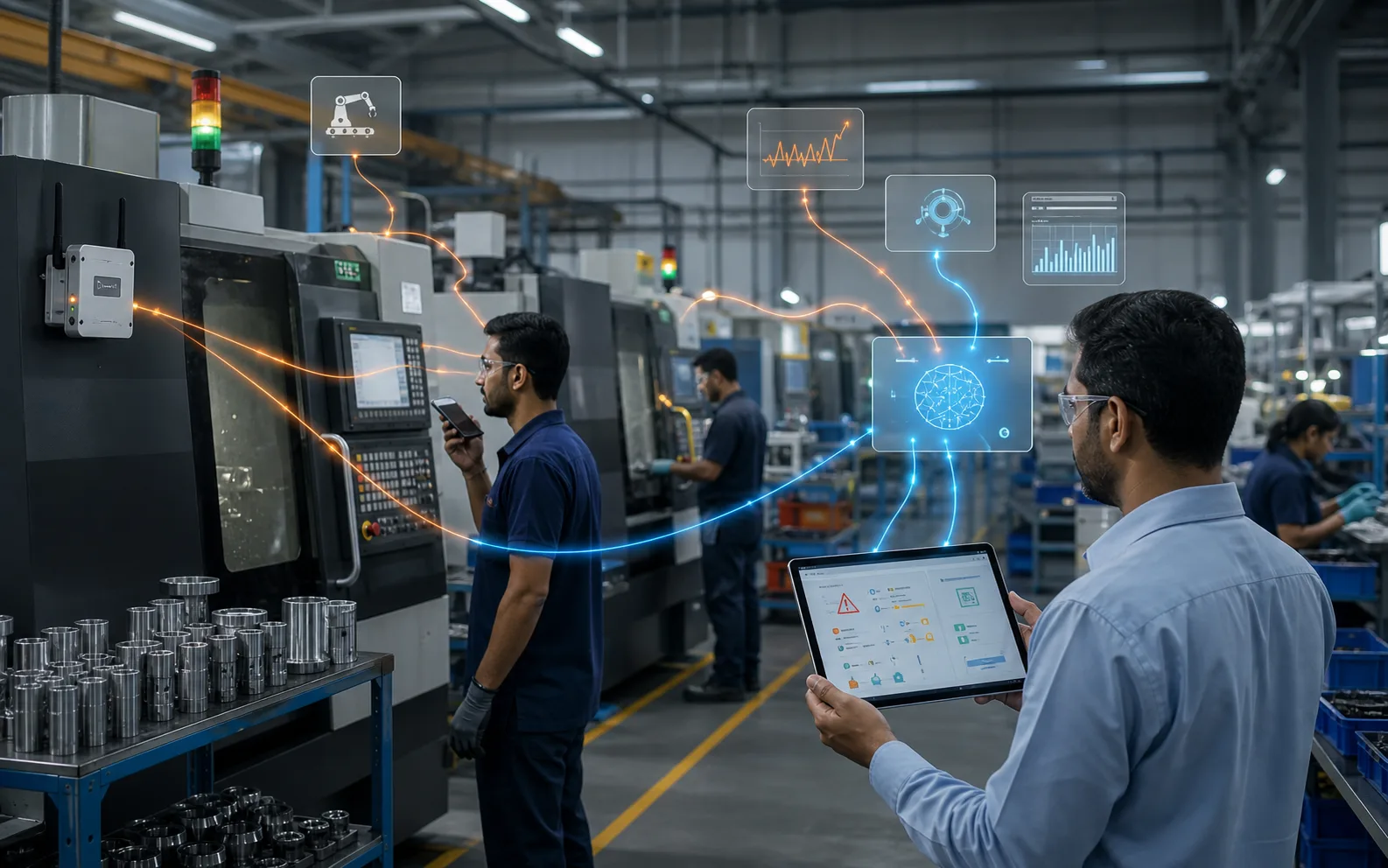
What Are the Biggest Obstacles to AI in Manufacturing?
The biggest obstacles to AI in manufacturing are rarely the AI models themselves. The harder problems are usually data quality, disconnected systems, unclear process ownership, weak adoption, unrealistic expectations, and lack of measurable goals.
Manufacturers often assume AI adoption is a technology project. In reality, it is an operations improvement project supported by technology.
AI succeeds when the business is ready to use better information. It struggles when the organization is still running on fragmented data and informal decisions.
Poor Data Quality
AI needs accurate, timely, and structured data. If item masters are messy, stock is updated late, downtime reasons are vague, and production entries are incomplete, AI recommendations will be unreliable.
Data quality is usually the first obstacle because it affects every use case: forecasting, maintenance, quality, inventory, planning, and reporting.
Disconnected Systems
Many factories use separate tools for sales, purchase, production, inventory, finance, quality, and maintenance. Some information sits in spreadsheets. Some stays in messages. Some exists only in people’s memory.
AI cannot create a complete picture when the operational picture is scattered. Integration and connected workflows matter.
Unclear Ownership
If AI flags a shortage, who acts? If it predicts machine risk, who reviews it? If it detects a production delay, who updates the plan?
AI without ownership becomes notification noise. Every alert and recommendation needs a responsible role and a defined next step.
Workforce Resistance
Workers may fear job loss, extra monitoring, or more complicated systems. Resistance increases when AI is introduced without explanation or training.
Adoption improves when teams see practical benefits: less manual reporting, faster updates, fewer surprises, and better support for daily work.
Unrealistic Expectations
AI is sometimes marketed as if it can solve every manufacturing problem immediately. That creates disappointment.
AI should be introduced with realistic expectations. It can support better decisions, but it still depends on process discipline, human judgment, and reliable data.
Weak ROI Measurement
If success is not defined, AI becomes hard to justify. Manufacturers should measure outcomes such as reporting time saved, downtime reduced, stockouts avoided, scrap reduced, or delivery reliability improved.
Clear measurement turns AI from a buzzword into a business case.
Where AICAN Optiwise Fits
AICAN Optiwise helps address many AI obstacles by creating connected operational visibility across production, inventory, purchase, sales, finance, and reporting. Better structure makes AI easier to implement and easier to trust.
AICAN supports manufacturers who want practical, measurable improvement rather than hype. Learn more about the company at About AICAN.
Founder’s Note
AI exposes the truth of a business. If data is weak, AI shows it. If ownership is unclear, AI shows it. If processes depend too much on memory, AI shows it.
That can feel uncomfortable, but it is also useful. The factories that face these obstacles honestly will build stronger systems.
FAQ
What is the biggest AI adoption barrier in manufacturing?
Poor data quality and disconnected systems are often the biggest barriers.
Can AI work without ERP?
It can work in limited ways, but connected ERP data makes AI far more useful and reliable.
How do manufacturers reduce resistance?
Explain the purpose, train teams, start with helpful use cases, and include workers in feedback.
Why do AI projects fail?
They often fail due to unclear goals, poor data, weak ownership, unrealistic expectations, or lack of adoption.
Final Thought
AI obstacles are solvable when manufacturers treat them as operational issues. Clean the data, connect the workflows, define ownership, and measure results. That is how AI becomes real.

Related Posts
Is AI Worth the Investment for My Factory?
Learn how to decide if AI is worth the investment for your factory by evaluating use cases, data readiness, costs, risks, ROI, and operational impact.
13 Jun 2026Read more →Manufacturing AI Mistakes to Avoid Before You Start
List manufacturing AI mistakes and controls for unclear use case, messy data, unsafe automation, no owner, weak security and unreviewed recommendations.
13 Jun 2026Read more →What's the Difference Between AI and Regular Automation?
Understand the difference between AI and regular automation in manufacturing, with practical examples for workflows, decisions, alerts, and predictive operations.
13 Jun 2026Read more →What Are the Risks of Using AI in Manufacturing?
Understand the risks of AI in manufacturing, including bad data, wrong recommendations, safety issues, security, job fear, over-automation, and implementation failure.
13 Jun 2026Read more →