
Can AI Actually Improve Production Scheduling?
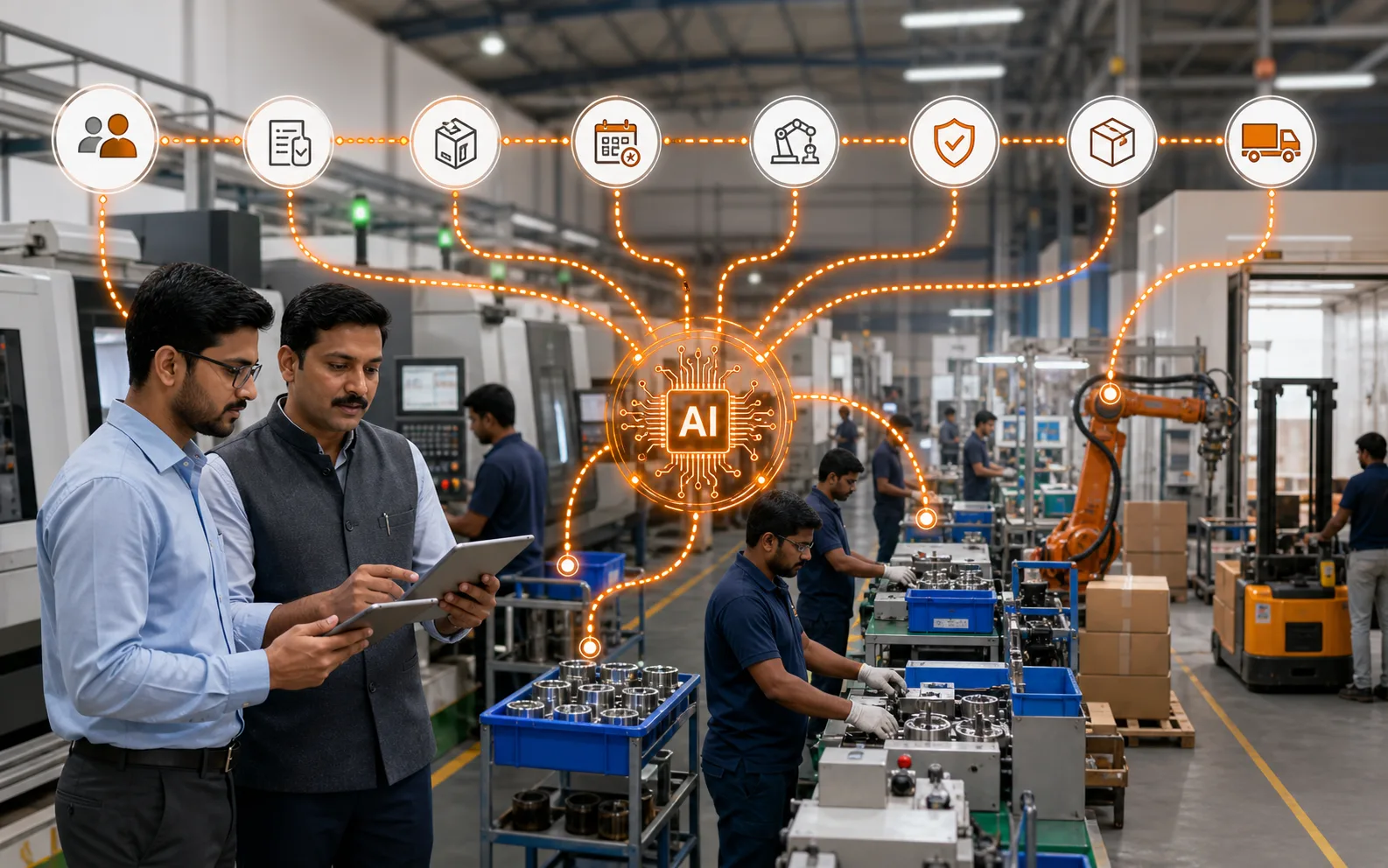
AI can improve production scheduling by connecting demand, machine capacity, material availability, labor, downtime risk, and delivery priorities.
Can AI Actually Improve Production Scheduling?
Yes, AI can improve production scheduling when it has access to the right operational data.
Production scheduling is difficult because many factors change at once: customer priorities, machine availability, material shortages, labor, changeovers, quality issues, maintenance needs, and dispatch deadlines. AI helps by comparing these signals faster than manual planning.
But AI scheduling works best when it supports planners, not when it ignores factory reality.
Why Manual Scheduling Gets Difficult
Manual production scheduling often depends on spreadsheets, supervisor judgment, phone calls, and last-minute adjustments.
This works for simple operations, but as orders, machines, and product variations grow, scheduling becomes harder to manage.
What AI Can Consider
AI can consider open orders, due dates, machine capacity, material availability, operator availability, changeover time, historical downtime, quality risk, and priority customers.
This helps planners understand which schedule is realistic, not just desirable.
Material Availability Matters
A schedule is useless if material is not available.
AI becomes much stronger when production planning is connected with inventory and purchase data.
AICAN Optiwise connects production with inventory, purchase, sales, finance, reports, IoT readiness, and AI workflows, helping scheduling decisions reflect real constraints.
AI Can Suggest Better Sequences
AI can help reduce unnecessary changeovers, identify machine loading conflicts, and suggest order sequences based on priority and resource availability.
Human planners should still review the suggestions, especially when customer relationships or urgent exceptions matter.
AI Can React Faster to Changes
If a machine goes down, material is delayed, or an urgent order arrives, AI can help show the impact and suggest revised options.
This makes rescheduling faster and less chaotic.
Where AICAN Optiwise Fits
AICAN Optiwise helps manufacturers improve scheduling by connecting shop floor data with the rest of the business. Production plans can be informed by stock, purchase, sales, finance, and reporting context.
Learn more at About AICAN.
Founder’s Note
Production scheduling is where ambition meets reality. A good schedule respects machines, material, people, and customers at the same time.
AI can help planners see those trade-offs more clearly.
FAQ
Can AI create production schedules automatically?
It can suggest schedules, but human review is important for practical constraints and customer context.
What data improves AI scheduling?
Orders, machine capacity, material availability, downtime history, changeover time, and delivery priorities.
Is AI scheduling useful for small factories?
Yes, especially when scheduling complexity is growing.
Can AI reduce delays?
It can reduce avoidable delays by identifying conflicts earlier.
Final Thought
AI can improve production scheduling by making constraints visible and options clearer.
When scheduling connects with inventory, purchase, and shop floor reality, manufacturers can plan with more confidence. That is the connected intelligence AICAN brings to Optiwise.

Related Posts
Is AI Worth the Investment for My Factory?
Learn how to decide if AI is worth the investment for your factory by evaluating use cases, data readiness, costs, risks, ROI, and operational impact.
13 Jun 2026Read more →Manufacturing AI Mistakes to Avoid Before You Start
List manufacturing AI mistakes and controls for unclear use case, messy data, unsafe automation, no owner, weak security and unreviewed recommendations.
13 Jun 2026Read more →What's the Difference Between AI and Regular Automation?
Understand the difference between AI and regular automation in manufacturing, with practical examples for workflows, decisions, alerts, and predictive operations.
13 Jun 2026Read more →What Are the Risks of Using AI in Manufacturing?
Understand the risks of AI in manufacturing, including bad data, wrong recommendations, safety issues, security, job fear, over-automation, and implementation failure.
13 Jun 2026Read more →