
Can AI Actually Predict When My Equipment Will Break?
Learn how predictive AI can identify equipment failure risks using machine data, maintenance history, production patterns, and operational signals.
Can AI Actually Predict When My Equipment Will Break?
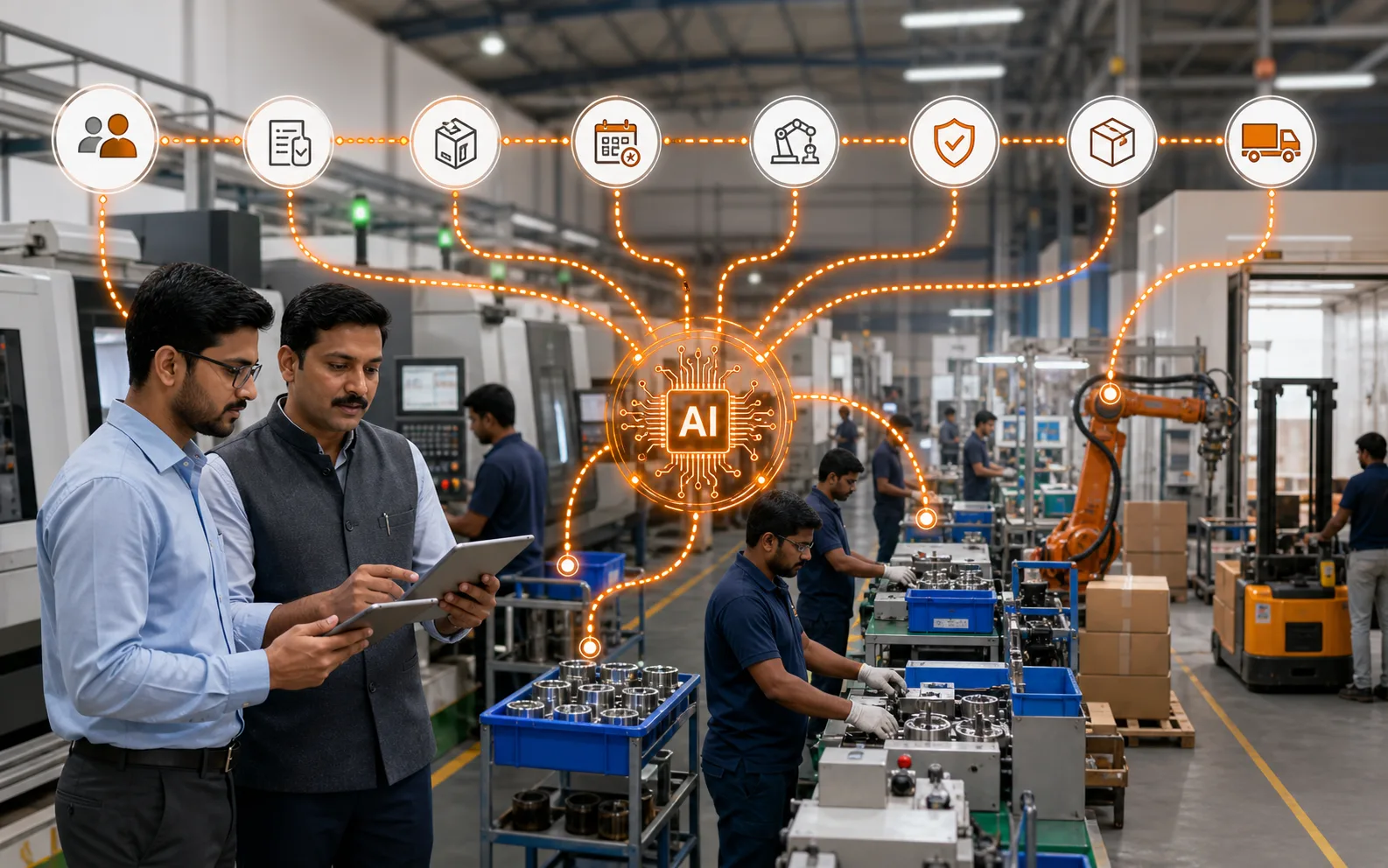
AI can often predict equipment failure risk, but it is important to understand what “predict” really means. AI does not magically know the future. It studies patterns in machine behavior, maintenance history, production load, downtime records, sensor readings, and operating conditions to identify when risk is increasing.
In practical terms, AI may not always say “this machine will fail at 3:40 PM on Thursday.” But it can say, “this machine is showing signs similar to previous breakdown patterns,” or “this asset needs inspection before the next heavy production run.”
That warning can be valuable enough to prevent downtime.
What Data Helps AI Predict Breakdowns
The best predictive maintenance systems use multiple signals. These may include vibration, temperature, current load, run hours, pressure, speed variation, lubrication history, maintenance records, spare replacement history, and operator observations.
Even without advanced sensors, manufacturers can start with useful data: breakdown dates, stoppage reasons, machine-wise downtime, production load, maintenance schedules, and recurring issue logs.
AI becomes stronger as the quality and consistency of data improve.
Why Traditional Maintenance Often Falls Short
Many factories rely on either reactive maintenance or fixed preventive schedules. Reactive maintenance waits until something breaks. Preventive maintenance checks equipment at planned intervals, whether the machine needs it or not.
Predictive AI adds another layer. It helps teams understand changing risk based on actual patterns. This can reduce unnecessary maintenance while also catching warning signs earlier.
What AI Can Detect
AI can identify repeated patterns that humans may miss. It can show whether a machine tends to fail after specific production loads, whether certain parts wear out faster under certain conditions, whether downtime is increasing gradually, or whether quality defects are linked to machine behavior.
It can also compare similar machines. If one machine is consuming more spares, causing more stoppages, or producing more rework than similar equipment, AI can flag it for review.
What AI Cannot Do Alone
AI cannot replace maintenance judgment. A model may raise an alert, but technicians still need to inspect, validate, and decide what action is needed.
AI also cannot perform well if failures are not recorded properly. If every breakdown reason is entered as “machine problem,” the system has little to learn from. Good predictive maintenance needs good failure classification.
How to Start With Predictive Maintenance
Start with a small set of critical machines. These should be machines where downtime is expensive, failure is frequent, or maintenance planning is difficult.
Clean the maintenance history, standardize failure reasons, capture downtime duration, connect production load data, and begin tracking alerts. Over time, add sensor data where it makes business sense.
A focused start is better than trying to predict every machine from day one.
Where AICAN Optiwise Fits
AICAN Optiwise helps manufacturers connect maintenance insights with production, inventory, purchase, and reporting workflows. Predictive maintenance is more useful when teams can also see spare availability, production commitments, and operational impact.
AICAN supports manufacturers in building the operational visibility AI needs. The goal is not only to predict breakdowns, but to help teams act before downtime damages delivery, cost, and customer trust. Learn more at About AICAN.
Founder’s Note
The value of predictive maintenance is not in sounding smart. It is in giving the maintenance team time.
Time to inspect. Time to arrange spares. Time to plan downtime. Time to prevent a small warning from becoming a production crisis. AI is useful when it gives people that time.
FAQ
Can AI predict equipment failure accurately?
AI can identify failure risk patterns, especially when machine data and maintenance history are reliable. Accuracy improves with better data.
Do I need IoT sensors for predictive maintenance?
Sensors help, but manufacturers can begin with maintenance records, downtime logs, spare usage, and production load data.
Which machines should be monitored first?
Start with critical machines that affect production heavily, fail often, or create high downtime cost.
Can AI replace maintenance teams?
No. AI supports maintenance teams by highlighting risk. Technicians still inspect, diagnose, and decide corrective action.
Final Thought
AI can help predict equipment breakdown risk, but it works best as an early warning system, not a fortune teller. When combined with maintenance expertise and clean records, it can reduce downtime and improve planning.

Related Posts
Is AI Worth the Investment for My Factory?
Learn how to decide if AI is worth the investment for your factory by evaluating use cases, data readiness, costs, risks, ROI, and operational impact.
13 Jun 2026Read more →Manufacturing AI Mistakes to Avoid Before You Start
List manufacturing AI mistakes and controls for unclear use case, messy data, unsafe automation, no owner, weak security and unreviewed recommendations.
13 Jun 2026Read more →What's the Difference Between AI and Regular Automation?
Understand the difference between AI and regular automation in manufacturing, with practical examples for workflows, decisions, alerts, and predictive operations.
13 Jun 2026Read more →What Are the Risks of Using AI in Manufacturing?
Understand the risks of AI in manufacturing, including bad data, wrong recommendations, safety issues, security, job fear, over-automation, and implementation failure.
13 Jun 2026Read more →