
Can AI Work With My Existing Equipment?
Learn how AI can work with existing manufacturing equipment using ERP data, maintenance history, machine logs, sensors, manual inputs, and phased integration.

Can AI Work With My Existing Equipment?
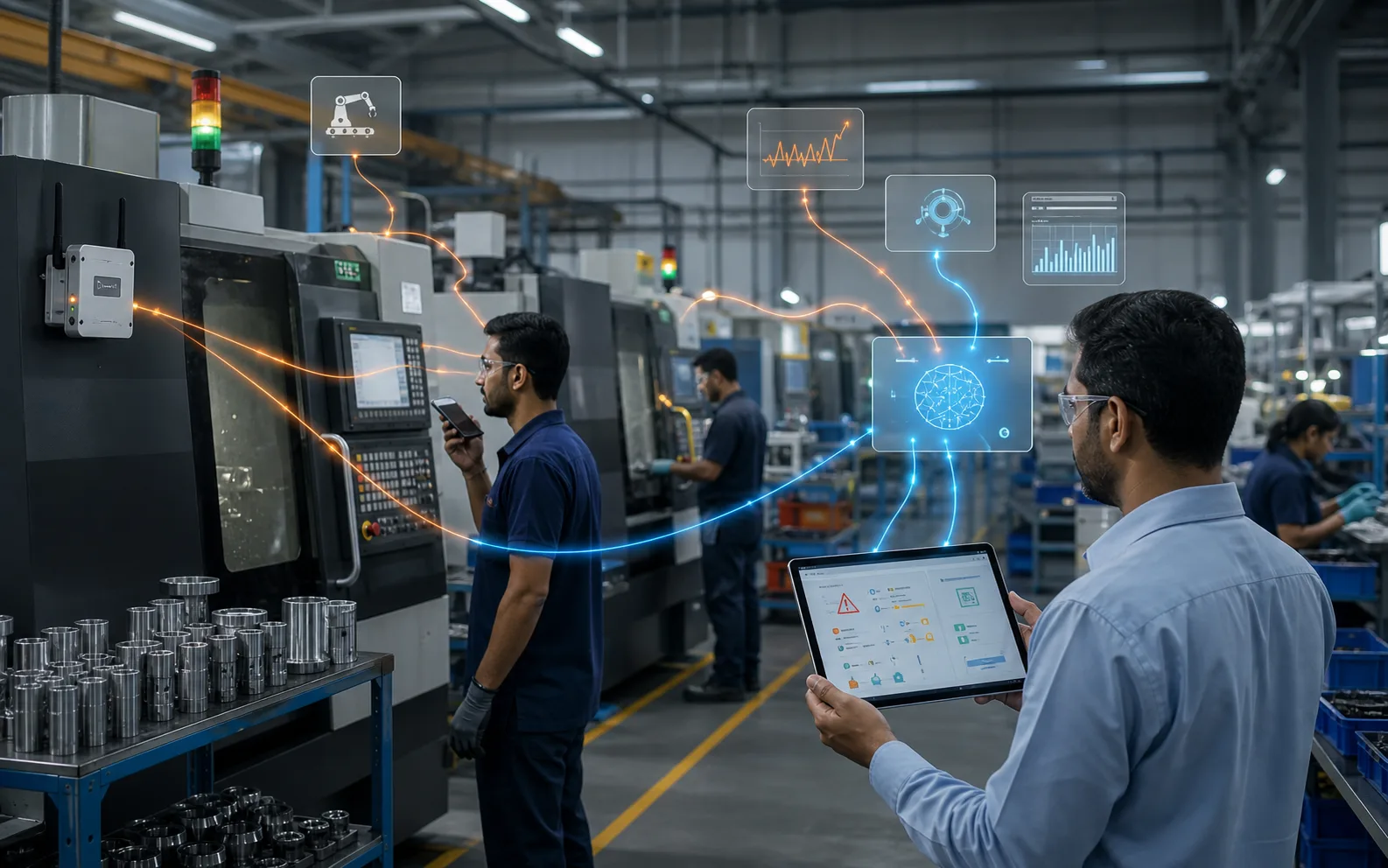
Yes, AI can often work with existing equipment. You do not always need to replace machines or build a fully connected smart factory before using AI.
The key is to understand what data your equipment and operations can provide today. Some machines already generate digital signals. Others may depend on maintenance logs, operator entries, production records, spare usage, and downtime history. AI can start with these available signals and become more advanced as integration improves.
Modernization does not have to happen all at once.
Start With What You Already Record
Many factories already record useful information even if machines are not fully connected. Work orders, production output, downtime, quality issues, maintenance activity, spare consumption, and inventory movement all create signals.
AI can use these records to identify patterns such as repeated stoppages, rising downtime, material delays, or quality issues linked to certain products or machines.
Sensors Help, But They Are Not Always Step One
Sensors can improve AI by capturing vibration, temperature, pressure, current, speed, and other machine behavior. But sensors are not always required for the first AI use case.
If your current pain is reporting, inventory planning, production delay visibility, or maintenance history analysis, ERP and operational data may be enough to start.
Add sensors where the business case is clear.
Older Machines Can Still Be Part of AI Workflows
Older equipment may not provide direct digital data, but teams can still capture operating hours, stoppage reasons, inspection results, and maintenance actions.
Even manual input can be valuable if it is consistent. The goal is to create enough reliable history for AI to identify patterns.
Integration Should Be Phased
Do not try to connect every machine immediately. Start with critical equipment where downtime is costly or production impact is high.
Track the data available, define what additional signals are needed, and connect gradually. A phased approach keeps cost and complexity under control.
AI Needs Operational Context
Machine data alone is not enough. A machine may show risk, but business impact depends on production schedules, customer orders, spare availability, and maintenance capacity.
AI becomes more useful when equipment signals are connected with ERP context.
Where AICAN Optiwise Fits
AICAN Optiwise helps manufacturers connect operational workflows so AI can use more than isolated machine readings. Production, inventory, purchase, sales, finance, and reporting context helps teams understand what equipment risk means for the business.
AICAN supports practical modernization where existing equipment can still contribute to smarter decisions. Learn more at About AICAN.
Founder’s Note
A factory should not feel forced to throw away working machines just to begin with AI. The smarter path is to respect what already exists and improve visibility around it.
AI adoption becomes practical when it starts from today’s reality and builds toward tomorrow’s capability.
FAQ
Do I need new machines for AI?
Not always. AI can start with ERP data, maintenance history, downtime logs, and manual records.
Are sensors necessary?
Sensors help for advanced predictive maintenance, but many AI use cases can start without them.
Can old machines be monitored?
Yes, if teams capture consistent downtime, maintenance, and operating data.
Which equipment should be connected first?
Start with critical machines where downtime affects production, delivery, or cost significantly.
Final Thought
AI can work with existing equipment when the implementation is practical. Start with available data, connect critical assets first, and expand where the return is clear.

Related Posts
Is AI Worth the Investment for My Factory?
Learn how to decide if AI is worth the investment for your factory by evaluating use cases, data readiness, costs, risks, ROI, and operational impact.
13 Jun 2026Read more →Manufacturing AI Mistakes to Avoid Before You Start
List manufacturing AI mistakes and controls for unclear use case, messy data, unsafe automation, no owner, weak security and unreviewed recommendations.
13 Jun 2026Read more →What's the Difference Between AI and Regular Automation?
Understand the difference between AI and regular automation in manufacturing, with practical examples for workflows, decisions, alerts, and predictive operations.
13 Jun 2026Read more →What Are the Risks of Using AI in Manufacturing?
Understand the risks of AI in manufacturing, including bad data, wrong recommendations, safety issues, security, job fear, over-automation, and implementation failure.
13 Jun 2026Read more →