
Can AI Work with My Existing Factory Equipment?
Learn whether AI can work with existing factory equipment, when sensors or IoT are needed, and how manufacturers can start with ERP, logs, and machine data.
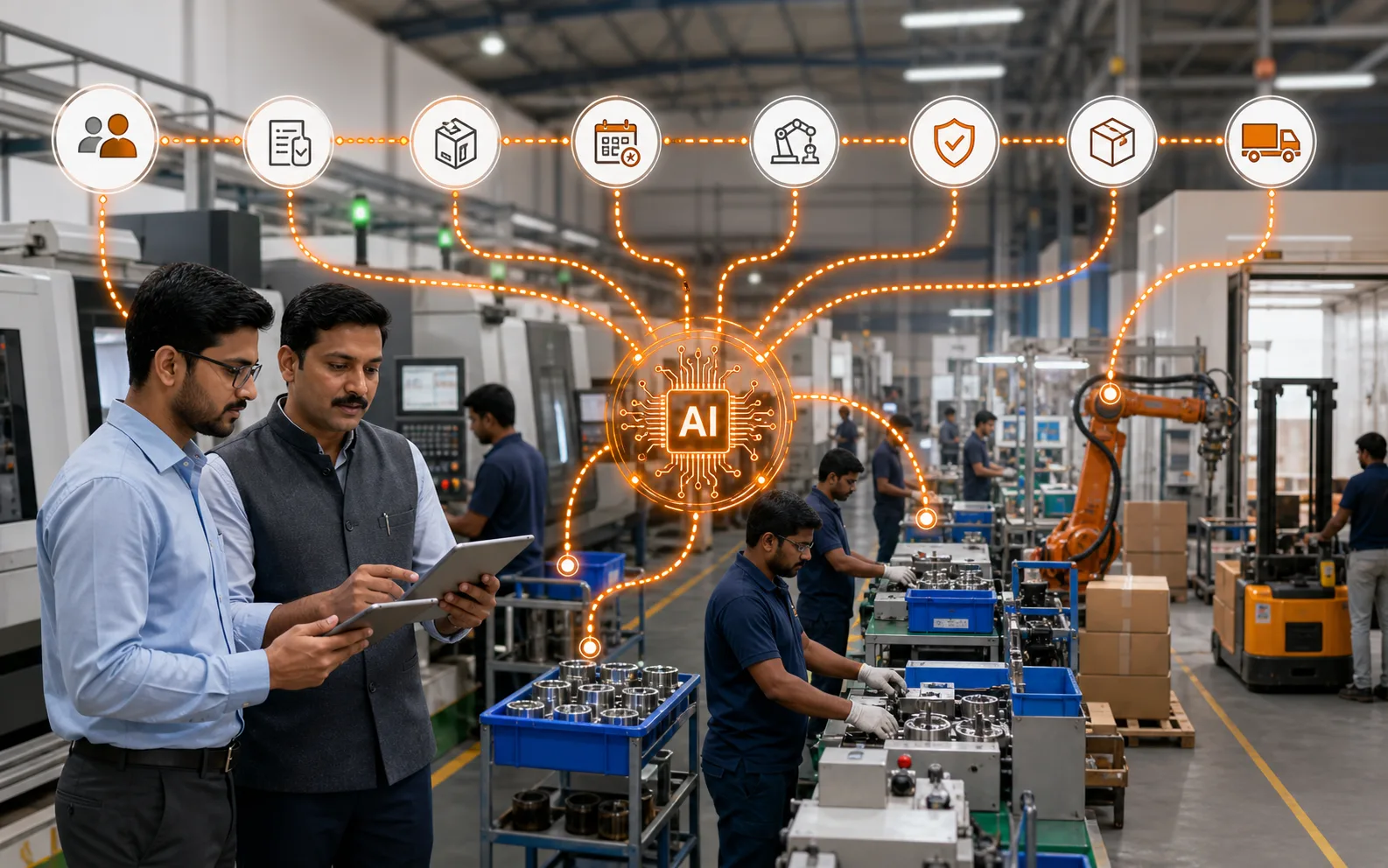
Can AI Work with My Existing Factory Equipment?
Yes, AI can often work with existing factory equipment, but the approach depends on what data the equipment can provide. You do not always need to replace machines to use AI. Many factories can start with ERP data, maintenance logs, production records, and simple sensors.
The important question is not whether the machine is new. The question is whether useful data can be captured.
AI Does Not Always Need Machine Connectivity
Some AI use cases do not need equipment data at all.
Examples include:
- SOP drafting
- Production report summaries
- Inventory analysis
- Quality trend analysis
- Purchase follow-up
- Training material
- Dispatch summaries
- Management dashboards
These use cases rely on business and process data, not machine signals.
When Equipment Data Is Needed
Equipment data becomes important for:
- Predictive maintenance
- Runtime analysis
- Downtime monitoring
- Temperature monitoring
- Vibration monitoring
- Energy usage analysis
- Machine utilization
- Real-time production tracking
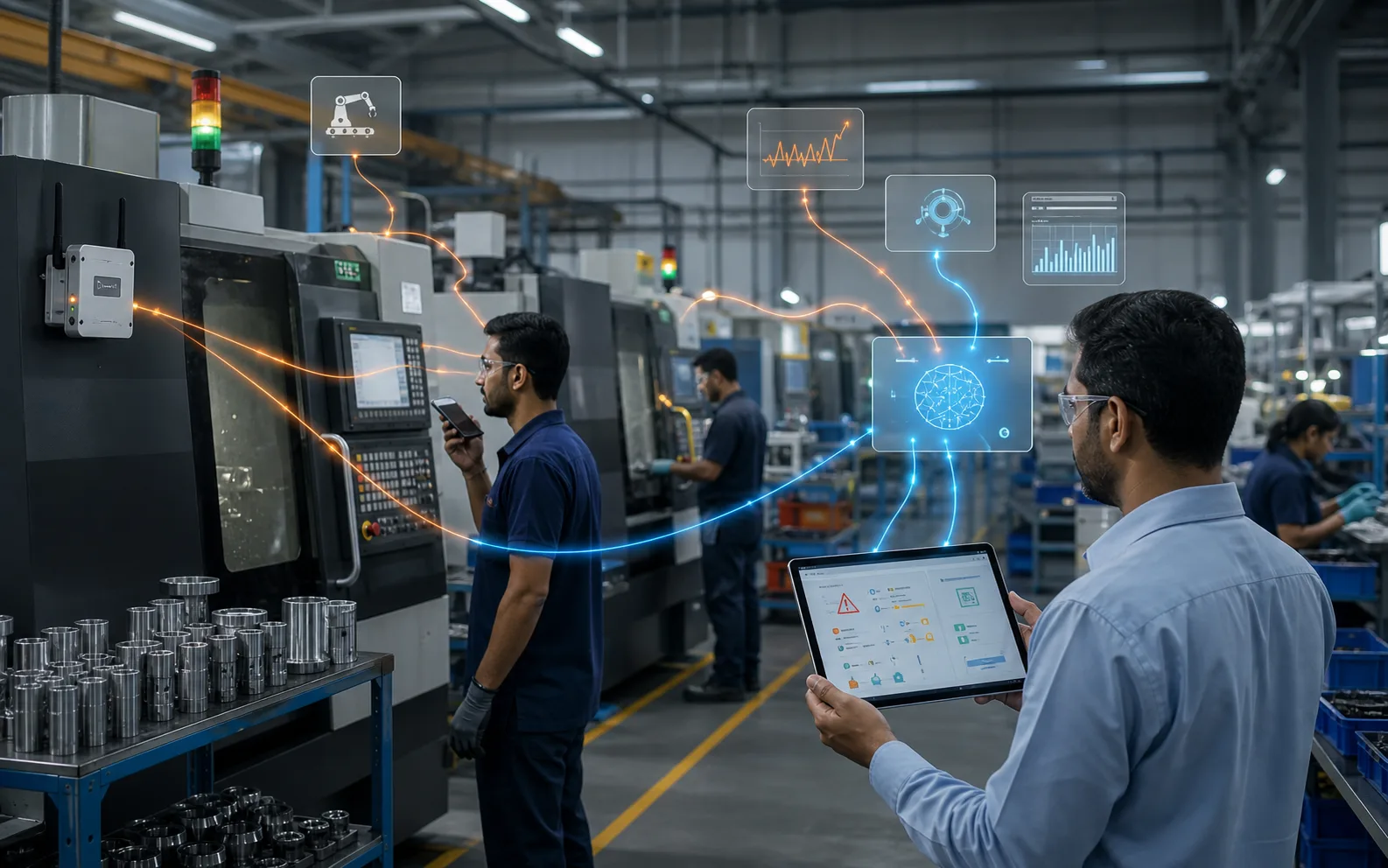
For these use cases, the machine must provide data directly or through added sensors.
Working with Older Machines
Older machines may not have built-in connectivity. That does not mean AI is impossible.
Manufacturers can use:
- External sensors
- IoT gateways
- Manual downtime logs
- Operator entry screens
- Barcode workflows
- Energy meters
- Maintenance records
- PLC connections where available
The right approach depends on machine type, cost, and use case.
Start with Critical Equipment
Do not connect every machine on day one. Start with equipment where downtime or performance loss is expensive.
Good starting points include:
- Bottleneck machines
- High-value machines
- Machines with repeated breakdowns
- Machines with long repair time
- Equipment affecting delivery commitments
- Safety-critical machines
This keeps the project focused.
Data Quality Is More Important Than Machine Age
A new machine with poorly captured data may be less useful than an older machine with disciplined downtime and maintenance records.
AI needs usable data. That can come from sensors, ERP, logs, or operator inputs.
What Integration May Involve
AI integration with equipment may involve:
- Sensor installation
- Gateway setup
- API integration
- PLC data access
- Dashboard configuration
- Alert rules
- Data storage
- Maintenance workflow mapping
- User training
This should be planned carefully.
Avoid Over-Investing Too Early
Do not buy sensors, gateways, or machine upgrades without a clear use case.
Start by asking:
- What problem are we solving?
- What machine data is needed?
- How will teams act on the data?
- What downtime cost are we trying to reduce?
- Who will monitor alerts?
Technology should follow the business problem.
Where AICAN Optiwise Fits
AICAN Optiwise is designed with ERP, workflows, reports, IoT readiness, and AI agents for manufacturers. It can help manufacturers begin with connected operational workflows and then add equipment data where it creates value.
This is practical for MSMEs because not every factory can replace machines. The smarter path is to connect what matters first.
Learn more at AICAN Optiwise and About AICAN.
Founder’s Note
AICAN’s view is that manufacturers should not feel forced to replace good machines just to become digital. The goal is to make existing operations more visible and intelligent.
Optiwise is built around that reality: connect workflows first, bring in machine and IoT data where useful, and let AI support decisions with context.
FAQ
Do I need new machines to use AI?
No. Many AI use cases work with ERP data, logs, documents, and existing records.
Can old machines be connected to AI?
Often yes, using sensors, gateways, operator inputs, or maintenance records.
When do I need sensors?
Sensors are useful for real-time monitoring, predictive maintenance, vibration, temperature, and energy analysis.
Should I connect all machines at once?
No. Start with critical machines where downtime or performance loss is costly.
Can AI work without IoT?
Yes. AI can support reports, inventory, quality, planning, and documentation without IoT.
Final Thought
AI can work with existing factory equipment if the right data can be captured. Start with the problem, connect the most important equipment first, and expand based on value.
Next step: Explore AICAN Optiwise if your factory wants to combine ERP, AI, and IoT-ready manufacturing workflows without unnecessary machine replacement.

Related Posts
Is AI Worth the Investment for My Factory?
Learn how to decide if AI is worth the investment for your factory by evaluating use cases, data readiness, costs, risks, ROI, and operational impact.
13 Jun 2026Read more →Manufacturing AI Mistakes to Avoid Before You Start
List manufacturing AI mistakes and controls for unclear use case, messy data, unsafe automation, no owner, weak security and unreviewed recommendations.
13 Jun 2026Read more →What's the Difference Between AI and Regular Automation?
Understand the difference between AI and regular automation in manufacturing, with practical examples for workflows, decisions, alerts, and predictive operations.
13 Jun 2026Read more →What Are the Risks of Using AI in Manufacturing?
Understand the risks of AI in manufacturing, including bad data, wrong recommendations, safety issues, security, job fear, over-automation, and implementation failure.
13 Jun 2026Read more →