
Can IoT Help Me Compete With Larger Manufacturers?
Learn how IoT platforms help smaller manufacturers compete with larger companies through visibility, faster decisions, better reliability, and stronger customer confidence.
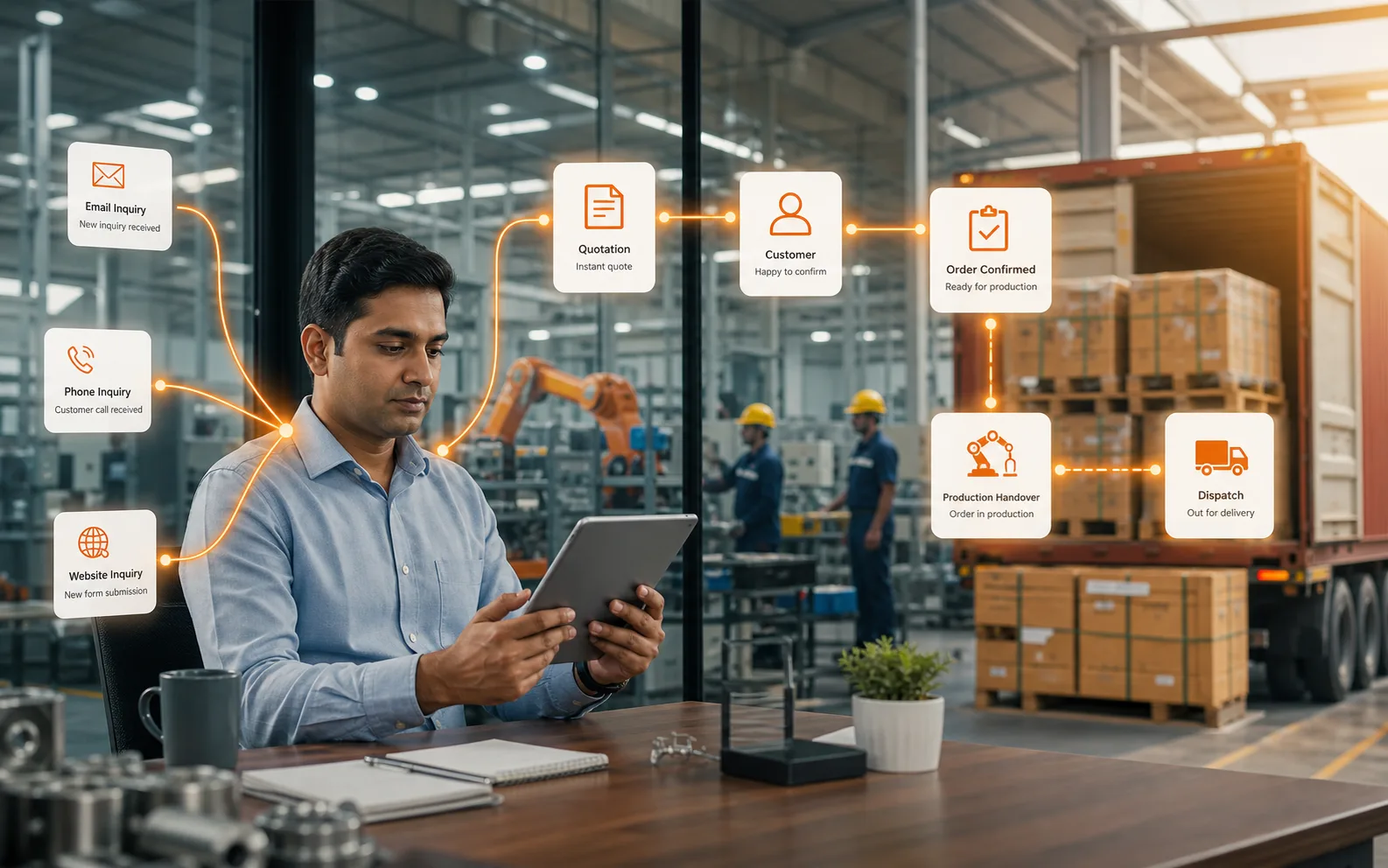
Can IoT Help Me Compete With Larger Manufacturers?
Yes, IoT can help smaller manufacturers compete with larger manufacturers, but not by making them look big.
It helps by making them sharper.
Large manufacturers often have more machines, more capital, more departments, and more formal systems. Smaller manufacturers usually have speed, customer closeness, flexibility, and owner involvement. The problem is that those strengths weaken when the business grows without better visibility. The owner cannot personally track every machine. Supervisors cannot keep every update in memory. Customers expect reliable delivery. Margins leave less room for avoidable mistakes.
IoT helps smaller manufacturers protect their natural advantages while adding the control they need to scale.
For teams evaluating AICAN Optiwise, the opportunity is practical: use connected factory data to respond faster, reduce uncertainty, and build customer confidence.
Competing starts with knowing what is happening
A larger competitor may have formal reporting systems, dedicated planning teams, and structured reviews. A smaller manufacturer may rely more on direct communication and experience.
That works until operations become too complex.
When there are multiple machines, jobs, operators, shifts, materials, and delivery commitments, informal visibility breaks down. The owner asks for status, the supervisor checks the floor, the operator gives an update, stores confirms material, maintenance adds another detail, and by then the information is already aging.
IoT gives smaller manufacturers a shared operating view. Machine status, production progress, downtime, inventory signals, and alerts become easier to see. This allows smaller teams to act with the confidence of a more structured organization without adding unnecessary bureaucracy.
Faster decisions become a competitive advantage
Small manufacturers often win because they can move quickly.
But speed without data can become guesswork. A customer asks whether an urgent order can be delivered. The owner wants to say yes, but production status is unclear. A machine may be behind. Material may be short. Maintenance may know a recurring issue is likely. Without visibility, the answer is based on optimism.
IoT makes the decision more grounded.
If the team can see current capacity, machine availability, job progress, and bottlenecks, it can respond faster and more honestly. Sometimes the answer may still be yes. Sometimes the answer may be, “We can deliver part quantity by Friday and the balance by Monday.” That level of clarity can build more trust than a confident promise that fails later.
Delivery reliability improves customer confidence
Customers may forgive a small supplier for not having the biggest plant. They are less forgiving when deliveries are unpredictable.
IoT helps improve delivery reliability by making risks visible earlier. If a job falls behind, the team can intervene sooner. If a critical machine is repeatedly stopping, maintenance can investigate before the delay becomes severe. If material is not ready, planning can adjust before the line waits.
The benefit is not only internal efficiency. It is customer confidence.
A smaller manufacturer that communicates accurately, delivers consistently, and handles exceptions professionally can compete strongly against larger suppliers that move slowly or treat customers as one account among many.
Waste reduction protects margins
Smaller manufacturers often operate with tighter margins and less buffer.
Hidden downtime, rework, excess overtime, poor material coordination, and late quality detection can quietly eat profit. Larger companies may absorb inefficiency for longer. Smaller companies feel it faster.
IoT gives teams the ability to see waste patterns more clearly:
- which machines lose the most time
- which shifts face repeated stoppages
- which jobs create rework
- which material delays keep returning
- which maintenance issues are recurring
- which production assumptions are unrealistic
Once these patterns are visible, improvement becomes more targeted. The manufacturer does not need a large continuous-improvement department to start making better decisions. It needs reliable data and disciplined follow-up.
Professional reporting improves buyer trust
Many customers, especially larger buyers, want suppliers who can provide clear status, traceability, and confidence.
A smaller manufacturer that can share accurate production updates, quality records, dispatch readiness, or machine-capacity visibility may appear more dependable. This does not mean exposing internal data casually. It means having the ability to answer customer questions with confidence.
Professional reporting also helps during audits, vendor reviews, and performance discussions. A manufacturer that can show data-backed improvement stands apart from one that relies only on verbal assurance.
IoT helps owners delegate without losing control
In many growing factories, the owner is the central information system.
Every important update flows through them. This works in the early stage, but it becomes a bottleneck. The owner cannot scale if every production decision, customer update, material issue, and machine problem requires personal checking.
IoT helps by making the factory visible without requiring the owner to physically chase every detail. Supervisors can act on dashboards. Maintenance can track machine issues. Planners can use current data. Owners can review exceptions and trends instead of managing every small status update.
This makes delegation safer.
A smaller manufacturer can become more professional without losing the owner's operating grip.
Technology alone is not enough
IoT creates an advantage only when the team uses it.
If dashboards are ignored, alerts have no owner, downtime reasons are not captured, or managers keep running the factory through informal calls alone, the value will be limited. Competing with larger manufacturers requires operating discipline.
The good news is that smaller companies can often adopt discipline faster because decision-makers are closer to the floor. If the owner and supervisors commit to using the system in daily reviews, habits can change quickly.
Where AICAN Optiwise fits
AICAN Optiwise is designed to give manufacturers practical visibility across production, machines, inventory, and operational decisions. For smaller manufacturers, that visibility can create a more professional, reliable, and scalable way of working without making the business heavy.
AICAN supports manufacturers who want to grow with better systems, not just more effort. More about the company is available at About AICAN.
Founder’s Note
Small manufacturers do not need to imitate large companies to win. They need to keep their speed and closeness while removing the blind spots that slow them down. IoT is valuable when it gives a growing factory the confidence to promise carefully, deliver reliably, and improve continuously.
FAQs
Can IoT really help a small manufacturer compete?
Yes. It helps by improving visibility, delivery reliability, production decisions, waste reduction, and customer confidence.
Do large manufacturers still have an advantage?
They may have more capital and structure, but smaller manufacturers can compete through speed, flexibility, service, and better use of data.
Will IoT make my company look more professional to customers?
It can, especially if it improves reporting accuracy, delivery updates, traceability, and responsiveness.
Is IoT too expensive for smaller manufacturers?
It does not have to be if the rollout starts with a focused problem and expands after value is proven.
What is the first competitive benefit to expect?
Usually, the first benefit is better visibility: knowing earlier where production, machines, or delivery commitments are at risk.

Related Posts
Is AI Worth the Investment for My Factory?
Learn how to decide if AI is worth the investment for your factory by evaluating use cases, data readiness, costs, risks, ROI, and operational impact.
13 Jun 2026Read more →Manufacturing AI Mistakes to Avoid Before You Start
List manufacturing AI mistakes and controls for unclear use case, messy data, unsafe automation, no owner, weak security and unreviewed recommendations.
13 Jun 2026Read more →What's the Difference Between AI and Regular Automation?
Understand the difference between AI and regular automation in manufacturing, with practical examples for workflows, decisions, alerts, and predictive operations.
13 Jun 2026Read more →What Are the Risks of Using AI in Manufacturing?
Understand the risks of AI in manufacturing, including bad data, wrong recommendations, safety issues, security, job fear, over-automation, and implementation failure.
13 Jun 2026Read more →