
Can IoT Actually Reduce Production Downtime?
Learn how IoT can reduce production downtime by improving machine visibility, alerts, condition monitoring, maintenance response, downtime analysis, and production planning.
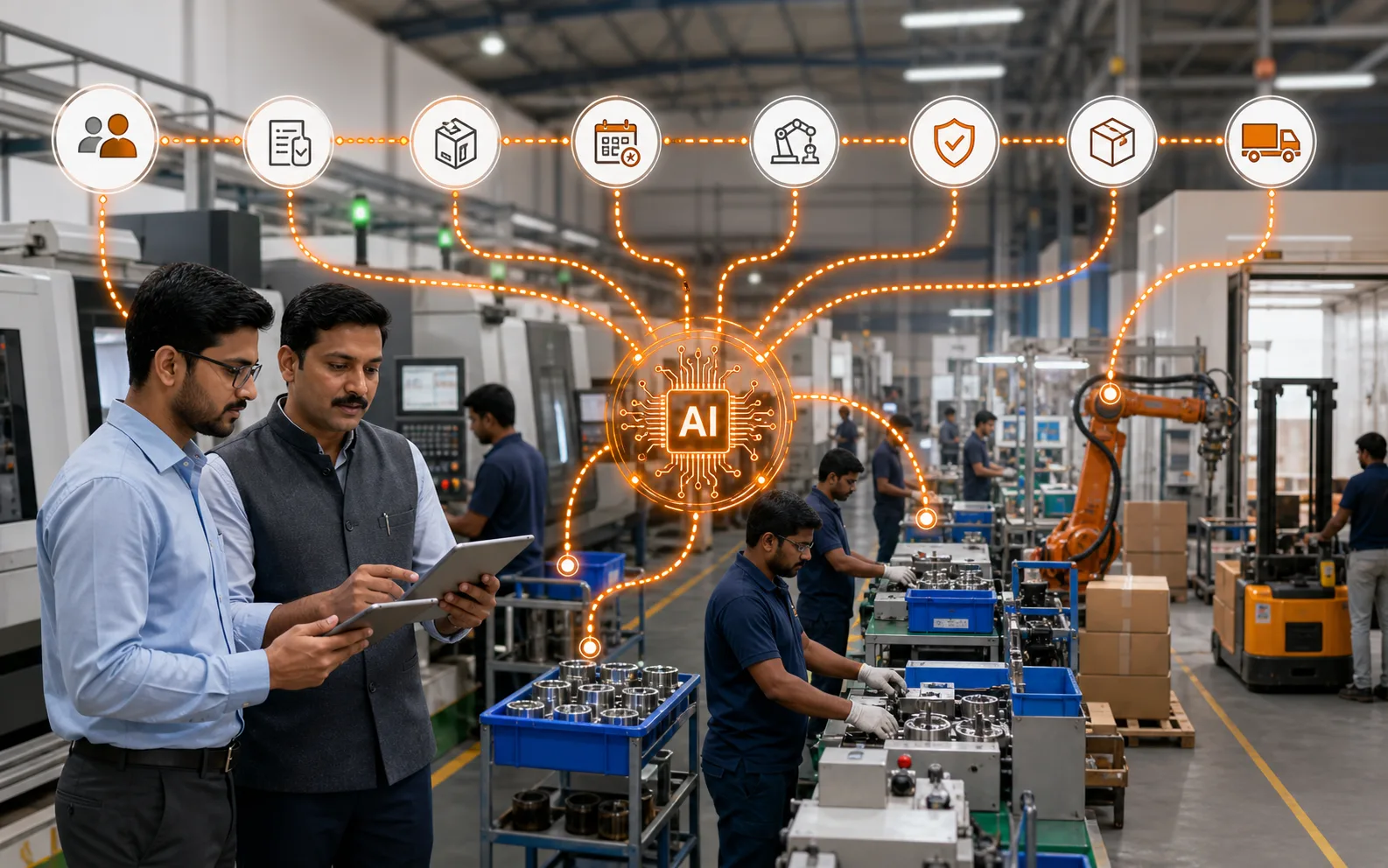
Can IoT Actually Reduce Production Downtime?
Yes, IoT can reduce production downtime, but not by magic.
IoT does not repair machines by itself. It does not replace maintenance skill. It does not remove the need for preventive maintenance, spare planning, operator discipline, or good production scheduling.
What IoT can do is make downtime visible earlier, measure it more accurately, reveal repeated patterns, and help teams respond before small issues become large losses.
That difference matters. In many factories, downtime is not fully understood. A machine stops, someone calls maintenance, the shift adjusts, production moves around the issue, and by the end of the day the real loss is only roughly known. Repeated minor stops may never be captured. Slow response may be hidden. A machine may be blamed when the true cause was material waiting, setup delay, quality hold, or operator unavailability.
For manufacturers exploring IoT for Manufacturing, downtime reduction is one of the strongest starting use cases because it is concrete, measurable, and connected directly to production output.
This guide explains how IoT can reduce downtime, where it helps most, what results to expect realistically, and how AICAN Optiwise can connect downtime data with factory decisions.
IoT Makes Machine Stops Visible Faster
The first way IoT helps is simple: it shows when a machine stops.
In a manual system, machine stoppage may depend on someone noticing and reporting it. If the supervisor is busy, maintenance is elsewhere, or the operator waits before escalating, valuable time is lost.
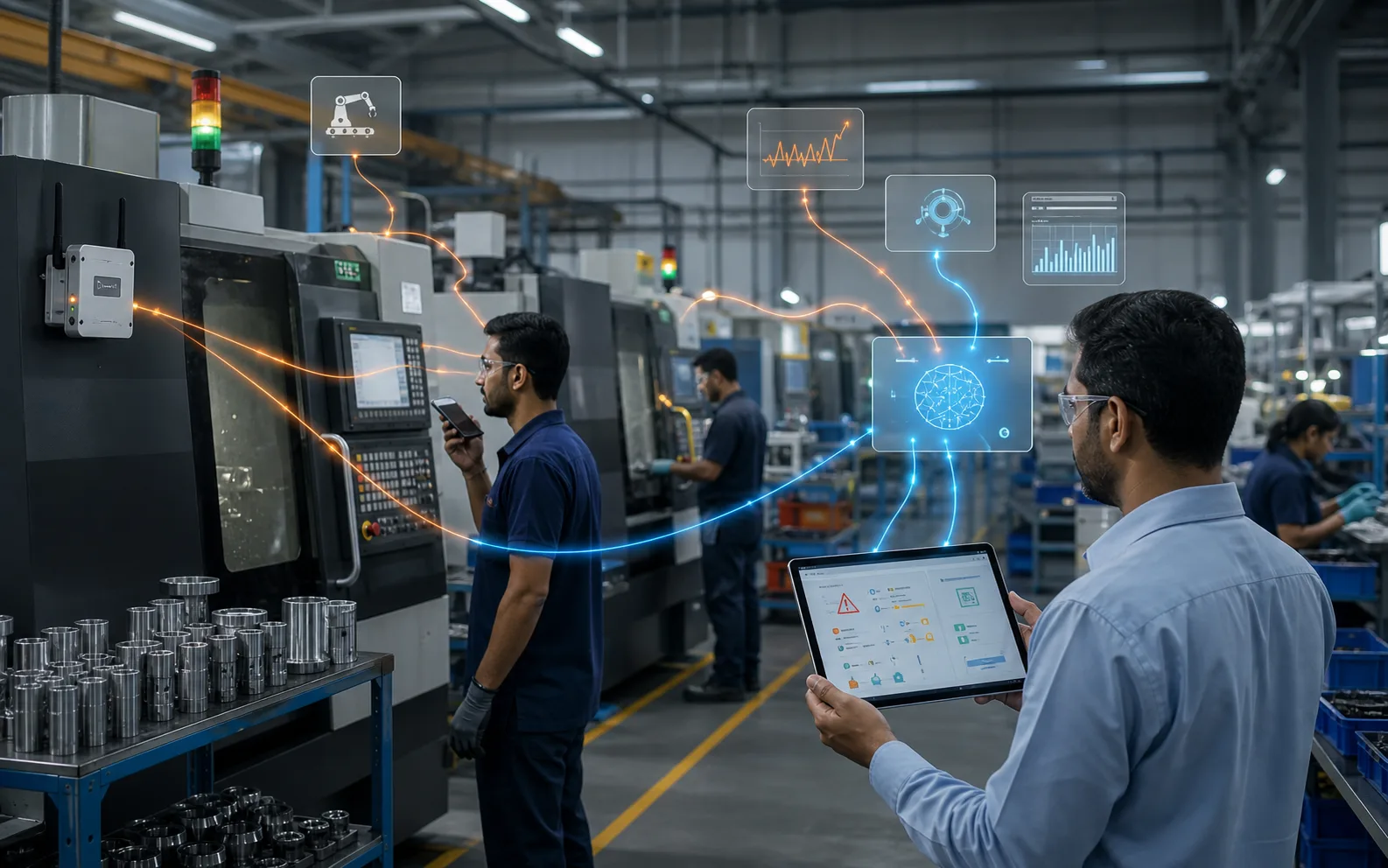
With connected machine status, a system can detect running, stopped, idle, or abnormal states faster. This can trigger dashboards or alerts that show:
- Which machine stopped.
- When the stop started.
- How long it has been stopped.
- Whether the machine is critical.
- Which job was running.
- Whether production target or dispatch is affected.
Faster visibility reduces the time between stop and response. That alone can reduce downtime in factories where delays are caused by late reporting or slow escalation.
IoT Captures Downtime Duration More Accurately
Accurate downtime duration is important because poor measurement leads to poor decisions.
Manual downtime records often depend on memory. A stop that began at 10:12 may be recorded as 10:30. A restart may not be updated immediately. Short stops may be ignored. Long stops may be rounded.
IoT can capture start and stop signals closer to real time, helping factories understand actual downtime more clearly.
This supports better analysis:
- Total downtime by machine.
- Downtime by shift.
- Downtime by job.
- Downtime by reason.
- Repeat stoppages.
- Longest stoppages.
- Downtime trend over time.
When downtime is measured honestly, teams can focus on the real losses instead of estimates.
IoT Helps Identify Repeated Minor Stops
Repeated minor stops are one of the most overlooked production losses.
A machine that stops for two or three minutes many times a shift may not create a dramatic breakdown event. But the accumulated loss can be significant. These small stops can also signal deeper process instability.
IoT is useful because it can capture short stops that manual systems often miss.
Repeated minor stops may point to:
- Sensor issues.
- Feeding problems.
- Tool wear.
- Material variation.
- Operator adjustments.
- Loose connections.
- Program or control issues.
- Cleaning or jamming problems.
Once visible, these patterns can be reviewed by production and maintenance teams. The factory can then act on the root cause instead of accepting the loss as normal.
IoT Supports Condition Monitoring
For some machines and processes, IoT can monitor condition signals such as vibration, temperature, current, pressure, flow, humidity, or other operating values.
When these signals move outside normal patterns, the system can warn teams before failure becomes severe.
Condition monitoring can help with:
- Early detection of abnormal machine behavior.
- Better preventive maintenance planning.
- Reduced surprise breakdowns.
- Evidence for maintenance diagnosis.
- Improved spare planning for critical assets.
This does not mean every factory needs advanced predictive maintenance on day one. Many manufacturers should first get basic machine status and downtime tracking right. Condition monitoring can be added where the machine is critical and the signal is meaningful.
IoT Improves Maintenance Response
Downtime reduction is not only about preventing failures. It is also about responding better when failures happen.
IoT can improve maintenance response by showing open machine issues, alert time, stop duration, and priority.
A useful maintenance view should show:
- Machines currently stopped.
- Duration of each stop.
- Jobs affected.
- Reason entered or pending.
- Maintenance response status.
- Criticality of the machine.
- Dispatch or production impact.
This helps maintenance teams prioritize. A minor issue on a non-critical machine may wait. A long stop on a bottleneck machine running an urgent order may need immediate attention.
Without this visibility, maintenance priority is often driven by calls, pressure, or habit.
IoT Connects Downtime to Production Impact
A machine stop matters because it affects production.
IoT data becomes more useful when connected with the production plan and work order. This allows the factory to understand not only that a machine stopped, but what the stop means.
For example:
- Which job was running?
- What quantity was planned?
- What quantity was produced before the stop?
- Is the job urgent?
- Is the next operation waiting?
- Is dispatch at risk?
- Can production be shifted to another machine?
This context helps teams make better decisions. If a stoppage affects a customer commitment, escalation should be faster. If there is buffer, the team may handle it differently.
Downtime reduction is easier when the factory can see impact, not just machine status.
IoT Helps Separate Machine Downtime From Other Delays
Not every idle machine is a machine failure.
A machine may be stopped because material is not available, the previous operation is delayed, quality approval is pending, the operator is unavailable, setup is incomplete, or there is no job assigned.
IoT can detect that a machine is not running, but the system also needs reason capture and workflow context to classify the cause correctly.
This distinction is important. If all idle time is blamed on machines, maintenance reports look worse than reality and the real issue stays unsolved.
Good downtime tracking should separate:
- Breakdown.
- Setup.
- Material waiting.
- Quality hold.
- Operator unavailable.
- Planned maintenance.
- No production plan.
- Utility issue.
This helps each department own the right improvement action.
IoT Can Reduce Time Lost in Reporting
In many factories, the first loss is not repair time. It is reporting time.
A machine stops. The operator waits. The supervisor notices later. Maintenance is called after delay. The technician reaches the machine. Diagnosis begins. The total downtime includes all of this.
IoT can reduce reporting delay by triggering alerts automatically when a machine stop crosses a threshold.
For example:
- Alert operator or supervisor after 5 minutes.
- Alert maintenance after 10 minutes.
- Escalate to plant head after 30 minutes on a critical machine.
- Notify planning if an urgent order is affected.
This structured escalation helps issues move faster without depending only on manual follow-up.
IoT Helps With Root Cause Analysis
After a downtime event, teams need to understand why it happened.
IoT can support root cause analysis by providing data around the event:
- Machine status before stop.
- Alarm history.
- Operating parameters.
- Frequency of similar stops.
- Job and product running.
- Operator shift.
- Maintenance action taken.
- Time to respond and repair.
This evidence helps teams move beyond opinions. It also helps identify repeat problems that deserve permanent fixes.
A factory may discover that what looked like random breakdowns are actually linked to one product, one material grade, one shift pattern, one sensor, or one setup practice.
IoT Helps Planning Use Real Capacity
Production planning often assumes machines are available unless marked otherwise.
If downtime data is poor, planning becomes optimistic. Jobs are scheduled on machines that are unreliable, overloaded, under maintenance, or repeatedly losing time.
IoT-based downtime tracking helps planning understand real machine availability.
This can improve:
- Scheduling accuracy.
- Capacity planning.
- Bottleneck management.
- Alternate machine decisions.
- Delivery commitment planning.
A factory that understands true machine availability can promise more realistically and recover faster when disruptions happen.
What Results Should Manufacturers Expect?
IoT can support downtime reduction, but results depend on action.
If the system only displays stops and nobody changes response, maintenance planning, spare availability, operator practice, or preventive maintenance, downtime will not improve much.
Real improvement comes when teams use the data to:
- Respond faster.
- Fix repeat issues.
- Improve preventive maintenance.
- Plan spares better.
- Reduce setup delays.
- Improve material readiness.
- Escalate critical stops.
- Review downtime patterns daily and weekly.
IoT provides visibility. The factory must convert visibility into discipline.
Where AICAN Optiwise Fits
AICAN Optiwise helps manufacturers connect downtime visibility with production, maintenance, quality, inventory, and dispatch workflows.
This connection is important because downtime is rarely isolated. A stopped machine may delay a job, create WIP ageing, affect quality timing, require material changes, or put dispatch at risk. When the system shows this context, teams can prioritize better.
Optiwise can help manufacturers work toward:
- Live machine status visibility.
- Downtime tracking and reason capture.
- Alerts for long or repeated stops.
- Maintenance and production coordination.
- Downtime impact linked to jobs and dispatch.
- Management dashboards for daily review.
AICAN builds practical systems for manufacturers who want clearer factory control. Learn more at About AICAN.
FAQ
Can IoT reduce production downtime?
Yes, IoT can help reduce production downtime by detecting machine stops faster, measuring downtime accurately, identifying repeated issues, supporting condition monitoring, and improving maintenance response.
Does IoT prevent all machine breakdowns?
No. IoT does not prevent every breakdown. It improves visibility and early warning, but downtime reduction also requires maintenance discipline, spare planning, operator training, and management action.
What machines should be connected first?
Start with bottleneck machines, critical machines, machines with frequent downtime, or machines that affect dispatch commitments. A focused starting point is usually better than connecting every machine at once.
What data is useful for downtime reduction?
Useful data includes machine running or stopped status, downtime start and end time, reason codes, job affected, machine alarms, repeated stops, condition signals, maintenance response time, and production impact.
Is condition monitoring required for every machine?
No. Condition monitoring is most useful for critical machines where signals such as vibration, temperature, current, or pressure can indicate failure risk. Many factories should start with basic downtime visibility first.
How does AICAN Optiwise support downtime reduction?
AICAN Optiwise helps connect downtime data with jobs, production plans, maintenance action, quality status, and dispatch risk so teams can see not only that a machine stopped, but why it matters.
Founder’s Note
Downtime reduction begins with honesty.
Factories often know they are losing time, but not exactly where, why, and how often. Once the data becomes visible, the conversation changes. It is no longer only about who called maintenance late or which machine caused trouble. It becomes a discussion about patterns, priorities, and permanent fixes.
At AICAN, we see IoT as valuable when it helps the factory act sooner. The sensor is only the beginning. The real value comes when machine data is connected to the job, the plan, and the customer commitment.
Final Thought
IoT can reduce downtime when it is used as an operating tool, not just a monitoring display.
It helps manufacturers see stops faster, measure losses accurately, identify repeat issues, and respond with better context. When combined with strong maintenance and production discipline, IoT becomes a practical way to improve uptime and Factory Floor Visibility.

Related Posts
Is AI Worth the Investment for My Factory?
Learn how to decide if AI is worth the investment for your factory by evaluating use cases, data readiness, costs, risks, ROI, and operational impact.
13 Jun 2026Read more →Manufacturing AI Mistakes to Avoid Before You Start
List manufacturing AI mistakes and controls for unclear use case, messy data, unsafe automation, no owner, weak security and unreviewed recommendations.
13 Jun 2026Read more →What's the Difference Between AI and Regular Automation?
Understand the difference between AI and regular automation in manufacturing, with practical examples for workflows, decisions, alerts, and predictive operations.
13 Jun 2026Read more →What Are the Risks of Using AI in Manufacturing?
Understand the risks of AI in manufacturing, including bad data, wrong recommendations, safety issues, security, job fear, over-automation, and implementation failure.
13 Jun 2026Read more →