
Can Older Factories Use Modern AI Technology?
Learn how older factories can adopt modern AI technology without replacing every machine, starting with connected data, workflows, and phased implementation.

Can Older Factories Use Modern AI Technology?
Yes, older factories can use modern AI technology. They do not need to replace every machine or rebuild the entire plant before starting. In many cases, the best first step is not machine automation. It is connecting the factory’s existing workflows and data so decisions become clearer.
Many Indian manufacturers operate with a mix of old machines, semi-automatic processes, manual checks, and experienced workers. That does not make AI impossible. It simply changes the implementation path. The factory must start with the information it already has: production orders, inventory, purchase records, quality checks, downtime logs, sales commitments, and dispatch status.
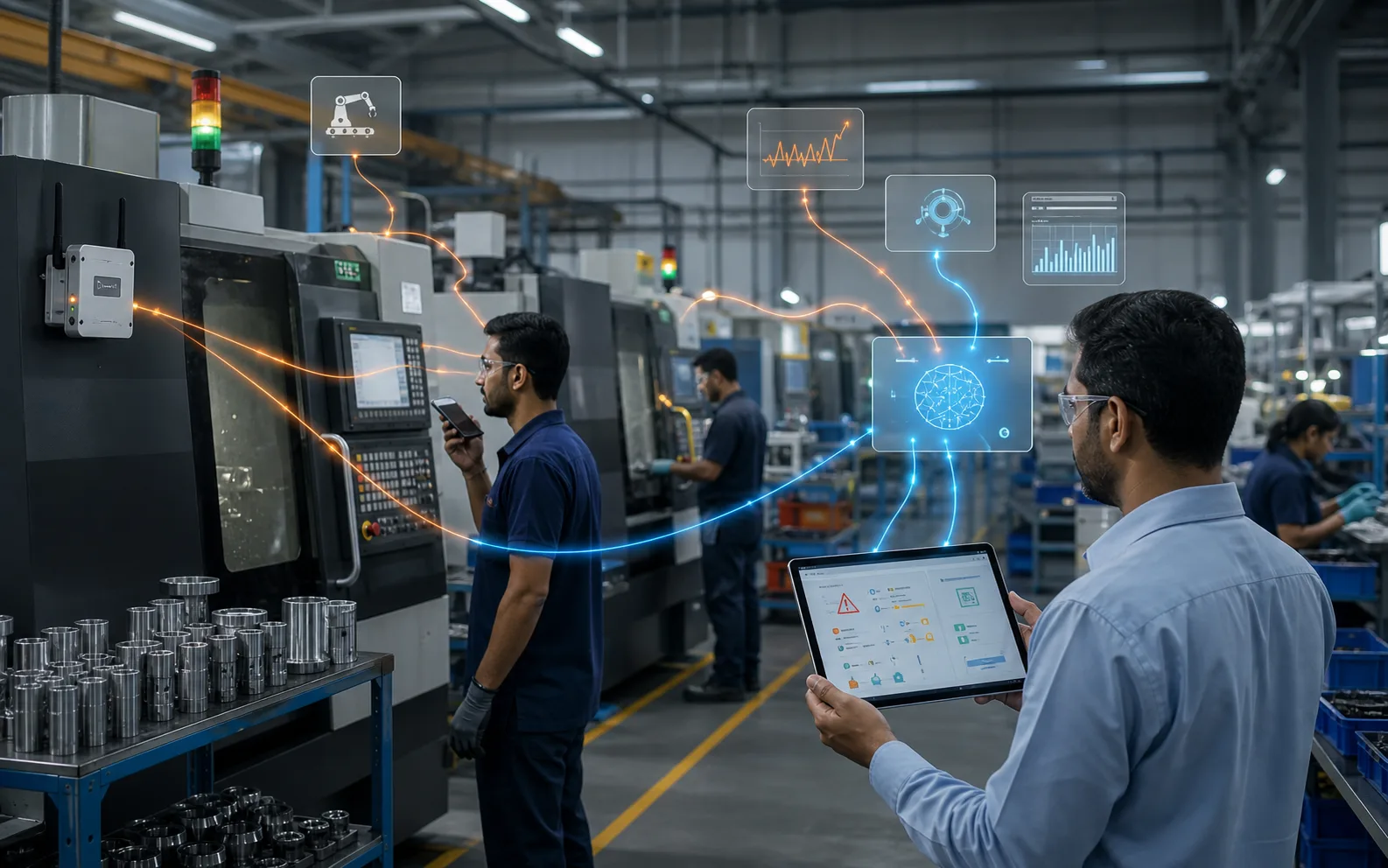
Artificial intelligence in manufacturing can deliver value even before full IoT integration. The key is to begin with practical use cases and upgrade gradually.
AI Does Not Always Require New Machines
A common misconception is that AI only works in fully automated smart factories. In reality, many useful AI applications depend on operational data, not only machine sensor data.
For example, AI can help predict stock shortages, identify slow-moving inventory, flag delayed purchase orders, analyse quality trends, improve production planning, and highlight dispatch risks using ERP and workflow data.
Older machines may limit certain advanced use cases, but they do not prevent the factory from becoming smarter.
Start by Digitizing Core Workflows
Older factories often have knowledge locked in notebooks, Excel files, phone calls, and experienced people’s memory. The first step is to digitize core workflows in a structured way.
This includes item masters, BOMs, inventory movement, production plans, job status, machine downtime, quality checks, purchase orders, sales orders, and dispatch records. Once these workflows are connected, AI has a better base for alerts and recommendations.
The goal is not to digitize everything at once. Start with the workflows that affect delivery, cost, and quality most directly.
Add IoT Where It Creates Clear Value
IoT sensors can be valuable for machine monitoring, energy tracking, predictive maintenance, and process control. But older factories should add IoT selectively.
Begin with machines where downtime is expensive, maintenance is unpredictable, or process data is critical. Do not install sensors everywhere only because it sounds modern. Connect machine data where it supports a measurable business outcome.
This phased approach keeps cost under control.
Respect Existing Worker Knowledge
Older factories often run on deep practical knowledge. AI implementation should not ignore that. Workers may know machine behaviour, material issues, and process risks that are not yet captured in data.
A good AI journey brings this knowledge into the system. Downtime reasons, defect notes, process observations, and maintenance history should be recorded in a way that makes human experience reusable.
This is how an older factory becomes smarter without losing its operational wisdom.
Modernization Should Be Phased
A practical roadmap may begin with connected ERP workflows, then dashboards and exception alerts, then AI recommendations, then selective IoT, then advanced predictive systems. Each stage should prove value before the next stage begins.
This avoids disruption and helps teams build confidence.
Where AICAN Optiwise Fits
AICAN Optiwise is built for real manufacturing environments, including factories that are modernizing gradually. It connects production, inventory, purchase, sales, finance, reporting, IoT readiness, and AI workflows so older factories can begin with operational visibility and expand toward smarter automation over time.
This makes AI adoption more practical for manufacturers that cannot replace their entire setup at once. Explore aican.co.in and About AICAN to understand the shopfloor-first approach.
Founder’s Note
AICAN’s founder-led belief is that Indian manufacturing modernization should meet factories where they are. Many strong businesses run on older machines, experienced teams, and practical discipline. AI should help them move forward step by step, not make them feel left behind.
The future belongs to factories that connect their knowledge, not only those that buy new equipment.
FAQ
Can AI work with old manufacturing machines?
Yes. Many AI use cases can begin with operational data such as production, inventory, purchase, quality, and downtime records. Machine sensors can be added later where useful.
Do older factories need IoT first?
Not always. IoT helps with machine-level data, but factories can start with connected workflows and AI-supported decision-making before adding sensors.
What should an older factory digitize first?
Start with production planning, inventory, purchase orders, quality checks, downtime reasons, and dispatch commitments. These areas affect daily decisions directly.
Is AI adoption expensive for older factories?
It depends on scope. A phased approach can control cost by starting with high-impact workflows before advanced automation.
Final Thought
Older factories are not excluded from modern AI. They simply need a practical path: connect workflows, improve data discipline, use AI for real decisions, and modernize machines where the business case is clear.
Next step: Explore AICAN Optiwise to see how older manufacturing businesses can move toward AI-ready operations without replacing everything at once.

Related Posts
Is AI Worth the Investment for My Factory?
Learn how to decide if AI is worth the investment for your factory by evaluating use cases, data readiness, costs, risks, ROI, and operational impact.
13 Jun 2026Read more →Manufacturing AI Mistakes to Avoid Before You Start
List manufacturing AI mistakes and controls for unclear use case, messy data, unsafe automation, no owner, weak security and unreviewed recommendations.
13 Jun 2026Read more →What's the Difference Between AI and Regular Automation?
Understand the difference between AI and regular automation in manufacturing, with practical examples for workflows, decisions, alerts, and predictive operations.
13 Jun 2026Read more →What Are the Risks of Using AI in Manufacturing?
Understand the risks of AI in manufacturing, including bad data, wrong recommendations, safety issues, security, job fear, over-automation, and implementation failure.
13 Jun 2026Read more →