
What's Involved in Choosing an IoT Platform Provider?
A practical vendor selection guide for manufacturers choosing an IoT platform provider, covering integration, support, dashboards, security, scalability, and implementation fit.
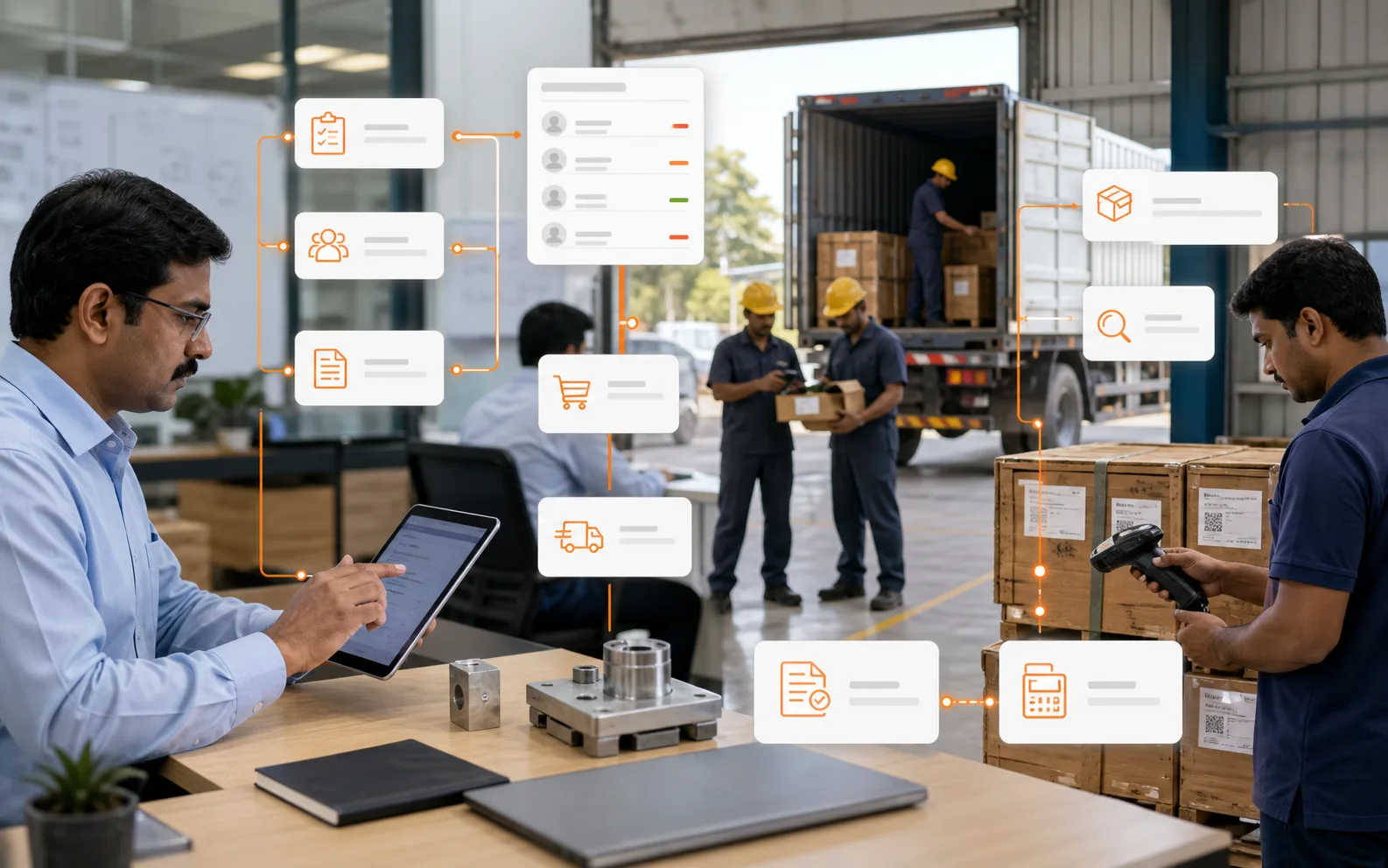
What's Involved in Choosing an IoT Platform Provider?
Choosing an IoT platform provider is not only a software purchase. It is an operating decision.
The provider you choose will affect how machines are connected, how data is trusted, how users learn the system, how quickly problems are solved, and how confidently management can make decisions from the platform. A beautiful dashboard is useful only if the data behind it is reliable and the implementation fits the factory.
Manufacturers should evaluate IoT providers with the same seriousness they use for machine purchases, ERP decisions, or long-term production partners.
For companies considering AICAN Optiwise, the right provider is one that understands manufacturing reality: mixed machines, practical budgets, operator habits, reporting pressure, and the need for phased improvement.
Start with manufacturing fit
The first question is whether the provider understands factories.
A generic IoT platform may be technically capable but still fail inside a manufacturing environment. Factories have shifts, downtime reasons, job cards, operators, supervisors, maintenance teams, quality checks, inventory constraints, production plans, and customer delivery pressure. The platform must understand these workflows.
Ask the provider to explain how the system handles real situations:
- a machine stops repeatedly for short durations
- material is unavailable for a planned job
- a supervisor needs shift output before dispatch planning
- maintenance wants history before attending a breakdown
- management wants to compare planned versus actual production
- operators need a simple way to capture downtime reasons
If the provider can only talk about sensors and cloud dashboards, the implementation may remain shallow. The provider should be able to discuss factory decisions.
Check machine integration capability
A strong IoT provider should be honest about what can and cannot be connected.
Factories often have a mix of old and new machines. Some machines may support direct communication. Others may need sensors, PLC integration, gateways, counters, manual inputs, or hybrid methods. The provider should inspect or understand the machine environment before promising easy integration.
Important questions include:
- Which machine types can be connected?
- What data can be captured directly?
- What needs additional hardware?
- How will older machines be handled?
- What happens if a machine does not expose useful data?
- How is data accuracy validated?
Do not accept vague promises. Integration quality determines whether the dashboard becomes trusted.
Look for practical dashboards, not dashboard theatre
A dashboard should answer operational questions, not simply look impressive.
A plant head may need machine status, production against plan, downtime reasons, and order risk. A maintenance engineer may need alarm history, stoppage frequency, and abnormal patterns. An owner may need utilization, delivery risk, cost signals, and department-level performance.
The provider should offer role-based views. Operators should not be forced to navigate management reports. Owners should not have to inspect sensor-level data to understand whether the factory is on track.
A practical dashboard reduces thinking load. It helps users move from signal to action.
Evaluate implementation support
Implementation is where many IoT projects succeed or fail.
A provider should help with scoping, machine assessment, installation planning, user training, dashboard configuration, data validation, and post-launch support. The factory team should know who will respond when a device stops reporting, a dashboard shows unexpected numbers, or users need changes.
Ask about:
- implementation timeline
- installation responsibilities
- training method
- support channels
- response time expectations
- data validation process
- change requests after go-live
- expansion planning
A provider that sells the platform and disappears after installation leaves the manufacturer carrying the hard part alone.
Review security and access controls
IoT platforms connect operational systems, so security cannot be ignored.
The provider should support role-based access, unique user accounts, controlled remote access, secure data handling, and sensible logging. If cloud hosting is involved, the manufacturer should understand where data is stored, who can access it, and how backups or incidents are handled.
Security questions may feel uncomfortable during sales discussions, but they are necessary. A good provider will answer clearly.
Understand total cost, not only subscription cost
IoT cost may include software subscription, hardware, sensors, gateways, installation, customization, training, support, integrations, and future expansion.
A low starting price can become expensive if every useful report, integration, or support request costs extra. A higher-quality provider may cost more upfront but reduce implementation risk.
Manufacturers should ask for a clear cost structure:
- software cost
- hardware cost
- implementation cost
- training cost
- support cost
- customization cost
- expansion cost
- renewal terms
The decision should be based on value and risk, not only the lowest quote.
Choose for scale, but start focused
The provider should support future growth, but the first implementation should stay focused.
You may begin with a few machines, then expand to production planning, inventory, quality, maintenance, energy, or dispatch. The provider should be able to grow with that path. At the same time, they should not push an oversized rollout before the team is ready.
The right provider balances ambition with discipline.
Where AICAN Optiwise fits
AICAN Optiwise is built for manufacturers who want IoT and operational visibility to fit the way factories actually run. The platform focuses on practical dashboards, connected production visibility, and implementation that can grow in phases.
AICAN works with the belief that manufacturing technology should be useful on the floor and meaningful to management. More context is available at About AICAN.
Founder’s Note
The best IoT provider is not the one with the longest feature list. It is the one that can walk through your factory problem, connect the right data, train the right people, and stay accountable after go-live. Technology is only as good as the operating habit it helps create.
FAQs
What should I ask an IoT provider first?
Ask how they would solve your specific factory problem. Their answer should include machines, users, data, workflow, training, and success measurement.
Should I choose the cheapest provider?
Not automatically. A low price can become costly if integration is weak, support is slow, or the system does not get adopted.
Do I need custom dashboards?
Most manufacturers need some configuration by role and workflow. Fully custom development may not always be required, but the dashboards should reflect real factory decisions.
How important is local implementation support?
Very important. IoT touches machines and people. Support during installation, training, troubleshooting, and expansion often matters as much as software features.
Can I change providers later?
It may be possible, but migration can be painful. Clarify data export, ownership, hardware compatibility, and contract terms before choosing a provider.

Related Posts
Is AI Worth the Investment for My Factory?
Learn how to decide if AI is worth the investment for your factory by evaluating use cases, data readiness, costs, risks, ROI, and operational impact.
13 Jun 2026Read more →Manufacturing AI Mistakes to Avoid Before You Start
List manufacturing AI mistakes and controls for unclear use case, messy data, unsafe automation, no owner, weak security and unreviewed recommendations.
13 Jun 2026Read more →What's the Difference Between AI and Regular Automation?
Understand the difference between AI and regular automation in manufacturing, with practical examples for workflows, decisions, alerts, and predictive operations.
13 Jun 2026Read more →What Are the Risks of Using AI in Manufacturing?
Understand the risks of AI in manufacturing, including bad data, wrong recommendations, safety issues, security, job fear, over-automation, and implementation failure.
13 Jun 2026Read more →