
Common Myths About Factory Automation
Factory automation myths include that it always replaces workers, requires huge budgets, works instantly, and only benefits large factories.
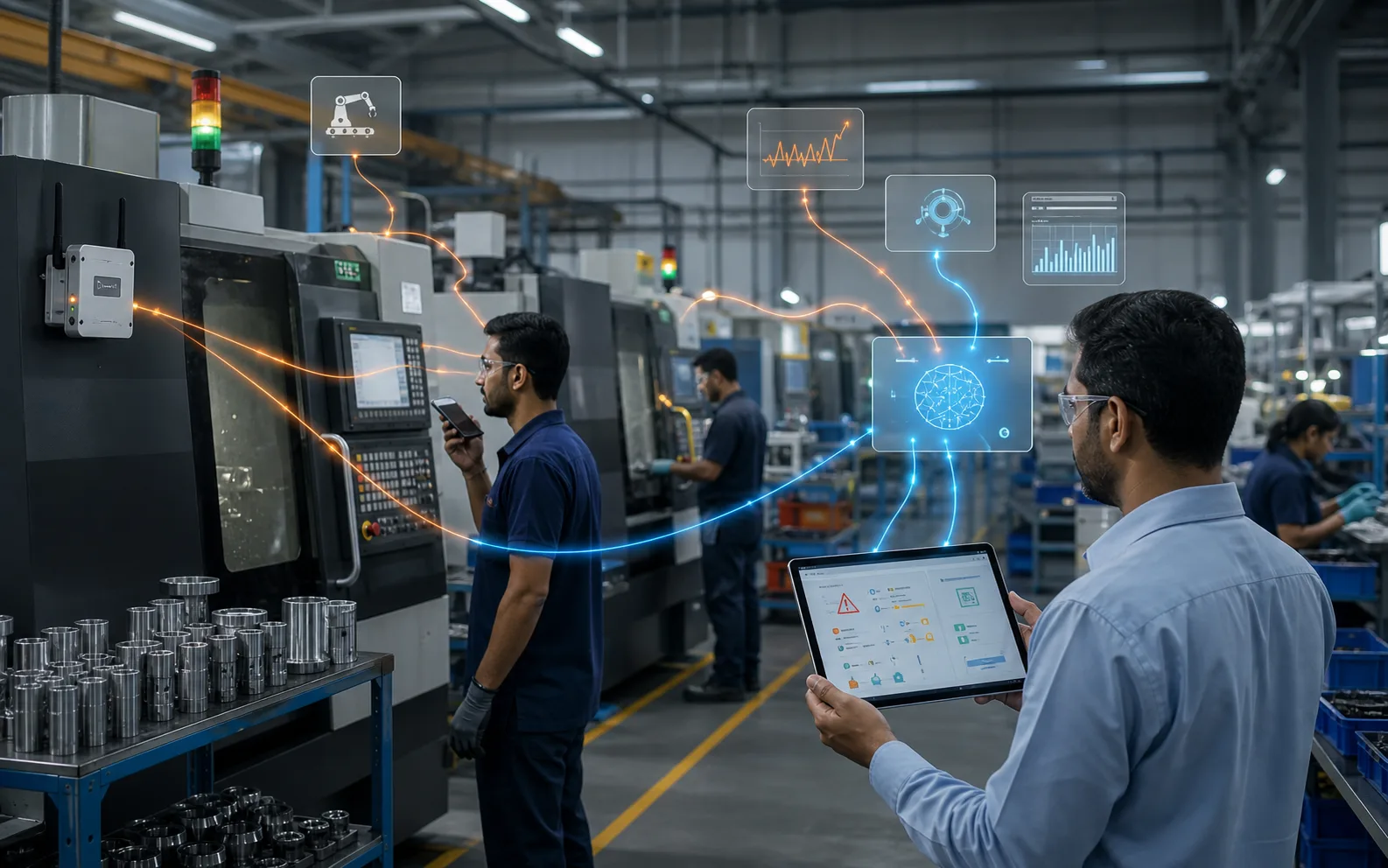
Common Myths About Factory Automation
Factory automation is surrounded by myths.
Some people believe automation always replaces workers. Others believe it is only for large companies, requires huge budgets, or works instantly after installation. These myths create fear and poor decisions.
The reality is more practical.
Myth 1: Automation Means No Workers
Automation usually replaces tasks, not entire factories full of people.
Factories still need workers for quality, maintenance, supervision, safety, problem-solving, and exception handling.
Myth 2: Automation Is Only for Large Factories
Small and mid-sized factories can automate specific workflows.
They can start with production tracking, downtime logs, inventory alerts, quality checklists, or purchase follow-ups.
Myth 3: Automation Works Instantly
Automation needs setup, training, data cleanup, and adoption.
A rushed rollout can fail even with good software.
AICAN Optiwise supports phased adoption through connected workflows across production, inventory, purchase, sales, finance, reports, and AI processes.
Myth 4: Automation Removes Human Judgment
Good automation supports judgment.
Humans still decide how to handle unusual conditions, quality risk, safety issues, and strategic priorities.
Myth 5: Automation Is Only Robots
Automation can be software-led.
Digital workflows, alerts, dashboards, AI summaries, and approval routing are all forms of automation.
Where AICAN Optiwise Fits
AICAN Optiwise helps manufacturers adopt automation practically without falling for myths. It focuses on connected control rather than flashy complexity.
Learn more at About AICAN.
Founder’s Note
Automation should be understood honestly. Fear and hype are both bad guides.
The right question is simple: which problem can technology help us solve responsibly?
FAQ
Does automation always reduce jobs?
No. It often changes tasks and increases demand for new skills.
Is automation too expensive for small factories?
Not always. Factories can start with specific workflows.
Does automation need robots?
No. Many automation gains come from software and digital workflows.
Can automation fail?
Yes, especially with poor training, bad data, and unclear goals.
Final Thought
Factory automation is not magic and not a threat by default.
It is a tool for improving visibility, consistency, and control when used responsibly. That is how AICAN approaches manufacturing automation.

Related Posts
Is AI Worth the Investment for My Factory?
Learn how to decide if AI is worth the investment for your factory by evaluating use cases, data readiness, costs, risks, ROI, and operational impact.
13 Jun 2026Read more →Manufacturing AI Mistakes to Avoid Before You Start
List manufacturing AI mistakes and controls for unclear use case, messy data, unsafe automation, no owner, weak security and unreviewed recommendations.
13 Jun 2026Read more →What's the Difference Between AI and Regular Automation?
Understand the difference between AI and regular automation in manufacturing, with practical examples for workflows, decisions, alerts, and predictive operations.
13 Jun 2026Read more →What Are the Risks of Using AI in Manufacturing?
Understand the risks of AI in manufacturing, including bad data, wrong recommendations, safety issues, security, job fear, over-automation, and implementation failure.
13 Jun 2026Read more →