
Can Computer Vision Inspect Small or Detailed Components?
Learn when computer vision can inspect small or detailed components, what affects accuracy, and how manufacturers should design lighting, resolution, lenses, handling, and validation.
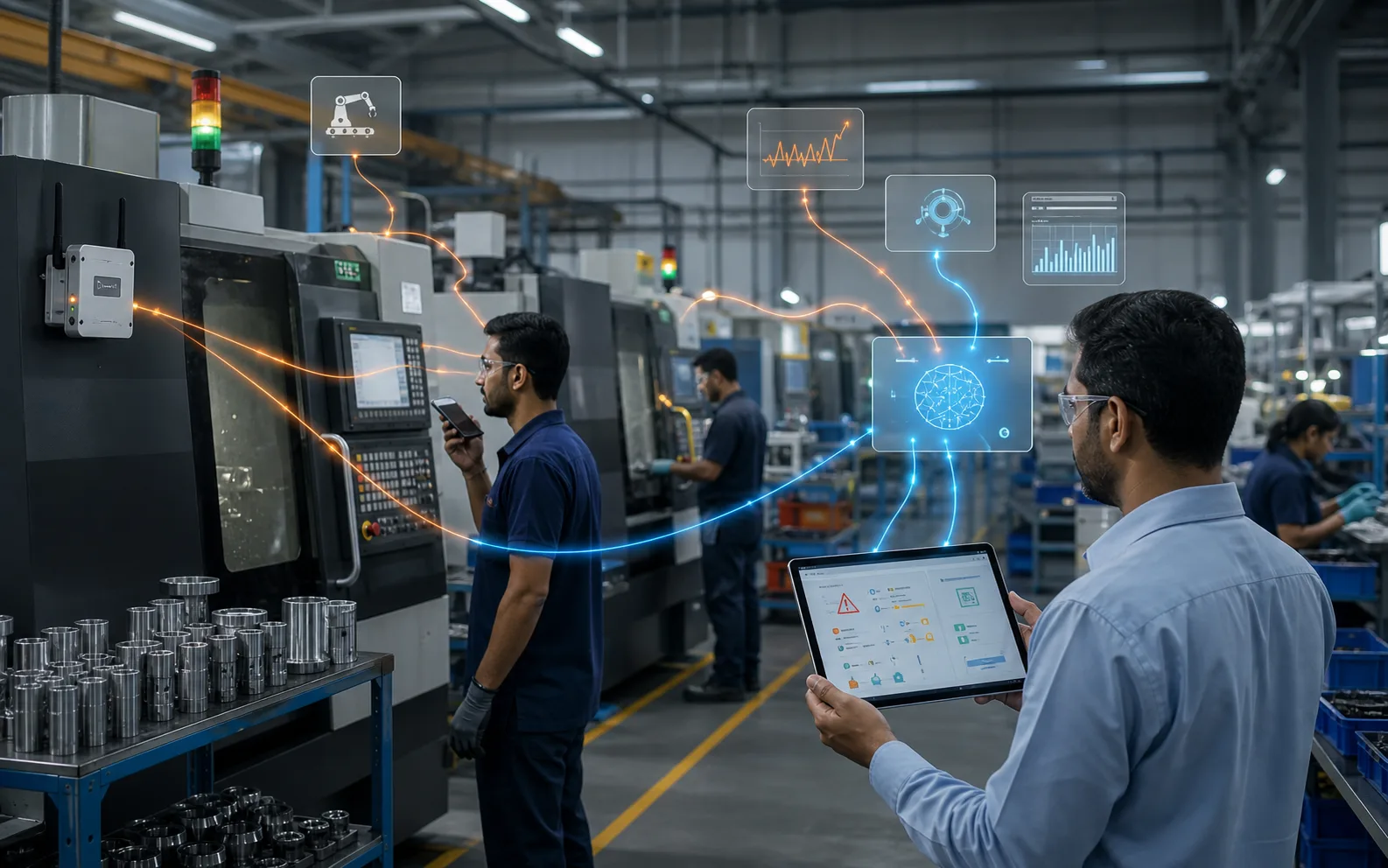
Computer vision can inspect small components, but small defects demand serious setup.
The smaller the part, the less room there is for guesswork. A tiny burr, scratch, missing pin, incorrect solder joint, surface mark, or dimensional feature may be visible only under the right camera, lens, lighting, fixture, and resolution.
Computer vision can inspect small and detailed components very effectively, but only when the defect is optically visible and the system is designed around the inspection requirement.
A normal camera placed somewhere above the line is not enough for precision inspection.
Start with the smallest defect that matters
Before choosing hardware, define the smallest feature or defect the system must detect.
For example:
- A 0.5 mm scratch
- A missing pin
- A small crack
- A burr on an edge
- A misaligned connector
- A tiny print error
- A surface contamination mark
- A missing washer
This matters because camera resolution must be sufficient for the defect size. If the defect covers only one or two pixels, reliable inspection is unlikely. The system needs enough pixels across the defect to distinguish it from noise, texture, or normal variation.
Lens choice matters as much as camera resolution
High megapixels alone do not guarantee accuracy. Lens quality, working distance, depth of field, distortion, and focus stability all matter.
For small components, the system may need:
- Macro lenses
- Telecentric lenses for dimensional checks
- Fixed working distance
- Controlled fixture position
- High-resolution sensors
- Stable focus
- Calibration targets
If the part moves closer or farther from the lens, focus can change. If the lens distorts edges, measurement can become unreliable. Precision inspection needs optical discipline.
Lighting can reveal or hide tiny defects
Small defects are often lighting problems before they are software problems.
A scratch may disappear under flat light but become visible under angled light. A transparent defect may need backlighting. A shiny part may need diffuse dome lighting to reduce glare. A height variation may need shadow or structured lighting.
Lighting methods may include:
- Backlight for silhouette and edge checks
- Ring light for general inspection
- Low-angle light for scratches or surface defects
- Dome light for reflective objects
- Coaxial light for flat reflective surfaces
- Strobe light for moving parts
The right lighting makes the defect visible before the software tries to detect it.
Fixturing and part presentation are critical
Small components need repeatable positioning. If the part rotates, tilts, shifts, or vibrates, inspection becomes harder.
A fixture, nest, guide, or controlled conveyor presentation may be needed. The system should see the part the same way every time.
This is not a weakness of computer vision. It is good manufacturing practice. Stable presentation improves accuracy and reduces false rejects.
Can vision inspect moving small parts?
Yes, but speed adds complexity. Moving small parts may require short exposure, strong lighting, hardware trigger, high frame rate, and precise timing.
If the part moves too fast and the exposure is not controlled, motion blur can hide small defects. If parts overlap or bounce, inspection reliability drops.
For high-speed small-part inspection, the mechanical handling system becomes as important as the camera.
AI or traditional vision for detailed inspection?
It depends on the defect.
Traditional rule-based vision can work well when the defect is consistent and measurable: missing feature, wrong position, edge dimension, presence/absence, alignment, or simple colour difference.
AI-based vision may be better when defects are variable, subtle, organic, or hard to define with fixed rules: surface scratches, stains, texture abnormalities, or complex cosmetic defects.
A good partner will not force one method. They will choose based on the inspection problem.
What are the limits?
Computer vision may struggle when:
- The defect is not visible optically
- The defect is smaller than practical resolution
- Normal product variation looks like the defect
- Parts cannot be positioned consistently
- The surface is highly reflective without proper lighting
- The defect requires touch, force, or internal measurement
- The inspection requires destructive testing
In such cases, vision may still help, but it may need to be combined with other sensors or test methods.
Validation is non-negotiable
For small components, validation must use real samples. You need known good parts, known bad parts, borderline parts, and examples from normal production variation.
Validation should answer:
- Can the system detect the smallest required defect?
- What false rejects occur?
- What defects can escape?
- Does the system work across shifts?
- Does it work after tool wear or material variation?
- Does it work at production speed?
- Can operators handle rejected parts correctly?
Without validation, precision inspection becomes guesswork.
Where AICAN Optiwise fits
AICAN Optiwise helps connect detailed inspection results to the wider manufacturing process. For small components, this matters because a defect may point to tooling, supplier, machine setup, or handling issues.
When inspection data links to batch, machine, shift, inventory, and dispatch context, the factory can investigate causes instead of only rejecting parts.
AICAN builds practical systems for manufacturers that need visibility across production and quality. You can learn more at About AICAN.
Founder's Note
Small-part inspection teaches a useful lesson: technology is not magic; it is engineering. If the defect is visible, repeatable, and the setup is designed correctly, computer vision can be powerful. If the setup is casual, even good software will struggle.
Precision deserves precision.
FAQs
1. Can computer vision detect tiny scratches?
Yes, if the scratch is visible under proper lighting and the camera-lens setup has enough resolution. Surface scratches often need special lighting.
2. Do small parts always need high-resolution cameras?
Often, but lens, lighting, working distance, and fixture stability matter just as much as megapixels.
3. Can computer vision measure dimensions?
Yes, for certain dimensional checks, especially with proper calibration and optics. High-accuracy measurement may need telecentric lenses or dedicated metrology equipment.
4. What if parts move during inspection?
Moving small parts need controlled exposure, lighting, triggering, and mechanical stability. Motion blur can reduce accuracy.
5. Can Optiwise use detailed inspection data?
Yes. Inspection results can support production, quality, batch traceability, and root-cause analysis when connected to the wider workflow.

Related Posts
Is AI Worth the Investment for My Factory?
Learn how to decide if AI is worth the investment for your factory by evaluating use cases, data readiness, costs, risks, ROI, and operational impact.
13 Jun 2026Read more →Manufacturing AI Mistakes to Avoid Before You Start
List manufacturing AI mistakes and controls for unclear use case, messy data, unsafe automation, no owner, weak security and unreviewed recommendations.
13 Jun 2026Read more →What's the Difference Between AI and Regular Automation?
Understand the difference between AI and regular automation in manufacturing, with practical examples for workflows, decisions, alerts, and predictive operations.
13 Jun 2026Read more →What Are the Risks of Using AI in Manufacturing?
Understand the risks of AI in manufacturing, including bad data, wrong recommendations, safety issues, security, job fear, over-automation, and implementation failure.
13 Jun 2026Read more →