
Cybersecurity in AI Manufacturing
Learn why cybersecurity matters in AI manufacturing, what risks factories face, and how manufacturers can protect data, machines, users, and connected workflows.
Cybersecurity in AI Manufacturing
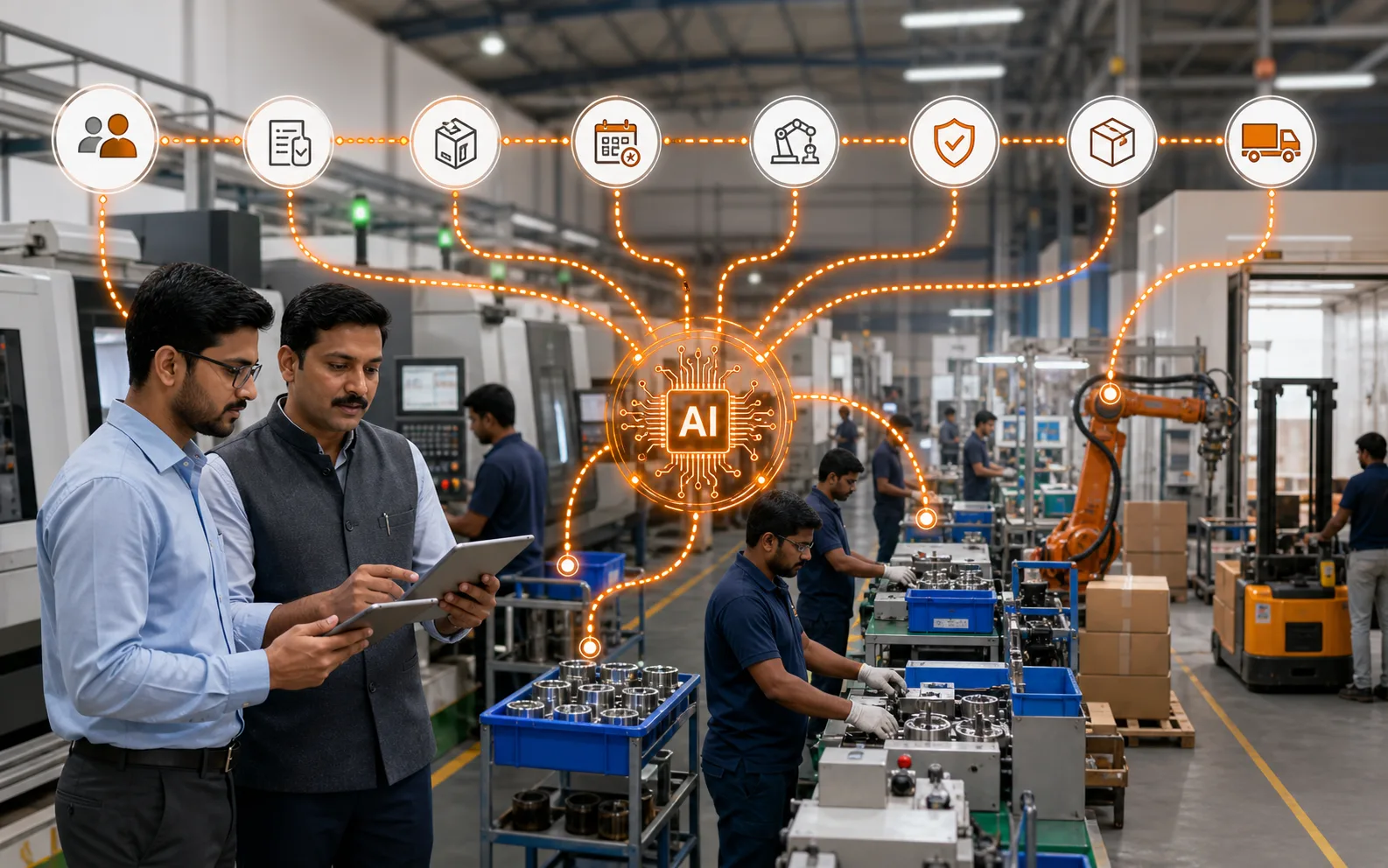
Cybersecurity in AI manufacturing matters because modern factories are becoming more connected. Production data, inventory records, machine signals, supplier details, customer orders, quality results, and financial information may now flow through cloud systems, dashboards, APIs, and AI tools. This improves visibility, but it also increases responsibility.
A factory does not need to be a large multinational to be at risk. Small and mid-sized manufacturers also hold valuable data: customer names, pricing, designs, BOMs, supplier terms, production capacity, and operational weaknesses. If that data is exposed, stolen, or manipulated, the impact can be serious.
Artificial intelligence in manufacturing should therefore be implemented with security thinking from the start, not added later as an afterthought.
What Cyber Risks Do AI Factories Face?
The most common risks include unauthorized access, weak passwords, shared user accounts, insecure integrations, exposed reports, poor device control, phishing, ransomware, and careless handling of downloaded data.
AI adds another layer of concern because it may process large amounts of operational data. Manufacturers should know how their data is used, whether it is isolated from other customers, and who can access it.
The risk is not only technical. Many breaches begin with ordinary human behaviour.
Access Control Is the First Line of Defense
Every user should have access only to the information needed for their role. Operators do not need finance reports. Purchase teams do not need every production costing detail. Management may need broader visibility, but even that should be controlled.
Role-based access reduces accidental exposure and makes accountability clearer. User offboarding is also important. When an employee leaves, access should be removed quickly.
Secure Integrations Matter
AI manufacturing systems often connect with ERP, accounting, IoT devices, APIs, or reporting tools. Each connection should be reviewed. Poorly secured integrations can expose data or create operational risk.
Manufacturers should ask vendors how integrations are authenticated, monitored, and maintained. They should also avoid uncontrolled data exports that create separate security problems.
Protecting Machine and IoT Data
When factories connect machines or sensors, cybersecurity must include devices as well as software. Device access, network segmentation, firmware updates, and monitoring become important.
Factories should not connect equipment casually without understanding how data moves and who can reach it.
Security Needs a Human Routine
Even the best platform can be weakened by shared passwords, personal email exports, uncontrolled spreadsheets, or casual access sharing. Train users on basic security hygiene and make it part of operating discipline.
Cybersecurity works when people treat data as factory property, not personal convenience.
Where AICAN Optiwise Fits
AICAN Optiwise brings production, inventory, purchase, sales, finance, reporting, IoT readiness, and AI workflows into a structured manufacturing operating system. This helps reduce dependence on scattered files and informal data movement, which are common security weak points.
Manufacturers should discuss role-based access, integrations, data handling, and implementation controls with the AICAN team based on their operating needs. Learn more at aican.co.in and About AICAN.
Founder’s Note
AICAN’s founder-led view is that trust is essential for factory technology. Manufacturers should not have to choose between visibility and control. The right system should help teams work smarter while protecting the business knowledge that makes the factory valuable.
Security is part of operational maturity.
FAQ
Why is cybersecurity important in AI manufacturing?
AI systems may handle sensitive production, customer, supplier, financial, and machine data. Protecting that data is essential for business continuity and trust.
What is the biggest security risk?
Weak user discipline, shared access, poor integrations, and uncontrolled exports are common risks, alongside technical threats such as ransomware and unauthorized access.
Should small factories worry about cybersecurity?
Yes. Small factories also hold valuable operational and commercial data and can be affected by downtime or data loss.
What should I ask vendors?
Ask about access control, encryption, backups, audit logs, data isolation, integrations, user offboarding, and AI data usage.
Final Thought
AI manufacturing security is not only an IT issue. It is a factory management issue. As operations become connected, manufacturers must protect data with the same discipline they bring to quality and finance.
Next step: Explore AICAN Optiwise and discuss how connected manufacturing workflows can be deployed with the right security controls.

Related Posts
Is AI Worth the Investment for My Factory?
Learn how to decide if AI is worth the investment for your factory by evaluating use cases, data readiness, costs, risks, ROI, and operational impact.
13 Jun 2026Read more →Manufacturing AI Mistakes to Avoid Before You Start
List manufacturing AI mistakes and controls for unclear use case, messy data, unsafe automation, no owner, weak security and unreviewed recommendations.
13 Jun 2026Read more →What's the Difference Between AI and Regular Automation?
Understand the difference between AI and regular automation in manufacturing, with practical examples for workflows, decisions, alerts, and predictive operations.
13 Jun 2026Read more →What Are the Risks of Using AI in Manufacturing?
Understand the risks of AI in manufacturing, including bad data, wrong recommendations, safety issues, security, job fear, over-automation, and implementation failure.
13 Jun 2026Read more →