
What's the Real Difference Between AI That Works and AI That Doesn't?
Learn why some factory AI projects succeed while others fail, including data quality, workflow ownership, adoption, ROI, and implementation discipline.
What's the Real Difference Between AI That Works and AI That Doesn't?
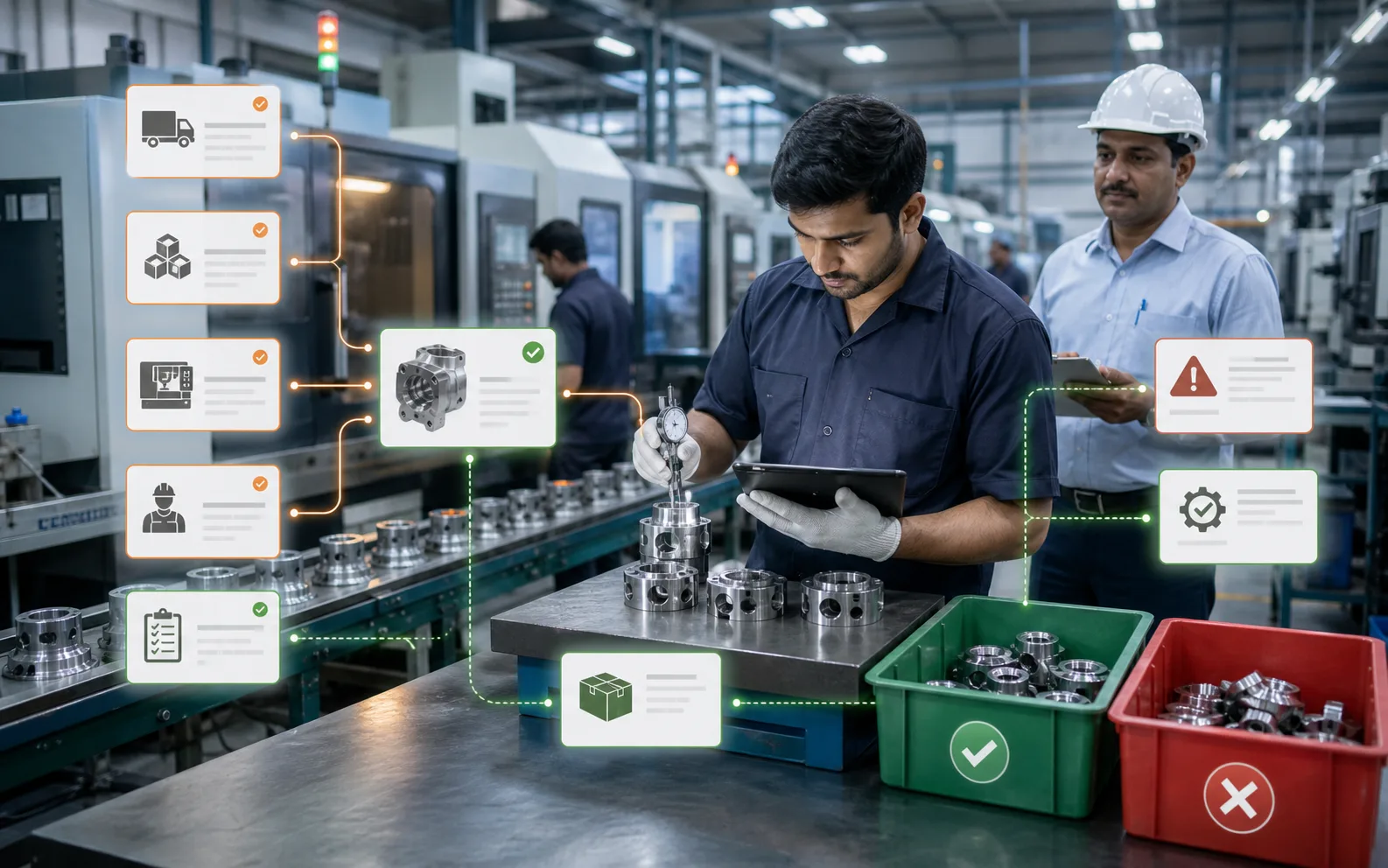
The real difference between AI that works and AI that does not is not only the technology. It is the operating foundation around it. AI works when the factory has a clear problem, reliable data, workflow ownership, trained users, management commitment, and measurable outcomes. AI fails when it is bought for buzzwords and placed on top of messy operations.
AI driven factory management is not magic. It is a system for improving decisions. If the inputs are weak and nobody acts on the outputs, the results will disappoint.
Successful AI feels practical. Failed AI feels like another dashboard nobody trusts.
AI That Works Starts With a Clear Use Case
Successful projects begin with a specific problem: reduce stockouts, improve production visibility, reduce defects, predict downtime, speed reporting, or improve scheduling.
Failed projects begin with vague ambition. "We need AI" is not a use case.
AI That Works Has Reliable Data
The system needs accurate stock, production, purchase, quality, maintenance, and dispatch data depending on the use case. Data does not need to be perfect everywhere, but it must be trustworthy where decisions are being made.
Failed AI often reflects poor data rather than poor algorithms.
AI That Works Connects to Action
An alert is useful only if someone owns the response. A recommendation matters only if it leads to a decision. A report matters only if management reviews it.
Failed AI produces insights that do not change behaviour.
AI That Works Is Adopted by Users
Workers and managers must understand the system and trust it enough to use it. Training, internal champions, and management discipline are essential.
If teams continue using old spreadsheets as the real system, AI will not work properly.
AI That Works Measures Outcomes
Successful projects track business results: fewer stockouts, lower scrap, reduced downtime, faster reporting, better delivery, or improved productivity.
Failed projects measure activity instead of improvement.
Where AICAN Optiwise Fits
AICAN Optiwise supports AI that works by connecting the core factory workflows: production, inventory, purchase, sales, finance, reporting, IoT readiness, and AI. This gives manufacturers the operational context needed for useful intelligence and accountable action.
Learn more at AICAN Optiwise and About AICAN.
Founder’s Note
AICAN’s founder-led belief is that AI succeeds when it respects factory reality. Manufacturers need connected workflows and practical adoption, not technology theatre.
AI works when it helps people make better decisions under real operating pressure.
FAQ
Why do factory AI projects fail?
Common reasons include poor data, unclear use cases, weak training, no workflow ownership, over-customization, and no measurable ROI.
What makes AI successful?
Clear business problem, reliable data, connected workflows, trained users, accountable action, and regular measurement.
Can a good AI tool fail?
Yes. Even strong tools fail if implementation and adoption are weak.
How do I test whether AI is working?
Compare outcomes before and after implementation, such as stockouts, defects, downtime, reporting time, and delivery performance.
Final Thought
AI works when it becomes part of how the factory runs. It fails when it remains a disconnected promise. The difference is discipline.
Next step: Visit AICAN Optiwise to build AI driven factory management on connected workflows and measurable outcomes.

Related Posts
Is AI Worth the Investment for My Factory?
Learn how to decide if AI is worth the investment for your factory by evaluating use cases, data readiness, costs, risks, ROI, and operational impact.
13 Jun 2026Read more →Manufacturing AI Mistakes to Avoid Before You Start
List manufacturing AI mistakes and controls for unclear use case, messy data, unsafe automation, no owner, weak security and unreviewed recommendations.
13 Jun 2026Read more →What's the Difference Between AI and Regular Automation?
Understand the difference between AI and regular automation in manufacturing, with practical examples for workflows, decisions, alerts, and predictive operations.
13 Jun 2026Read more →What Are the Risks of Using AI in Manufacturing?
Understand the risks of AI in manufacturing, including bad data, wrong recommendations, safety issues, security, job fear, over-automation, and implementation failure.
13 Jun 2026Read more →