
What Is a Digital Twin and Why Should My Factory Have One?
Understand digital twins in manufacturing, how they use IoT data, and when factories should consider them for planning, maintenance, quality, and productivity.
What Is a Digital Twin and Why Should My Factory Have One?
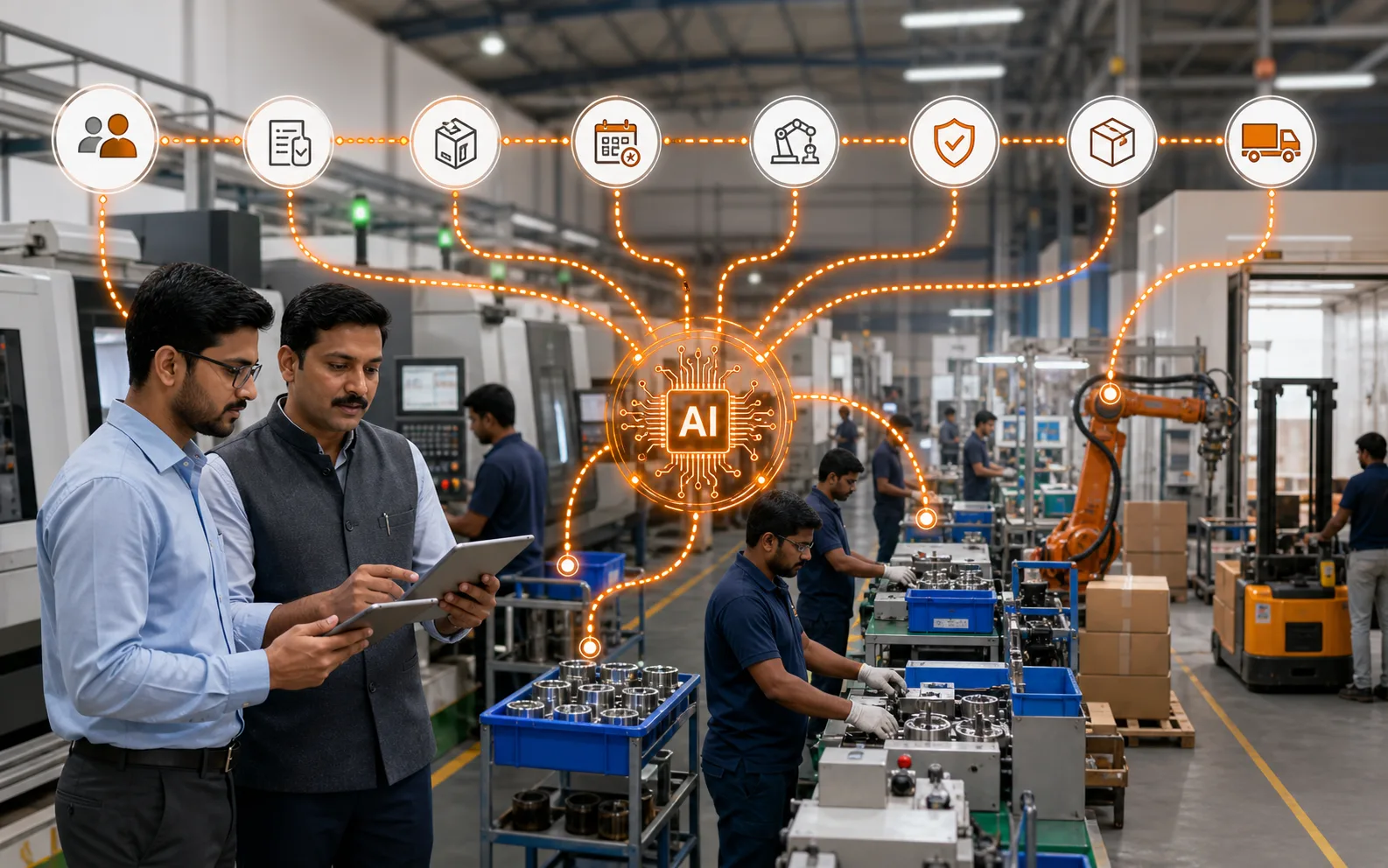
A digital twin is a digital representation of a physical asset, process, line, or factory that uses real data to reflect what is happening in the real world. In manufacturing, that data often comes from IoT sensors, machines, ERP systems, quality records, maintenance history, and production plans.
The phrase can sound expensive and futuristic, but the idea is practical. A digital twin helps the factory understand current performance, test possible decisions, investigate problems, and improve planning without depending only on guesswork.
Not every factory needs a full digital twin on day one. But many factories can benefit from digital-twin thinking: connect the real process, model the important relationships, and use data to make better decisions.
A Digital Twin Is More Than a 3D Model
Some people imagine a digital twin as a 3D factory animation. That can be part of it, but it is not the main point.
A useful digital twin may show:
- machine status
- production flow
- line capacity
- downtime patterns
- energy use
- quality trends
- maintenance condition
- inventory movement
- order progress
- bottleneck behavior
The value is not the visual effect. The value is that the digital version stays connected to real operating data.
IoT Provides the Live Data Layer
IoT is often the foundation of a digital twin because it captures what is happening on the floor.
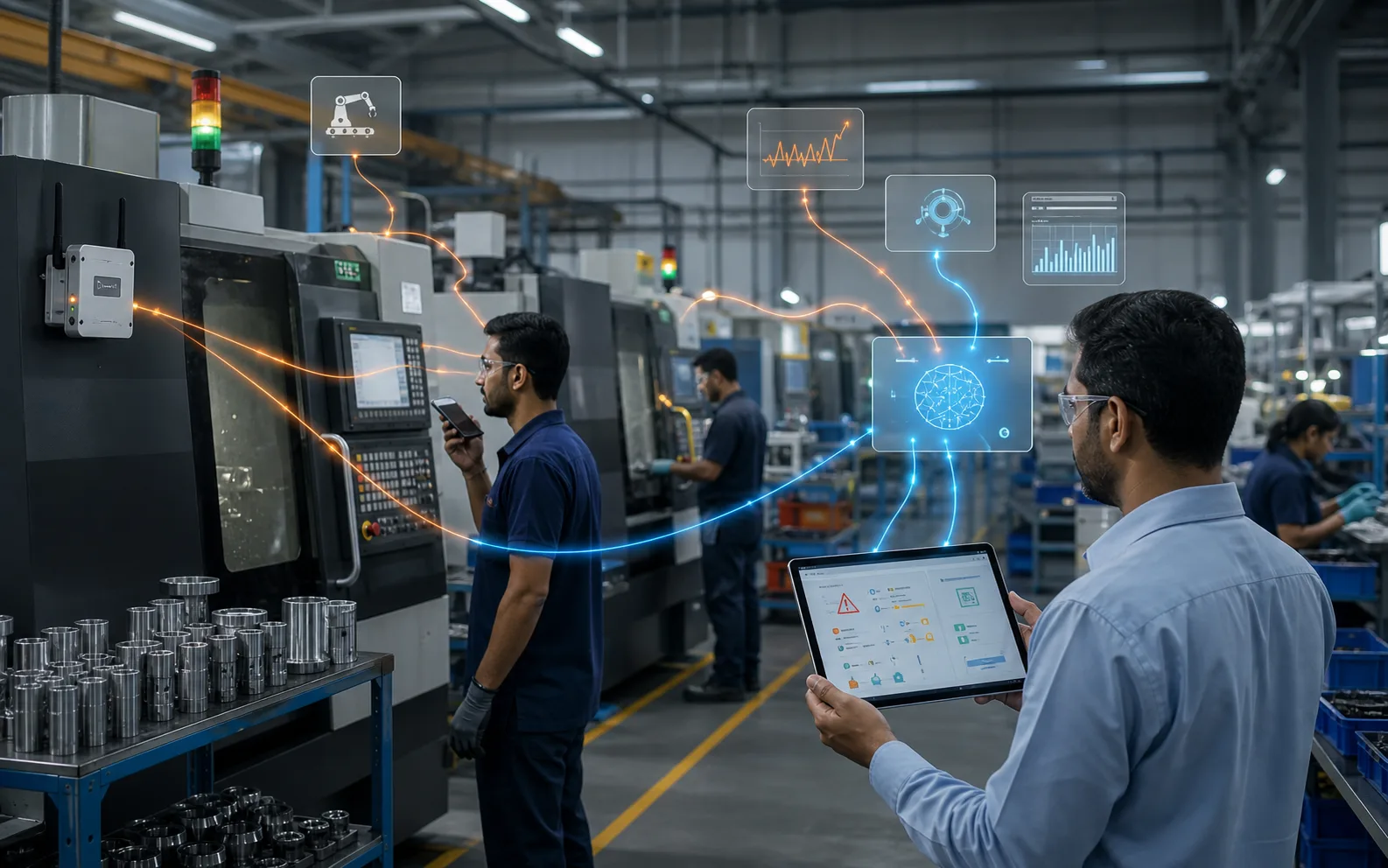
Sensors, meters, PLCs, counters, gateways, and operator inputs can provide data such as:
- running or stopped status
- output count
- cycle time
- vibration
- temperature
- energy consumption
- pressure
- flow
- downtime reason
- inspection result
This data helps the digital twin reflect reality. Without live or regularly updated data, the digital twin becomes a static diagram.
ERP and Business Data Add Context
Factory-floor data alone is not enough. A machine may be running, but the business needs to know what it is producing, which order it affects, what material is being used, which batch is involved, and whether dispatch is at risk.
ERP and business data can add:
- production orders
- item and BOM details
- inventory availability
- purchase status
- customer orders
- dispatch dates
- quality records
- maintenance tickets
- costing information
This context turns the digital twin from a technical model into a business tool.
How a Digital Twin Helps Planning
Planning teams often deal with uncertainty. They need to know whether orders can be completed on time, whether capacity is available, whether material will arrive, and whether bottlenecks will affect delivery.
A digital twin can help by showing the current state and the likely impact of changes.
For example:
- What happens if one machine is down for four hours?
- Can this urgent order be inserted without delaying existing orders?
- Which line is the real bottleneck this week?
- How much output can we expect if rejection increases?
- What happens if material arrives late?
Even a simple model can improve planning if it is connected to real data.
How a Digital Twin Helps Maintenance
Maintenance teams can use a digital twin to understand asset condition and production impact.
Instead of seeing a machine alert in isolation, they can see how the machine fits into the production flow. If the asset is critical to a customer order, the issue becomes urgent. If another machine can take the load, the team may schedule maintenance more calmly.
Digital twins can also support condition monitoring by showing trends in vibration, temperature, current, energy, or downtime over time.
How a Digital Twin Helps Quality
Quality issues often depend on process conditions. A digital twin can help connect inspection results with machine state, product, batch, operator, material lot, and process readings.
This helps answer:
- when did the defect start?
- which machine or line was involved?
- did process conditions change?
- was a specific material lot used?
- did rejection increase after maintenance or setup?
- which batches may be affected?
Better traceability means faster investigation and stronger customer response.
When a Factory Is Ready for a Digital Twin
A factory is ready for digital twin work when it has at least some reliable data and a clear use case.
You do not need perfect data everywhere. But you do need:
- a defined process or asset to model
- reliable data for key signals
- ownership from operations
- a decision the model will improve
- willingness to validate the model against reality
If the factory still struggles to capture basic downtime, production count, or inventory accuracy, start there first. A digital twin built on weak data will not be trusted.
Start Small: Asset, Line, or Process Twin
A full factory twin may be unnecessary at the beginning. Start smaller.
Possible starting points include:
- a critical machine twin for maintenance
- a production line twin for bottleneck analysis
- an energy twin for high-consumption equipment
- a batch process twin for quality traceability
- a planning twin for capacity and order impact
The first twin should answer one important business question.
Where AICAN Optiwise Fits
AICAN Optiwise helps manufacturers connect operational data across production, inventory, purchase, sales, finance, and reporting. Digital twin work becomes more useful when shop-floor signals are connected with business context.
Optiwise supports the practical foundation manufacturers need before advanced digital models become useful: reliable workflows, clear data, and connected operating visibility. You can learn more about AICAN and the company on About AICAN.
FAQ
Is a digital twin only for large factories?
No. Large factories may build complex twins, but smaller manufacturers can start with one machine, line, process, or planning use case.
Do I need 3D software for a digital twin?
Not always. A digital twin can be a data-driven model, dashboard, simulation, or process representation. The visual format depends on the use case.
What data is needed for a digital twin?
Common data includes machine status, production count, cycle time, downtime, energy, quality results, maintenance history, order data, inventory, and process conditions.
Should I build a digital twin before IoT?
Usually no. IoT and operational data provide the foundation. Start by capturing reliable data, then build the model around a useful decision.
What is the biggest risk with digital twins?
The biggest risk is building a model that looks impressive but does not match reality or improve decisions. Trust and usefulness matter more than visual complexity.
Founder’s Note
At AICAN, we see digital twins as useful only when they respect factory reality. A model should help people plan, maintain, produce, and serve customers better. It should not become another expensive layer of confusion.
The foundation is always the same: reliable data, connected workflows, and decisions that improve because the system exists.
Final Thought
A digital twin is not a trophy technology. It is a way to understand your factory more clearly.
Start with one process, connect real data, test the model against reality, and use it to make a decision that matters.

Related Posts
Is AI Worth the Investment for My Factory?
Learn how to decide if AI is worth the investment for your factory by evaluating use cases, data readiness, costs, risks, ROI, and operational impact.
13 Jun 2026Read more →Manufacturing AI Mistakes to Avoid Before You Start
List manufacturing AI mistakes and controls for unclear use case, messy data, unsafe automation, no owner, weak security and unreviewed recommendations.
13 Jun 2026Read more →What's the Difference Between AI and Regular Automation?
Understand the difference between AI and regular automation in manufacturing, with practical examples for workflows, decisions, alerts, and predictive operations.
13 Jun 2026Read more →What Are the Risks of Using AI in Manufacturing?
Understand the risks of AI in manufacturing, including bad data, wrong recommendations, safety issues, security, job fear, over-automation, and implementation failure.
13 Jun 2026Read more →