
How to Evaluate If Your Industry Is at Risk From AI
Learn how to evaluate AI risk in your industry by analyzing repetitive tasks, data availability, cost pressure, regulation, human trust, physical work, and adoption speed.
How to Evaluate If Your Industry Is at Risk From AI
To evaluate AI risk in your industry, look at tasks, not headlines. AI risk depends on how much work is repetitive, data-based, predictable, and economically attractive to automate.
Some industries will change quickly. Others will change slowly because they need physical work, regulation, trust, or human judgment.
1. How Repetitive Is the Work?
Repetitive tasks are easier to automate. If many roles involve the same digital process every day, AI exposure is higher.
2. Is Data Available?
AI needs data. Industries with large amounts of clean digital data may adopt AI faster.
3. Is There Cost Pressure?
High labour or operational cost pushes companies to automate faster.
4. Does Work Require Physical Presence?
Physical work in changing environments is harder to automate fully.
5. Does Human Trust Matter?
Industries involving relationships, care, negotiation, and trust retain strong human roles.
6. Is Regulation Heavy?
Regulated industries may adopt AI carefully because errors have serious consequences.
7. Can AI Improve Decisions?
Even if AI does not replace workers, it may reshape how decisions are made.
Manufacturing Example
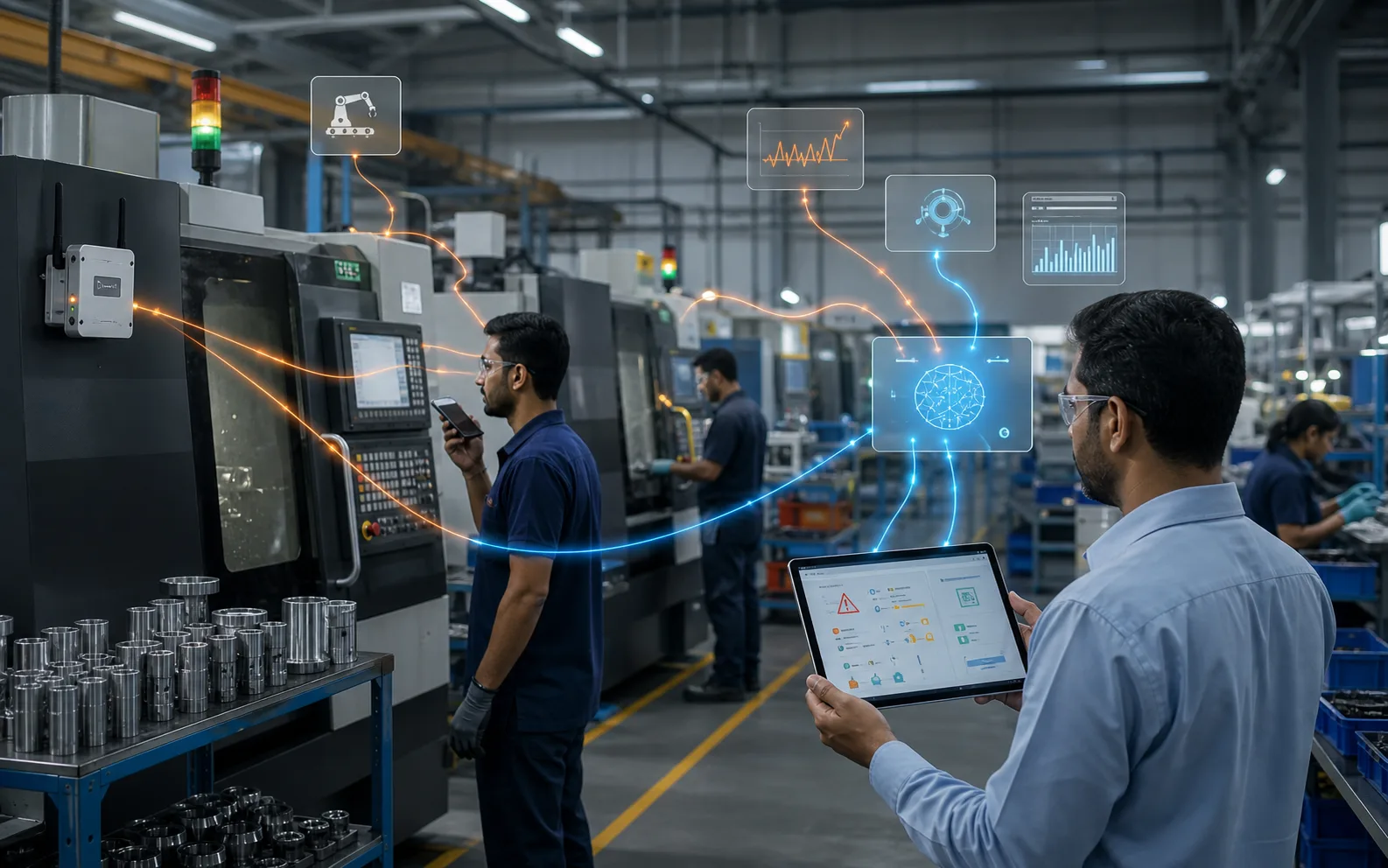
Manufacturing has both high and low AI exposure. Reporting, planning, and data analysis may change fast. Maintenance, safety, quality judgment, and physical troubleshooting remain human-heavy.
Where AICAN Optiwise Fits
AICAN Optiwise helps manufacturers use AI where it is practical: visibility, follow-ups, shortages, delays, and workflow intelligence. It supports gradual adoption rather than unrealistic full automation.
FAQ
How do I know if my industry is at high AI risk?
Look for repetitive digital tasks, clean data, cost pressure, and low need for human judgment.
Is manufacturing at risk?
Parts of manufacturing are exposed, but many roles still need people.
Does regulation slow AI adoption?
Often yes, because risk and accountability matter.
Should I change industries?
First assess your tasks and build transferable skills.
Final Thought
AI risk is not evenly spread across an industry.
Understand which tasks are exposed, then prepare for the parts of work that will change first.

Related Posts
Is AI Worth the Investment for My Factory?
Learn how to decide if AI is worth the investment for your factory by evaluating use cases, data readiness, costs, risks, ROI, and operational impact.
13 Jun 2026Read more →Manufacturing AI Mistakes to Avoid Before You Start
List manufacturing AI mistakes and controls for unclear use case, messy data, unsafe automation, no owner, weak security and unreviewed recommendations.
13 Jun 2026Read more →What's the Difference Between AI and Regular Automation?
Understand the difference between AI and regular automation in manufacturing, with practical examples for workflows, decisions, alerts, and predictive operations.
13 Jun 2026Read more →What Are the Risks of Using AI in Manufacturing?
Understand the risks of AI in manufacturing, including bad data, wrong recommendations, safety issues, security, job fear, over-automation, and implementation failure.
13 Jun 2026Read more →