
How Can AI Analyze Equipment Performance Data?
Learn how AI analyzes equipment performance data using downtime logs, runtime, vibration, temperature, energy, maintenance history, and production impact.

How Can AI Analyze Equipment Performance Data?
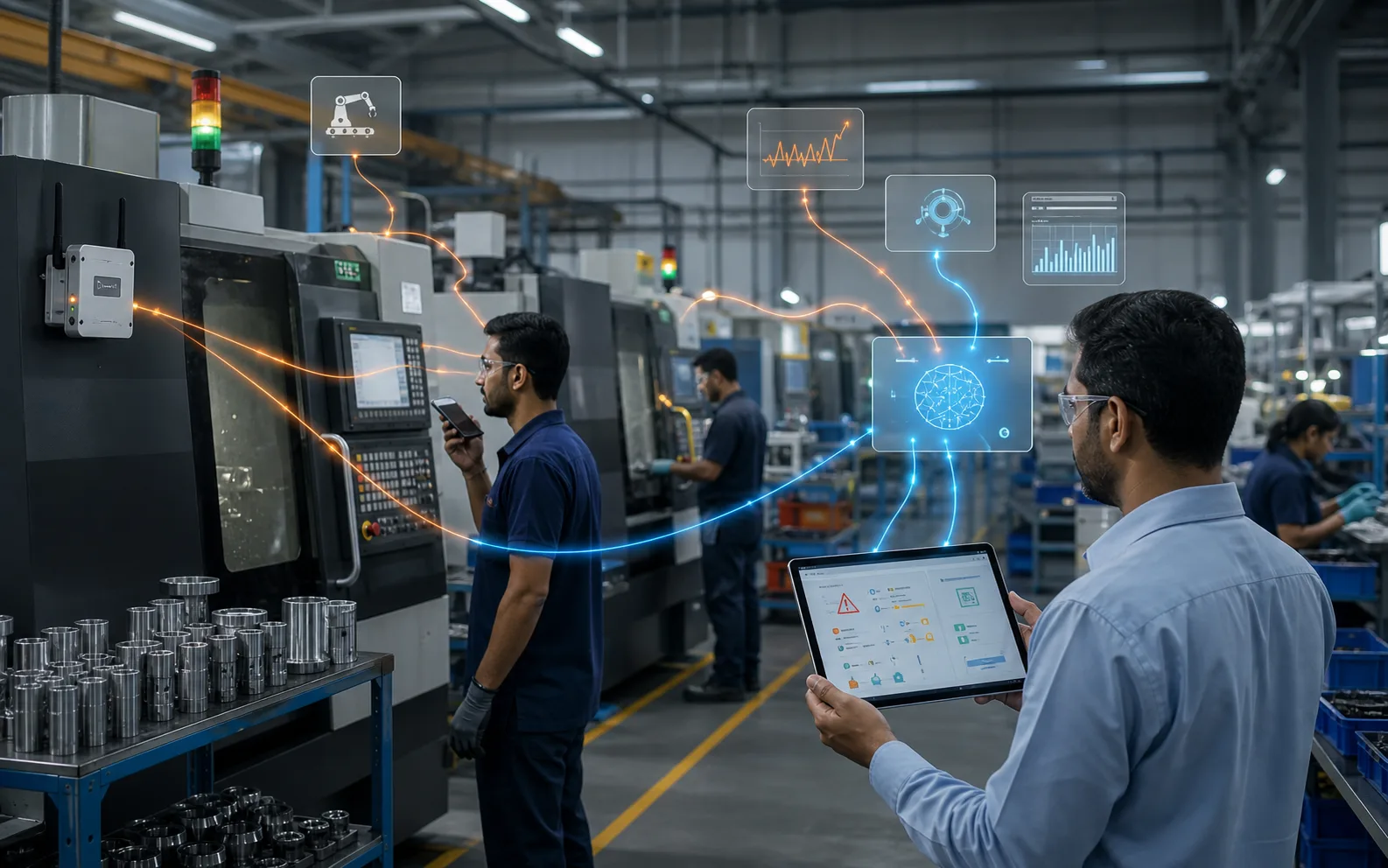
AI analyzes equipment performance data by finding patterns in machine behavior, downtime history, maintenance records, and production impact. It helps manufacturers understand which machines are running well, which ones are creating losses, and which ones may need attention.
The goal is not just to collect machine data. The goal is to turn that data into better maintenance and production decisions.
What Equipment Performance Data Includes
Equipment performance data can come from many sources:
- Machine runtime
- Downtime logs
- Production output
- Cycle time
- Vibration readings
- Temperature readings
- Energy consumption
- Alarm history
- Maintenance records
- Spare usage
- Operator notes
- Quality issues linked to machines
Some factories capture this data automatically through sensors or IoT devices. Others start with manual logs and ERP records.
AI Can Identify Downtime Patterns
AI can review downtime history and group repeated issues.
For example, it may show:
- One machine stops more often during a specific shift
- One product causes repeated setup delays
- A specific fault code appears before breakdowns
- A machine creates more rejection after maintenance
- Downtime increases after long runtime without inspection
This helps maintenance teams focus on root causes, not just symptoms.
AI Can Compare Planned vs Actual Performance
A machine may be expected to produce a certain output per hour or shift. AI can compare planned output with actual output and highlight performance gaps.
This helps identify whether the issue is machine speed, setup time, operator availability, material shortage, quality hold, or downtime.
AI Can Detect Abnormal Behavior
AI can learn normal operating patterns and flag unusual behavior.
Examples:
- Vibration rising above normal trend
- Temperature increasing gradually
- Energy usage changing unexpectedly
- Output dropping without a clear reason
- Frequent minor stoppages before a major failure
These signals can help teams inspect equipment before a breakdown occurs.
AI Can Support Predictive Maintenance
Predictive maintenance uses equipment data to estimate failure risk. AI looks at patterns that often appear before failure.
This is useful for critical machines where downtime creates high cost.
But predictive maintenance is only as good as the data. If downtime reasons are not recorded properly, AI insights will be weak.
AI Can Link Equipment Performance to Production Impact
A machine issue matters more when it affects customer orders. AI can connect equipment performance with production schedules, WIP, dispatch commitments, and quality records.
This helps teams prioritize maintenance based on business impact, not only machine condition.
AI Can Help With OEE Analysis
Many manufacturers track OEE: availability, performance, and quality.
AI can help identify why OEE is low:
- Availability loss from downtime
- Performance loss from slow cycles
- Quality loss from rejection
- Setup loss from changeovers
- Waiting time from material delays
This makes improvement more targeted.
Data Quality Matters
AI needs clean, consistent data. If downtime reasons are written casually, sensor readings are missing, or machine IDs are inconsistent, analysis becomes unreliable.
Start by standardizing the basics:
- Machine names
- Downtime reason codes
- Maintenance checklists
- Operator remarks
- Spare part records
- Production output entries
Where AICAN Optiwise Fits
AICAN Optiwise connects production, shopfloor, inventory, quality, dispatch, and AI workflows in one manufacturing operating system. Equipment performance data becomes more valuable when it is connected to production and business outcomes.
A machine issue should not be seen only by maintenance. It should be understood in terms of orders, material, quality, dispatch, and cost.
Learn more at AICAN Optiwise and About AICAN.
Founder’s Note
AICAN’s view is that machine data should not become another isolated dashboard. If equipment performance is not connected to production decisions, the factory still reacts late.
Optiwise is built so shopfloor data, production planning, quality, and management visibility can work together, with AI helping teams understand what needs attention.
FAQ
What equipment data does AI need?
Runtime, downtime, output, maintenance history, alarms, vibration, temperature, energy, spare usage, and quality data are useful.
Can AI analyze equipment data without sensors?
Yes, it can start with downtime logs and maintenance records. Sensors improve real-time analysis.
What is the main benefit?
Earlier visibility into performance loss, repeated issues, and failure risk.
Can AI improve OEE?
AI can help identify why OEE is low, but teams must act on the insights.
Is equipment AI useful for small manufacturers?
Yes, especially for critical machines where downtime affects delivery or cost.
Final Thought
AI analyzes equipment performance data to help manufacturers move from reactive repair to informed maintenance and production planning.
Next step: Explore AICAN Optiwise if your factory wants equipment insights connected with production and operational visibility.

Related Posts
Is AI Worth the Investment for My Factory?
Learn how to decide if AI is worth the investment for your factory by evaluating use cases, data readiness, costs, risks, ROI, and operational impact.
13 Jun 2026Read more →Manufacturing AI Mistakes to Avoid Before You Start
List manufacturing AI mistakes and controls for unclear use case, messy data, unsafe automation, no owner, weak security and unreviewed recommendations.
13 Jun 2026Read more →What's the Difference Between AI and Regular Automation?
Understand the difference between AI and regular automation in manufacturing, with practical examples for workflows, decisions, alerts, and predictive operations.
13 Jun 2026Read more →What Are the Risks of Using AI in Manufacturing?
Understand the risks of AI in manufacturing, including bad data, wrong recommendations, safety issues, security, job fear, over-automation, and implementation failure.
13 Jun 2026Read more →