
How Can AI Predict When Equipment Will Fail?
Learn how AI predicts equipment failure using downtime history, machine data, vibration, temperature, maintenance logs, alarms, and predictive analytics.
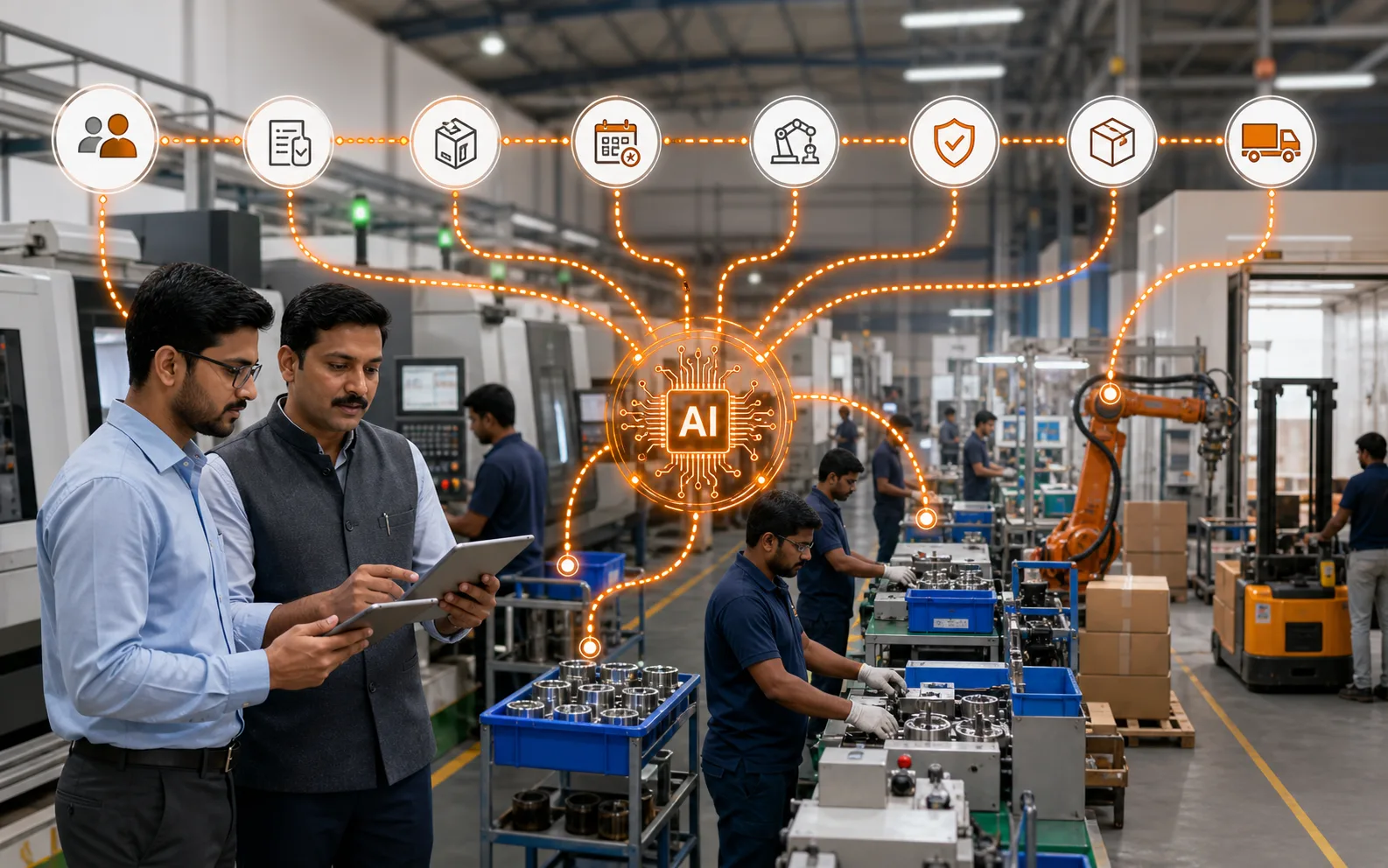
How Can AI Predict When Equipment Will Fail?
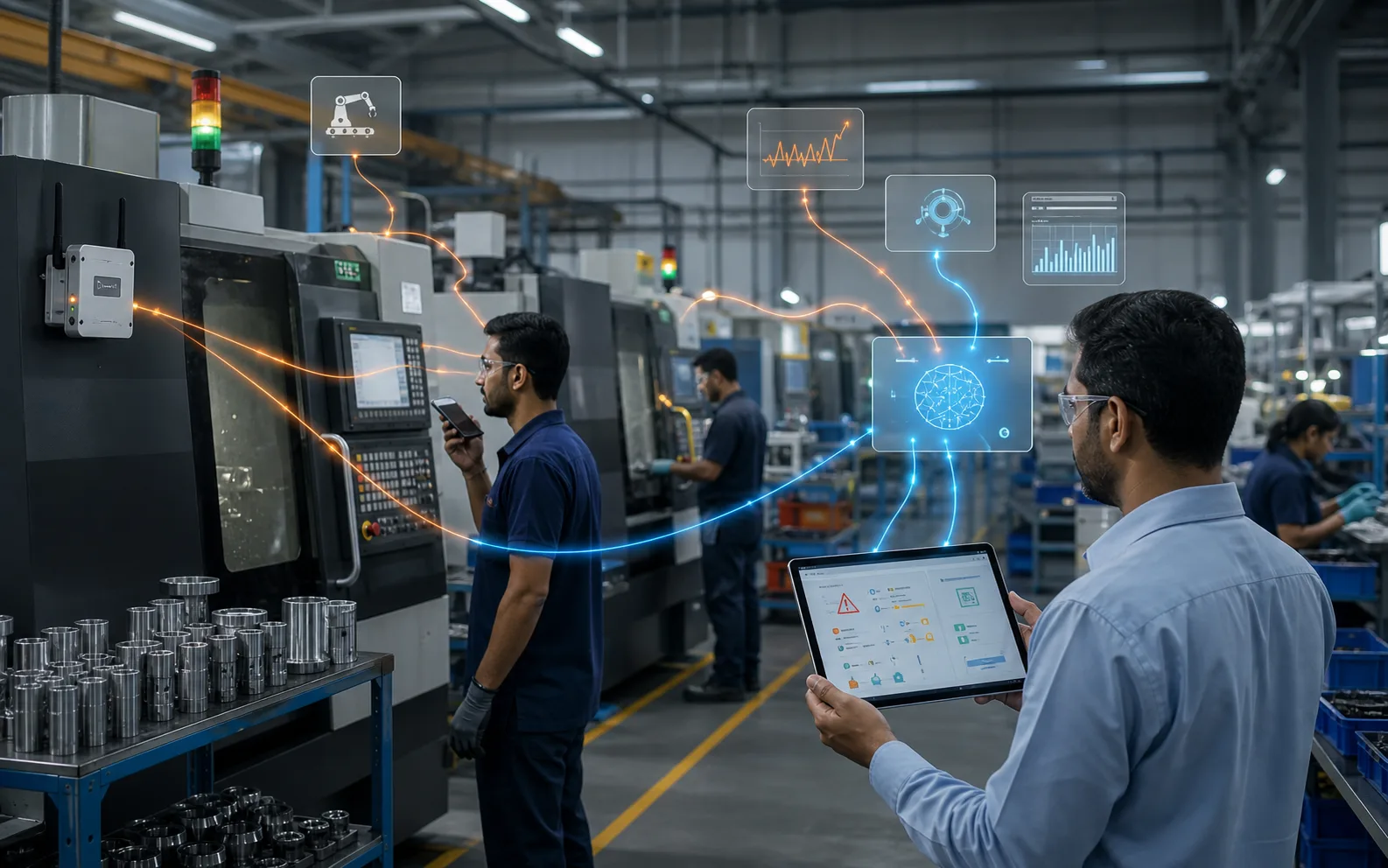
AI predicts equipment failure by studying patterns in machine behavior before breakdowns happen. It looks at signals such as vibration, temperature, runtime, downtime history, alarms, maintenance logs, and spare usage.
The goal is not to predict every failure perfectly. The goal is to identify risk early enough for maintenance teams to act before production is disrupted.
Machines Often Show Warning Signs
Most equipment failures do not happen without signals. A machine may start vibrating more than usual. A motor may run hotter. A bearing may create unusual noise. Energy consumption may rise. Minor stoppages may become more frequent.
Humans can notice some of these signs, but AI can track them continuously and compare them with historical patterns.
What Data AI Uses
AI can use many types of equipment data:
- Vibration readings
- Temperature readings
- Runtime hours
- Energy consumption
- Pressure readings
- Alarm history
- Downtime logs
- Maintenance records
- Spare replacement history
- Operator notes
- Production output
- Quality issues linked to machines
The more relevant data available, the better AI can identify risk.
Pattern Recognition
AI looks for patterns that often appear before failure.
For example:
- Vibration slowly increases before a bearing failure
- Temperature rises before a motor issue
- A specific alarm appears before downtime
- A machine fails after a certain runtime pattern
- Minor stoppages increase before a major breakdown
AI can compare current behavior with past failures and flag similar conditions.
Predictive Maintenance vs Preventive Maintenance
Preventive maintenance follows a fixed schedule. For example, inspect a machine every 30 days.
Predictive maintenance uses actual machine condition. If the machine is healthy, maintenance may be delayed. If the machine shows risk, maintenance may happen earlier.
AI supports this shift from calendar-based maintenance to condition-based maintenance.
AI Does Not Replace Maintenance Engineers
AI can flag risk, but maintenance engineers still need to inspect the machine, understand context, and decide action.
A temperature spike may be serious, or it may be caused by a temporary operating condition. A vibration alert may indicate failure, or it may come from sensor placement.
Human review prevents false decisions.
What Makes Predictions More Accurate?
Predictions improve when:
- Machines are monitored consistently
- Downtime reasons are recorded clearly
- Maintenance actions are documented
- Sensors are installed properly
- Historical failure data exists
- Operators record observations honestly
- AI is connected to production context
Bad data creates bad predictions. Good maintenance discipline improves AI output.
Which Equipment Should Be Monitored First?
Start with machines where failure is expensive.
Good candidates include:
- Bottleneck machines
- Critical production equipment
- Machines with repeated breakdowns
- Equipment with expensive spares
- Machines with long repair time
- Equipment that affects delivery commitments
- Safety-critical machines
Do not try to monitor everything on day one.
Business Benefits
AI-based failure prediction can help reduce:
- Unplanned downtime
- Emergency repair costs
- Production delays
- Overtime
- Spare shortages
- Quality problems after machine issues
- Customer delivery risk
The financial value depends on how costly downtime is for the factory.
Common Mistakes
One mistake is expecting AI to predict failure without enough data.
Another mistake is installing sensors but not changing maintenance workflow.
A third mistake is ignoring alerts because there are too many false positives. Alert quality matters.
Predictive maintenance must be implemented as a process, not just a dashboard.
Where AICAN Optiwise Fits
AICAN Optiwise helps manufacturers connect machine and shopfloor insights with production, inventory, quality, dispatch, and management visibility. Equipment failure risk becomes more useful when teams can see what production orders, materials, and dispatch commitments may be affected.
Optiwise is built as an AI-native operating system for manufacturers, combining ERP, workflows, IoT readiness, reports, and AI agents.
Learn more at AICAN Optiwise and About AICAN.
Founder’s Note
AICAN’s view is that predictive maintenance should not live only inside the maintenance department. A machine failure affects the whole factory.
Optiwise is built to connect equipment risk with production reality, so AI warnings can lead to better decisions instead of becoming another ignored alert list.
FAQ
Can AI predict every equipment failure?
No. AI can reduce surprises, but it cannot predict every failure with certainty.
Do I need sensors for AI failure prediction?
Sensors improve prediction, but factories can start with downtime logs and maintenance records.
What machine data is most useful?
Vibration, temperature, runtime, alarms, downtime history, and maintenance logs are highly useful.
Should AI alerts trigger automatic maintenance?
Not automatically. Maintenance teams should review alerts and inspect equipment.
Is predictive maintenance useful for small manufacturers?
Yes, especially for critical machines where downtime creates major cost or delivery risk.
Final Thought
AI predicts equipment failure by turning machine signals and maintenance history into early warnings. The value comes when teams act on those warnings before downtime becomes expensive.
Next step: Explore AICAN Optiwise if your factory wants equipment risk connected with production and operational visibility.

Related Posts
Is AI Worth the Investment for My Factory?
Learn how to decide if AI is worth the investment for your factory by evaluating use cases, data readiness, costs, risks, ROI, and operational impact.
13 Jun 2026Read more →Manufacturing AI Mistakes to Avoid Before You Start
List manufacturing AI mistakes and controls for unclear use case, messy data, unsafe automation, no owner, weak security and unreviewed recommendations.
13 Jun 2026Read more →What's the Difference Between AI and Regular Automation?
Understand the difference between AI and regular automation in manufacturing, with practical examples for workflows, decisions, alerts, and predictive operations.
13 Jun 2026Read more →What Are the Risks of Using AI in Manufacturing?
Understand the risks of AI in manufacturing, including bad data, wrong recommendations, safety issues, security, job fear, over-automation, and implementation failure.
13 Jun 2026Read more →