
How Competitors Are Using IoT in Manufacturing
See how manufacturers use IoT to improve visibility, maintenance, energy control, quality, and delivery without turning the factory into a science project.
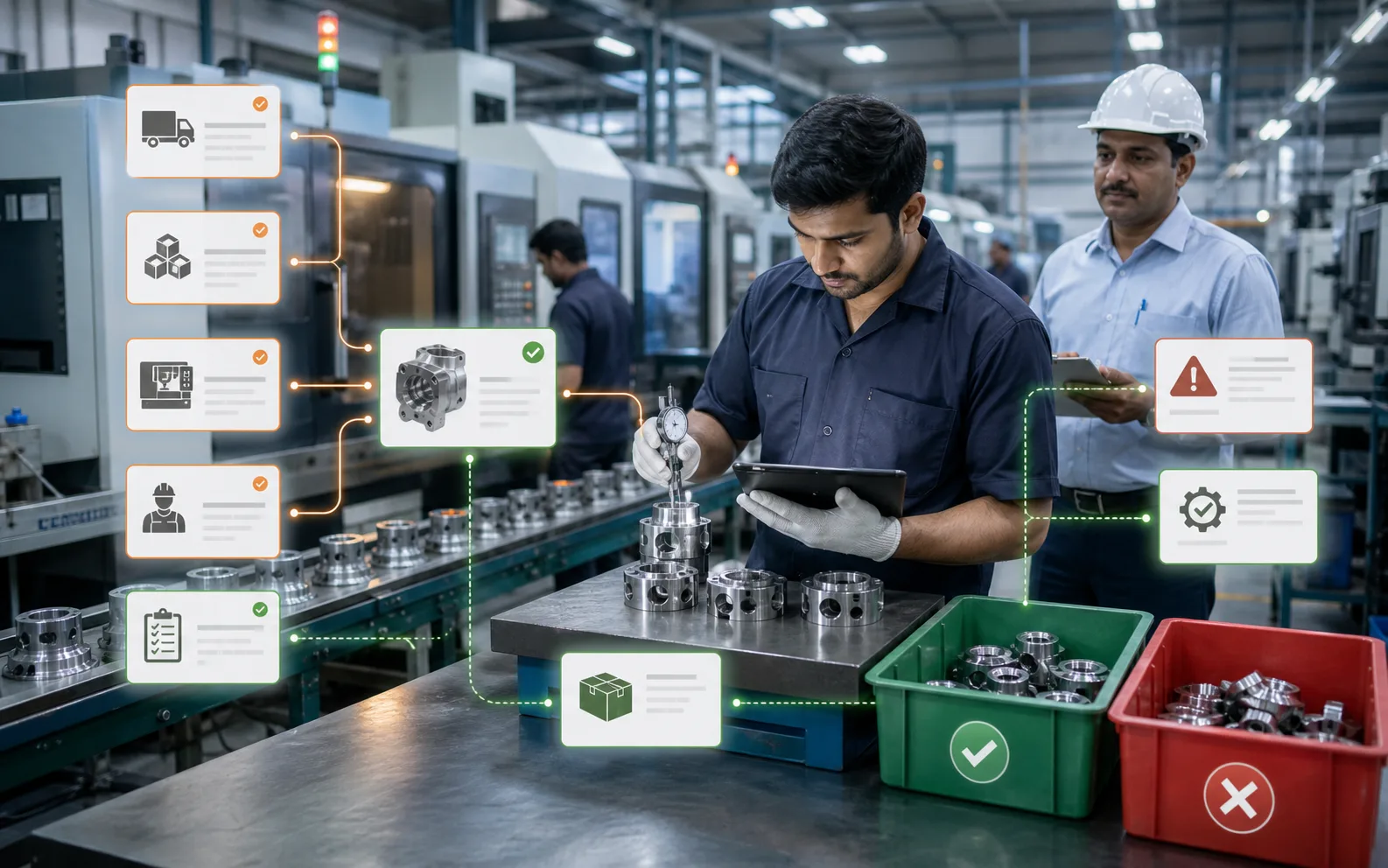
How Competitors Are Using IoT in Manufacturing
A competitor does not need a fully automated factory to move faster than you. Sometimes the advantage is simpler: they know which machine is slowing the line before the shift ends. They know why a batch was rejected. They know where power is being wasted. They know which order is likely to miss dispatch while there is still time to fix it.
That is where IoT for manufacturing becomes practical. It is not only about sensors, cloud dashboards, or Industry 4.0 language. On the factory floor, IoT is useful when it helps people make better decisions while the decision still matters.
For many small and mid-sized manufacturers, the real question is not whether competitors are using IoT. The better question is: what are they using it for, and where is it quietly changing their cost, speed, quality, and customer response?
The First Use Is Usually Visibility
Most factories already have data. The problem is that the data is trapped in machines, registers, Excel files, operator memory, WhatsApp messages, and end-of-shift summaries.
Competitors using IoT well are often not doing anything glamorous in the beginning. They are connecting basic shop-floor signals so production teams can see:
- which machines are running, idle, stopped, or waiting
- how long a stoppage actually lasted
- whether actual output matches the planned output
- which line is creating more rejection or rework
- where operators are repeatedly entering manual corrections
- whether raw material movement is aligned with production demand
This visibility changes the rhythm of management. Instead of asking, "What happened yesterday?" teams start asking, "What is happening now, and what should we do in the next hour?"
That one shift can reduce firefighting. Supervisors do not have to wait for reports. Owners do not need to chase five people for one update. Maintenance does not learn about issues only after production has already suffered.
Predictive Maintenance Is Becoming a Competitive Habit
A breakdown rarely begins at the moment the machine stops. There are usually early signals: vibration changes, temperature changes, pressure variation, unusual current draw, repeated micro-stoppages, longer cycle times, or operator complaints.
Manufacturers using IoT are starting to track these signals in a structured way. The goal is not to replace maintenance teams. The goal is to give them earlier warnings.
A competitor with connected maintenance data can plan downtime instead of suffering unplanned downtime. They can see which asset is becoming unreliable. They can compare maintenance history with actual machine behavior. They can stock critical spares based on usage patterns instead of guesswork.
For a plant where one machine controls a major part of output, even a few prevented breakdowns can change monthly delivery performance. This is why IoT maintenance projects often get management attention quickly: the pain is visible, and the savings are easy to understand.
Quality Teams Use IoT to Find Patterns Faster
Quality problems are expensive because they rarely stay inside one department. A rejected batch can affect production planning, inventory, dispatch, customer confidence, and cash flow.
Competitors using IoT are connecting quality data with production context. Instead of seeing only that rejection increased, they can ask sharper questions:
- Did rejection rise after a machine setting changed?
- Did it happen during a specific shift?
- Was one operator, vendor lot, tool, or raw material batch involved?
- Did temperature, pressure, humidity, speed, or load vary during the batch?
- Was the inspection result entered late or corrected manually?
This does not remove the need for quality judgment. It strengthens it. The quality manager gets a cleaner trail of evidence and can separate real process issues from assumptions.
For customers, this matters because traceability builds confidence. A manufacturer who can explain what happened, when it happened, and what corrective action was taken looks more reliable than one who only says, "We will check and update."
Energy Monitoring Is Becoming a Margin Tool
Energy is often treated as one large monthly bill. But competitors using IoT are breaking it down into usable factory intelligence.
They monitor machine-level consumption, compressor usage, idle power, peak-load behavior, shift-wise consumption, and production-linked energy cost. The useful metric is not only total electricity consumed. It is energy consumed per unit produced, per batch, per line, or per process.
This creates a different kind of cost control. Teams can see whether machines are left running during breaks. They can identify equipment that consumes more power than similar machines. They can understand whether overtime production is more expensive than planned. They can compare energy cost against actual output instead of only against last month's bill.
For manufacturers operating on thin margins, energy visibility can be a serious advantage. It may not make headlines, but it can protect profit.
Better Delivery Commitments Come From Better Data
Customers do not only compare price. They compare reliability. A competitor who can give a realistic dispatch date and keep it will often look stronger than a cheaper supplier who keeps changing the commitment.
IoT helps delivery performance when it connects production status with planning. If a line is behind schedule, the planning team knows earlier. If a machine is repeatedly stopping, the customer commitment can be reviewed before the last day. If material is not available, the issue is visible before operators are left waiting.
This is where IoT and ERP should work together. IoT shows what is happening on the floor. ERP connects that reality to orders, inventory, purchasing, costing, and dispatch. When both systems talk to each other, the business gets a more truthful view of delivery risk.
Competitors May Be Starting Smaller Than You Think
A common mistake is assuming that IoT adoption requires a large transformation project. Many manufacturers begin with one pain point:
- monitor one bottleneck machine
- digitize production counts on one line
- track downtime reasons for one department
- capture energy consumption for high-load equipment
- connect quality checks with batch records
- introduce alerts for stoppages or abnormal readings
This matters because small projects reduce fear. Teams can see results, improve the process, and then expand. The factory learns how to use data without being overwhelmed by it.
Competitors who started two years ago may not have started big. They may simply have started before others did.
How to Benchmark Without Copying Blindly
It is useful to observe competitors, but copying their technology stack blindly can become expensive. Your factory has its own machines, people, constraints, margins, and customer expectations.
A better benchmarking approach is to ask:
- Where are we losing time without clear proof?
- Which machine or process creates the most uncertainty?
- Which reports arrive too late to act on?
- Which customer complaints are hard to investigate?
- Which costs are visible only after the month is over?
- Which decisions still depend on memory instead of records?
These questions help you identify the right IoT use case for your plant. The best project is not the one with the most sensors. It is the one that solves the most expensive uncertainty.
Where AICAN Optiwise Fits
AICAN Optiwise is built for manufacturers who want factory data to become business action, not another disconnected dashboard. IoT signals are most valuable when they connect with production planning, inventory, purchase, sales, finance, reports, and management decisions.
With Optiwise, manufacturers can move from scattered updates to a more connected operating system for the factory. AICAN helps teams bring visibility into the workflows that already matter: production, inventory, orders, costing, maintenance follow-up, and performance review.
You can explore more about AICAN and the team behind the product on the About AICAN page.
Practical Signs Your Competitors Are Ahead
You may not see their internal dashboards, but you can often see the results:
- they respond faster to order status questions
- they quote lead times more confidently
- their rejection explanations are more specific
- they recover from breakdowns faster
- they negotiate better because they know their real costs
- they scale production without adding the same level of chaos
These are not only technology signals. They are management signals. IoT is useful because it improves management discipline.
FAQ
Are competitors really using IoT, or is it mostly hype?
Some companies overuse the word IoT, but the practical adoption is real. Many manufacturers are connecting machines, energy meters, quality checks, and production data in small stages. The most successful ones focus on business problems first, not technology language.
Should I copy the same IoT platform my competitor uses?
Not automatically. Your ideal system depends on your machines, team maturity, budget, reporting needs, and ERP requirements. Start with the decision you want to improve, then choose the tools that support that decision.
Can small manufacturers benefit from IoT?
Yes, especially when they start with a narrow use case. A small manufacturer may get strong value from monitoring one bottleneck machine, one energy-heavy process, or one quality-critical line.
What is the biggest mistake in IoT adoption?
The biggest mistake is collecting data without changing decisions. If the data does not affect maintenance, production planning, quality action, costing, or customer commitments, the project becomes decoration.
How should I start if my factory has old machines?
Start with retrofit-friendly options such as sensors, gateways, counters, energy meters, and operator input screens. You do not need to replace every machine to begin using connected data.
Founder’s Note
At AICAN, we see one pattern repeatedly: manufacturers do not lose only because they lack machines. They lose because important information reaches the right person too late. IoT becomes powerful when it shortens that delay.
Our belief is simple. A factory should not need ten separate systems to understand what is happening. The data from machines, people, inventory, orders, and finance should come together in a way that helps owners and teams act with confidence.
That is the thinking behind Optiwise.
Final Thought
Your competitors may not be running a futuristic factory. They may simply be measuring better, reacting faster, and learning from the floor more consistently.
That is enough to create an advantage.
The right way to respond is not panic. It is to choose one high-value area, connect the data, improve the decision, and build from there.

Related Posts
Is AI Worth the Investment for My Factory?
Learn how to decide if AI is worth the investment for your factory by evaluating use cases, data readiness, costs, risks, ROI, and operational impact.
13 Jun 2026Read more →Manufacturing AI Mistakes to Avoid Before You Start
List manufacturing AI mistakes and controls for unclear use case, messy data, unsafe automation, no owner, weak security and unreviewed recommendations.
13 Jun 2026Read more →What's the Difference Between AI and Regular Automation?
Understand the difference between AI and regular automation in manufacturing, with practical examples for workflows, decisions, alerts, and predictive operations.
13 Jun 2026Read more →What Are the Risks of Using AI in Manufacturing?
Understand the risks of AI in manufacturing, including bad data, wrong recommendations, safety issues, security, job fear, over-automation, and implementation failure.
13 Jun 2026Read more →