
How Much Data Do I Need to Use AI in Manufacturing?
Learn how much data manufacturers need to start using AI, which data matters first, and how factories can improve data readiness without overcomplicating adoption.
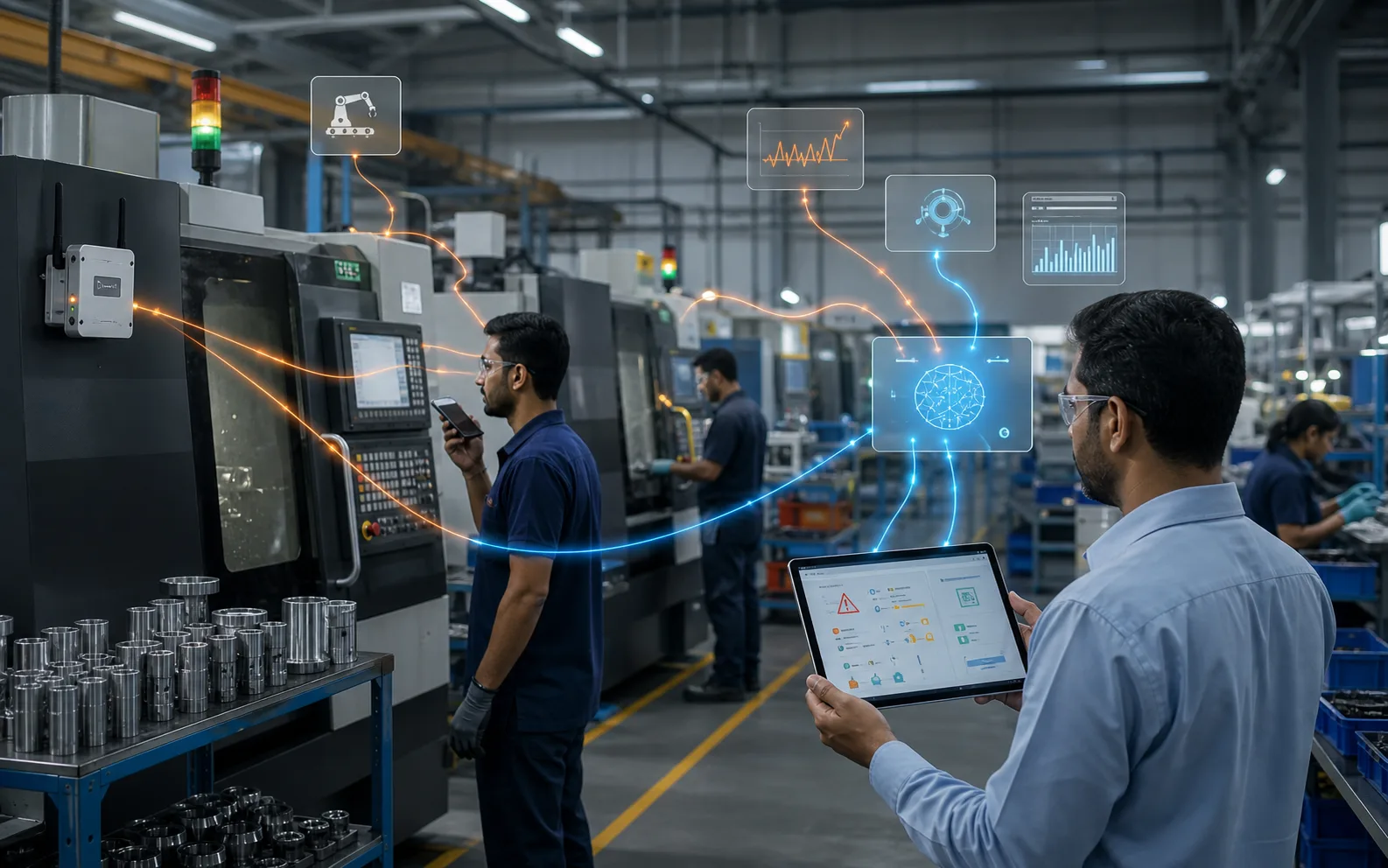
How Much Data Do I Need to Use AI in Manufacturing?
You do not need years of perfect data to start using AI in manufacturing. But you do need enough reliable data around the problem you want to solve. This distinction matters. Many manufacturers delay AI because they believe their data is not perfect. Others rush in with messy data and then lose trust when the system gives weak recommendations.
Artificial intelligence in manufacturing works best when the factory starts with a clear use case and the critical data required for that use case. If the goal is to reduce stockouts, inventory, purchase, consumption, lead time, and production requirement data matter most. If the goal is quality improvement, inspection results, defect reasons, supplier lots, process stages, and corrective actions matter more.
The right question is not "Do we have enough data for AI?" It is "Do we have reliable enough data to improve one decision?"
Start With the Decision You Want to Improve
Data requirements depend on the decision. For inventory risk, you need item masters, current stock, open purchase orders, consumption trends, supplier lead times, and production plans. For predictive maintenance, you need machine history, downtime reasons, maintenance records, operating hours, and sensor data where available.
For production scheduling, you need order priorities, capacity, routing, machine availability, material readiness, and due dates. For quality control, you need inspection results, rejection reasons, batch data, process information, and customer complaints.
A focused AI project needs focused data. Trying to clean every piece of data in the factory before starting can delay useful progress.
Quality Matters More Than Quantity at the Beginning
A smaller set of accurate data is more useful than a large set of unreliable data. If stock balances are regularly wrong, AI cannot predict shortages confidently. If downtime reasons are entered casually, maintenance predictions will be weak. If quality defects are recorded inconsistently, trend analysis becomes misleading.
Manufacturers should first improve the accuracy of the data that supports the chosen use case. This may include standardizing item codes, cleaning BOMs, defining downtime reasons, improving stock update discipline, or making inspection categories consistent.
Good data discipline is the foundation of trustworthy AI.
How Much Historical Data Is Useful?
Historical data helps AI identify patterns, but the amount needed varies. For simple alerts and rule-based recommendations, a factory can start with current operational data and a few months of history. For advanced prediction, more history improves reliability, especially where seasonality, machine behaviour, or supplier patterns matter.
In many practical cases, six to twelve months of reasonably clean data can provide a useful base. But manufacturers should not wait if they have less. They can begin capturing better data now and improve the intelligence over time.
What If My Data Is Scattered?
Scattered data is common. Production may be in Excel, inventory in accounting software, quality in registers, purchase in emails, and dispatch in WhatsApp messages. AI adoption should begin by bringing the most important workflows into a connected system.
This does not mean every historical file must be migrated. Start with master data and live operational workflows. Old data can be imported selectively if it supports the first use case.
Build Data Ownership
AI fails when nobody owns data accuracy. Each department should know which data it is responsible for and when updates must happen. Store teams own stock movement accuracy. Production teams own output and downtime updates. Quality teams own defect records. Purchase teams own vendor and lead time information.
Data ownership turns AI from a software project into an operating discipline.
Where AICAN Optiwise Fits
AICAN Optiwise helps manufacturers create an AI-ready data foundation by connecting production, inventory, purchase, sales, finance, reporting, IoT readiness, and AI workflows. Instead of leaving data scattered across departments, Optiwise gives teams one operating system for daily work.
This makes AI more dependable because recommendations are based on connected operational context. Learn more at aican.co.in and About AICAN.
Founder’s Note
AICAN’s founder-led belief is that manufacturers should not be blocked by imperfect data. The path is to start with the most important workflows, improve discipline, and let the system become smarter as the factory becomes more consistent.
AI readiness is built step by step, not declared in one meeting.
FAQ
Do I need years of data to use AI in manufacturing?
No. Years of data can help, but many use cases can begin with current operational data and a few months of history if the data is reliable.
What data should I prepare first?
Prepare the data linked to your first use case, such as inventory, production, purchase, quality, maintenance, or dispatch records.
Can AI work with messy data?
It can produce some insights, but reliability suffers. Clean the critical data first instead of trying to clean everything at once.
Who should own data accuracy?
Each department should own the data it creates. AI succeeds when data ownership is part of daily operations.
Final Thought
You do not need perfect data to begin. You need honest data, clear ownership, and a focused problem. AI becomes stronger as your factory’s operating discipline improves.
Next step: Explore AICAN Optiwise to see how connected workflows can help your factory build an AI-ready data foundation.

Related Posts
Is AI Worth the Investment for My Factory?
Learn how to decide if AI is worth the investment for your factory by evaluating use cases, data readiness, costs, risks, ROI, and operational impact.
13 Jun 2026Read more →Manufacturing AI Mistakes to Avoid Before You Start
List manufacturing AI mistakes and controls for unclear use case, messy data, unsafe automation, no owner, weak security and unreviewed recommendations.
13 Jun 2026Read more →What's the Difference Between AI and Regular Automation?
Understand the difference between AI and regular automation in manufacturing, with practical examples for workflows, decisions, alerts, and predictive operations.
13 Jun 2026Read more →What Are the Risks of Using AI in Manufacturing?
Understand the risks of AI in manufacturing, including bad data, wrong recommendations, safety issues, security, job fear, over-automation, and implementation failure.
13 Jun 2026Read more →