
How Much Data Do I Need to Train Manufacturing AI?
Learn how much data manufacturing AI needs, why data quality matters more than volume, and how factories can start with focused operational datasets.
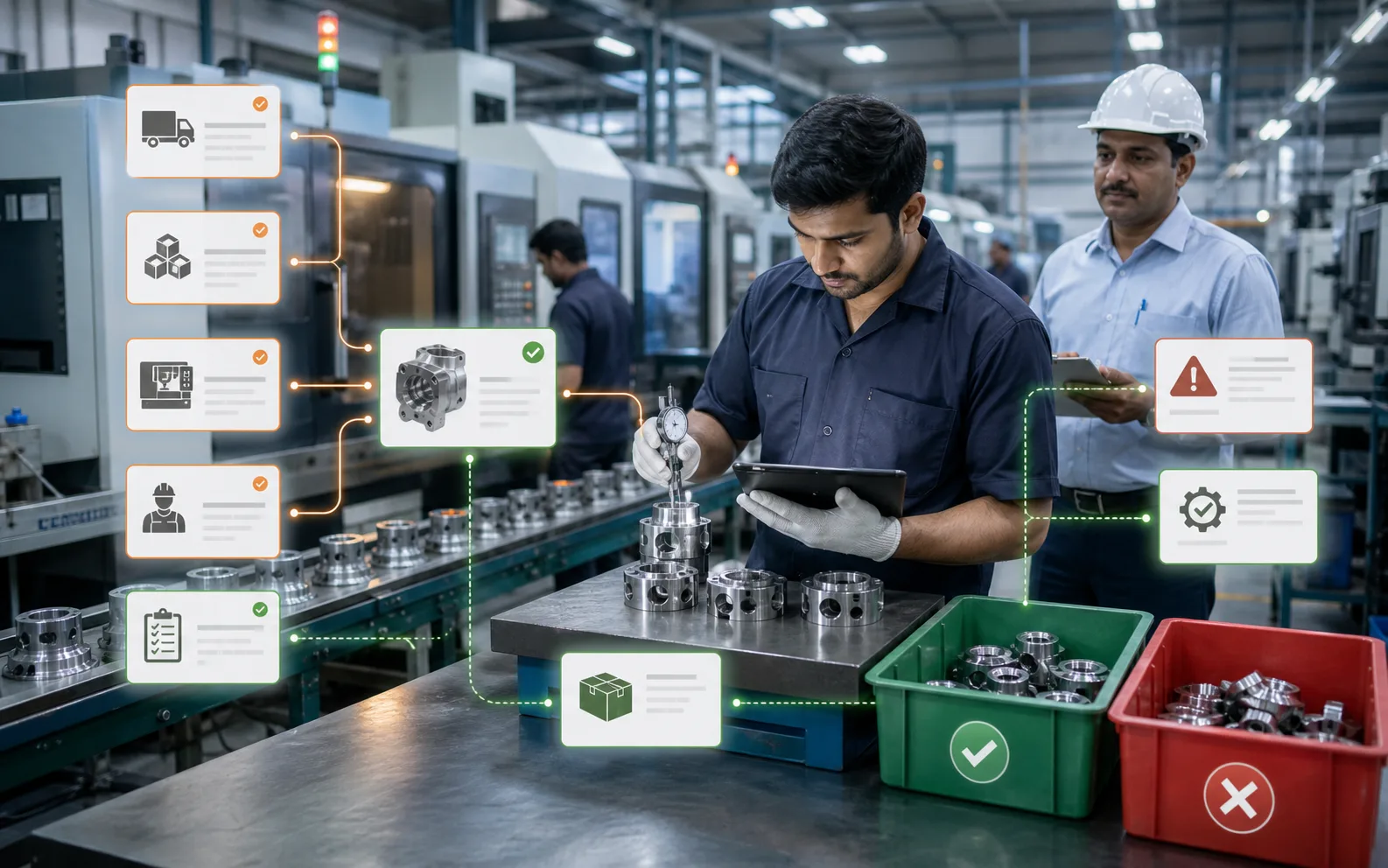
How Much Data Do I Need to Train Manufacturing AI?
You need enough relevant, reliable data for the decision you want AI to support. That may be months of production records for one use case, years of maintenance history for another, or a smaller clean dataset for reporting and classification.
The common mistake is thinking only about volume. More data is not automatically better. Clean, structured, recent, and well-labeled data is often more valuable than years of messy records.
Manufacturing AI succeeds when data explains the process clearly.
Start With the Use Case
The amount of data depends on the problem.
For inventory forecasting, you need stock movement, consumption history, purchase lead times, open orders, and demand patterns. For predictive maintenance, you need downtime history, maintenance records, spare usage, machine load, and failure reasons. For quality control, you need inspection results, defect categories, product details, supplier information, and corrective actions.
There is no single number because each use case learns from different signals.
Quality Beats Quantity
Ten thousand records with unclear item names, missing dates, and vague reasons may be less useful than two thousand clean records with proper structure.
AI needs consistent fields, meaningful categories, accurate timestamps, and reliable outcomes. If the system cannot tell what happened and why, data volume will not solve the problem.
Recent Data Matters
Manufacturing changes. Vendors change, machines age, products evolve, customer demand shifts, and processes improve. Very old data may not reflect current reality.
Historical data is useful, but recent data should carry weight. AI should learn from patterns that still matter today.
Labels and Reasons Matter
For AI to learn from failures, delays, or defects, records should include reason codes. “Breakdown” is less useful than motor issue, bearing failure, electrical fault, tool wear, or lubrication problem. “Rejected” is less useful than dimensional error, surface defect, wrong material, or process deviation.
Good labels turn raw history into learning material.
You Can Start Small
Manufacturers do not always need massive datasets to begin. AI-assisted reporting, exception summaries, duplicate detection, and workflow recommendations can start with existing ERP data.
More advanced prediction usually needs more history and better structure, but early use cases can begin while data maturity improves.
Where AICAN Optiwise Fits
AICAN Optiwise helps manufacturers create structured operational data across production, inventory, purchase, sales, finance, and reporting. This connected base makes AI easier to train, test, and trust.
AICAN helps teams focus on usable data first: the records that affect real decisions. Learn more at About AICAN.
Founder’s Note
The question is not “do we have enough data?” The better question is “do we have the right data for the decision we want to improve?”
Factories already create valuable signals every day. The work is to capture them clearly enough that people and AI can both learn from them.
FAQ
Do I need years of data for AI?
Not always. Some use cases need long history, while others can start with smaller clean datasets.
What matters more: data volume or quality?
Quality usually matters more. Clean, consistent, relevant data is essential.
Can AI work with spreadsheet data?
It can for limited use cases, but connected ERP data is stronger for operational AI.
What data should I collect first?
Collect data tied to the chosen use case: inventory, maintenance, quality, production, sales, or purchase records.
Final Thought
Manufacturing AI does not need endless data. It needs meaningful data. Start with a clear use case, clean the records that matter, and build from there.

Related Posts

Is AI Worth the Investment for My Factory?
Learn how to decide if AI is worth the investment for your factory by evaluating use cases, data readiness, costs, risks, ROI, and operational impact.
13 Jun 2026Read more →Manufacturing AI Mistakes to Avoid Before You Start
List manufacturing AI mistakes and controls for unclear use case, messy data, unsafe automation, no owner, weak security and unreviewed recommendations.
13 Jun 2026Read more →What's the Difference Between AI and Regular Automation?
Understand the difference between AI and regular automation in manufacturing, with practical examples for workflows, decisions, alerts, and predictive operations.
13 Jun 2026Read more →What Are the Risks of Using AI in Manufacturing?
Understand the risks of AI in manufacturing, including bad data, wrong recommendations, safety issues, security, job fear, over-automation, and implementation failure.
13 Jun 2026Read more →