
How Safe Is AI in Manufacturing Environments?
Learn how safe AI is in manufacturing environments, what risks to manage, and how factories can use AI responsibly with human review and controls.
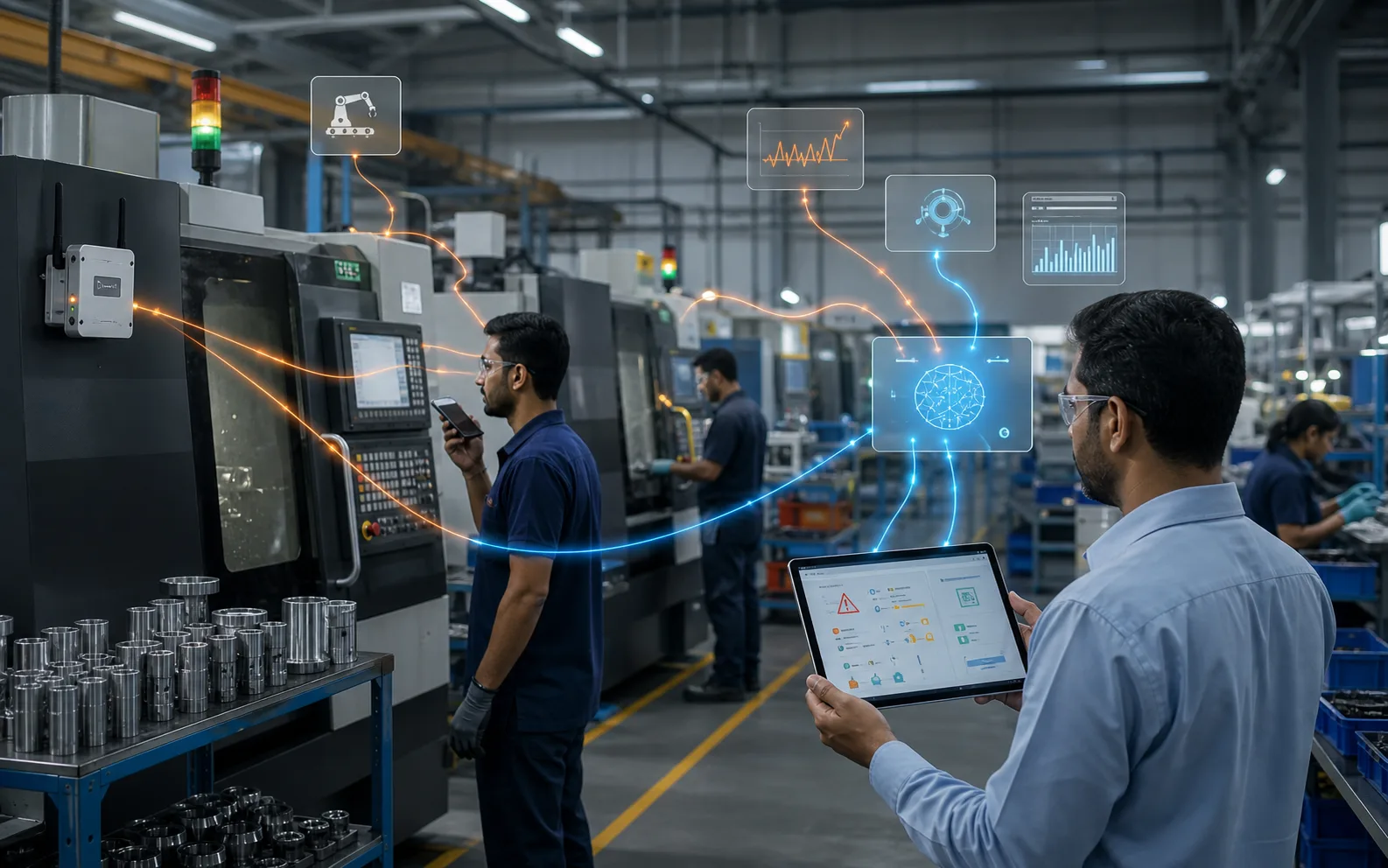
How Safe Is AI in Manufacturing Environments?
AI can be safe in manufacturing environments when it is used with clear controls, human review, secure data practices, and proper testing. It becomes risky when companies use AI for critical decisions without validation or accountability.
Manufacturing involves machines, materials, workers, quality, customers, and safety. AI must be implemented responsibly.
AI Safety Depends on the Use Case
AI used for SOP drafting has lower risk than AI used for machine control. AI used for report summaries has lower risk than AI used for safety shutdown decisions.
The higher the operational risk, the more validation and human review are needed.
Human Review Is Essential
AI should not make critical manufacturing decisions alone in the early stages.
Human review is important for:
- Safety alerts
- Machine maintenance decisions
- Quality release decisions
- Production schedule changes
- Supplier substitutions
- Customer commitments
- Compliance documents
AI can support. People remain accountable.
Data Quality Affects Safety
Bad data can lead to wrong AI output. If downtime logs are incomplete or sensor readings are faulty, AI may miss risk or create false alarms.
Data validation is part of AI safety.
Avoid Alert Fatigue
If AI creates too many alerts, users may ignore them. A safe system prioritizes meaningful alerts and explains why they matter.
Secure Data Handling
AI safety also includes information safety. Manufacturing data must be protected through role-based access, secure integrations, and clear policies.
Testing Before Rollout
AI should be tested in a controlled way before full deployment. Run pilots, compare AI output with expert judgment, and refine workflows.
Safe AI Adoption Practices
Manufacturers should:
- Start with low-risk use cases
- Keep human approval
- Train users
- Protect data
- Validate sensors
- Monitor accuracy
- Define escalation rules
- Document decisions
Where AICAN Optiwise Fits
AICAN Optiwise brings AI into structured manufacturing workflows, helping teams use AI with better context and control. It connects ERP, workflows, reports, IoT readiness, and AI agents across sales, purchase, inventory, production, shopfloor, quality, dispatch, and finance visibility.
This structured approach is safer than uncontrolled AI usage across scattered tools.
Learn more at AICAN Optiwise and About AICAN.
Founder’s Note
AICAN’s belief is that AI in manufacturing must be practical and responsible. Factories cannot rely on black-box decisions where safety, quality, or delivery is at stake.
Optiwise is built to keep AI connected to workflows where people can review, understand, and act with accountability.
FAQ
Is AI safe for factories?
Yes, if implemented with controls, testing, human review, and secure data practices.
Can AI control machines safely?
It can in specific controlled systems, but manufacturers should be cautious and validate thoroughly.
What is the biggest safety risk?
Using AI recommendations without human review or relying on poor data.
How do you reduce AI safety risk?
Start with low-risk use cases, test carefully, train users, and define approval rules.
Is AI safer inside ERP workflows?
It can be safer because roles, data, and actions are more structured.
Final Thought
AI can be safe in manufacturing when it is treated as a controlled decision-support tool. Safety comes from clear workflows, good data, trained users, and human accountability.
Next step: Explore AICAN Optiwise if your factory wants AI inside structured manufacturing workflows with operational context.

Related Posts
Is AI Worth the Investment for My Factory?
Learn how to decide if AI is worth the investment for your factory by evaluating use cases, data readiness, costs, risks, ROI, and operational impact.
13 Jun 2026Read more →Manufacturing AI Mistakes to Avoid Before You Start
List manufacturing AI mistakes and controls for unclear use case, messy data, unsafe automation, no owner, weak security and unreviewed recommendations.
13 Jun 2026Read more →What's the Difference Between AI and Regular Automation?
Understand the difference between AI and regular automation in manufacturing, with practical examples for workflows, decisions, alerts, and predictive operations.
13 Jun 2026Read more →What Are the Risks of Using AI in Manufacturing?
Understand the risks of AI in manufacturing, including bad data, wrong recommendations, safety issues, security, job fear, over-automation, and implementation failure.
13 Jun 2026Read more →