
How Secure Is Manufacturing AI Software?
Understand manufacturing AI software security, including data privacy, role-based access, ERP permissions, vendor checks, audit trails, and safe AI usage.
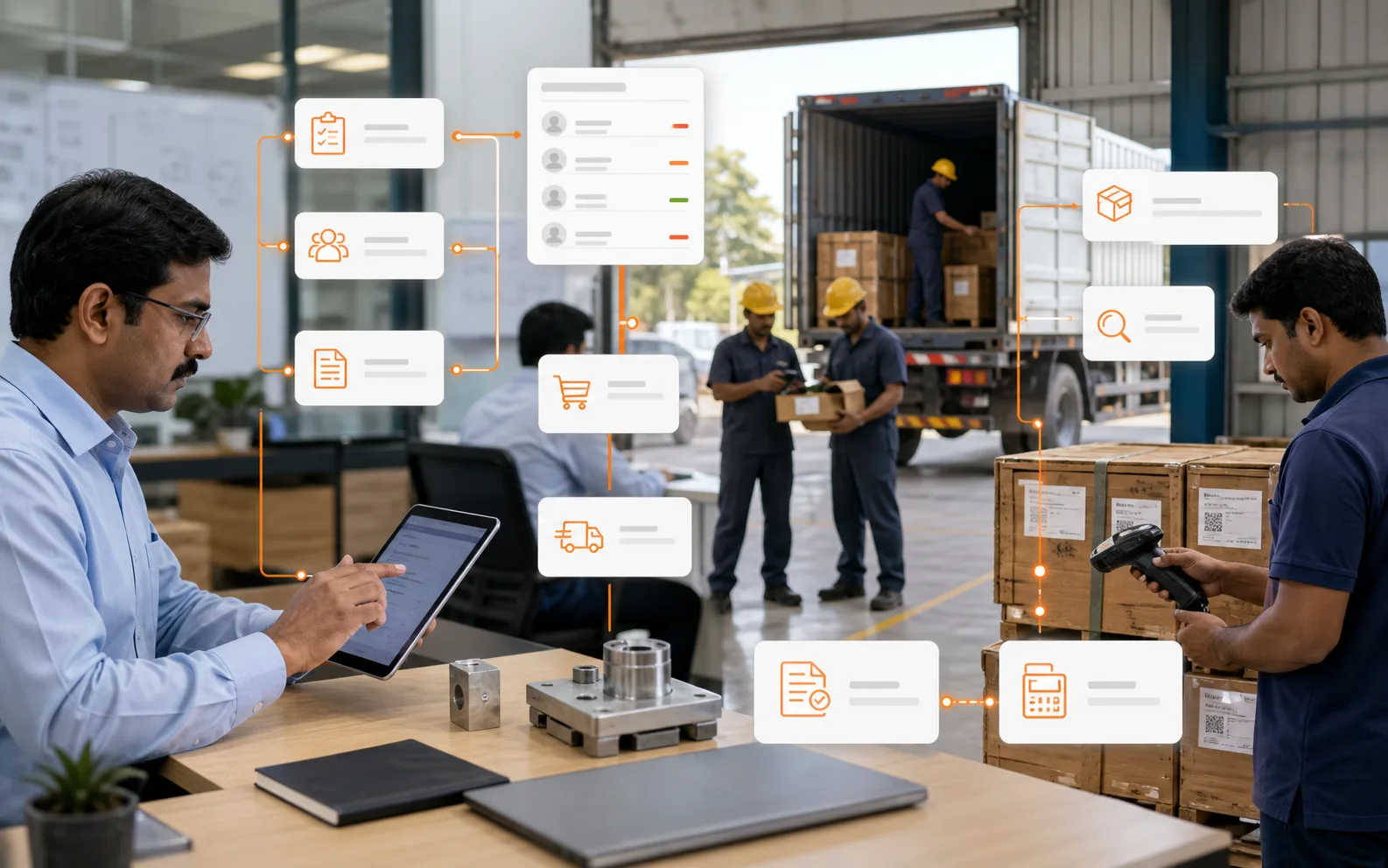
How Secure Is Manufacturing AI Software?
Manufacturing AI software can be secure, but only if it is designed and implemented with proper controls. Manufacturers should not assume every AI tool is safe for factory data.
AI may touch sensitive information: BOMs, costs, production plans, vendor rates, customer orders, quality records, machine data, employee details, and financial visibility. That data must be protected.
What Manufacturing Data Needs Protection?
Sensitive manufacturing data includes:
- Bills of material
- Product designs
- Customer orders
- Vendor pricing
- Purchase rates
- Inventory value
- Production schedules
- Quality records
- Rejection history
- Machine data
- Financial summaries
- Employee information
- Customer commitments
If this information leaks or is misused, the business can be harmed.
Ask How Data Is Stored
Before using AI software, ask where data is stored and how it is protected.
Important questions:
- Is data encrypted?
- Where is it hosted?
- Who has access?
- Is data used to train external models?
- Can company data be deleted?
- Are backups secure?
- Is access logged?
A responsible vendor should answer clearly.
Role-Based Access Matters
Not every user should see every AI answer. A storekeeper may need inventory visibility. Finance may need cost visibility. Production may need job status. Quality may need inspection records.
AI should respect the same permissions as the ERP or business system.
If AI ignores roles, it can expose sensitive data to the wrong users.
Be Careful with Free AI Tools
Free or public AI tools may be useful for generic writing, but manufacturers should be cautious about uploading sensitive data.
Do not upload:
- BOMs
- Customer lists
- Vendor rates
- Cost sheets
- Production plans
- Quality complaints
- Employee data
- Financial reports
unless the tool is approved for business use.
Audit Trails
Manufacturing AI software should ideally maintain audit trails for important actions and access.
You should know:
- Who asked the question
- What data was used
- What output was produced
- Whether any workflow action was taken
- Who approved the action
This is important for accountability.
Integration Security
AI connected to ERP, IoT, or machine systems must be integrated securely. APIs, credentials, and data flows should be controlled.
Weak integrations can become security risks.
Human Review Is Also a Security Control
Security is not only technical. Users need training on what data can be shared, what outputs can be trusted, and what decisions need approval.
A trained user is part of the security system.
What to Ask a Vendor
Ask:
- How is data protected?
- Is our data used for model training?
- Can access be role-based?
- Is there an audit trail?
- How are integrations secured?
- What happens if a user asks for restricted data?
- Can sensitive fields be masked?
- What support is available for security setup?
Where AICAN Optiwise Fits
AICAN Optiwise brings AI into connected manufacturing workflows rather than leaving teams to use random tools for sensitive data. Its AI-native operating system is built around ERP, workflows, reports, IoT readiness, and AI agents for manufacturing operations.
For MSME manufacturers, this matters because AI should work inside controlled operational systems, not through uncontrolled data sharing.
Learn more at AICAN Optiwise and About AICAN.
Founder’s Note
AICAN’s belief is that manufacturing AI must be practical and responsible. Factory data is not casual information. It includes customer commitments, costs, materials, quality, and production reality.
Optiwise is built so AI can support teams inside structured workflows where access, context, and responsibility are clearer.
FAQ
Is manufacturing AI software safe?
It can be safe if it has strong data protection, role-based access, secure integrations, and clear vendor policies.
Can AI expose sensitive data?
Yes, if permissions and security controls are weak.
Should employees use free AI tools for factory data?
Only if company policy allows it and sensitive data is protected. Otherwise, avoid uploading confidential data.
What is role-based access?
It means users only see the data relevant to their role.
What security question should I ask first?
Ask whether your company data is used to train external AI models and who can access it.
Final Thought
Manufacturing AI security depends on the tool, the vendor, the implementation, and user discipline. AI should make operations smarter without putting factory data at risk.
Next step: Explore AICAN Optiwise if you want AI inside structured manufacturing workflows rather than uncontrolled data sharing.

Related Posts
Is AI Worth the Investment for My Factory?
Learn how to decide if AI is worth the investment for your factory by evaluating use cases, data readiness, costs, risks, ROI, and operational impact.
13 Jun 2026Read more →Manufacturing AI Mistakes to Avoid Before You Start
List manufacturing AI mistakes and controls for unclear use case, messy data, unsafe automation, no owner, weak security and unreviewed recommendations.
13 Jun 2026Read more →What's the Difference Between AI and Regular Automation?
Understand the difference between AI and regular automation in manufacturing, with practical examples for workflows, decisions, alerts, and predictive operations.
13 Jun 2026Read more →What Are the Risks of Using AI in Manufacturing?
Understand the risks of AI in manufacturing, including bad data, wrong recommendations, safety issues, security, job fear, over-automation, and implementation failure.
13 Jun 2026Read more →