
How Do I Know If an AI Tool Actually Works?
Learn how manufacturers can evaluate AI tools using real data, measurable outcomes, pilot results, workflow fit, transparency, and team adoption.
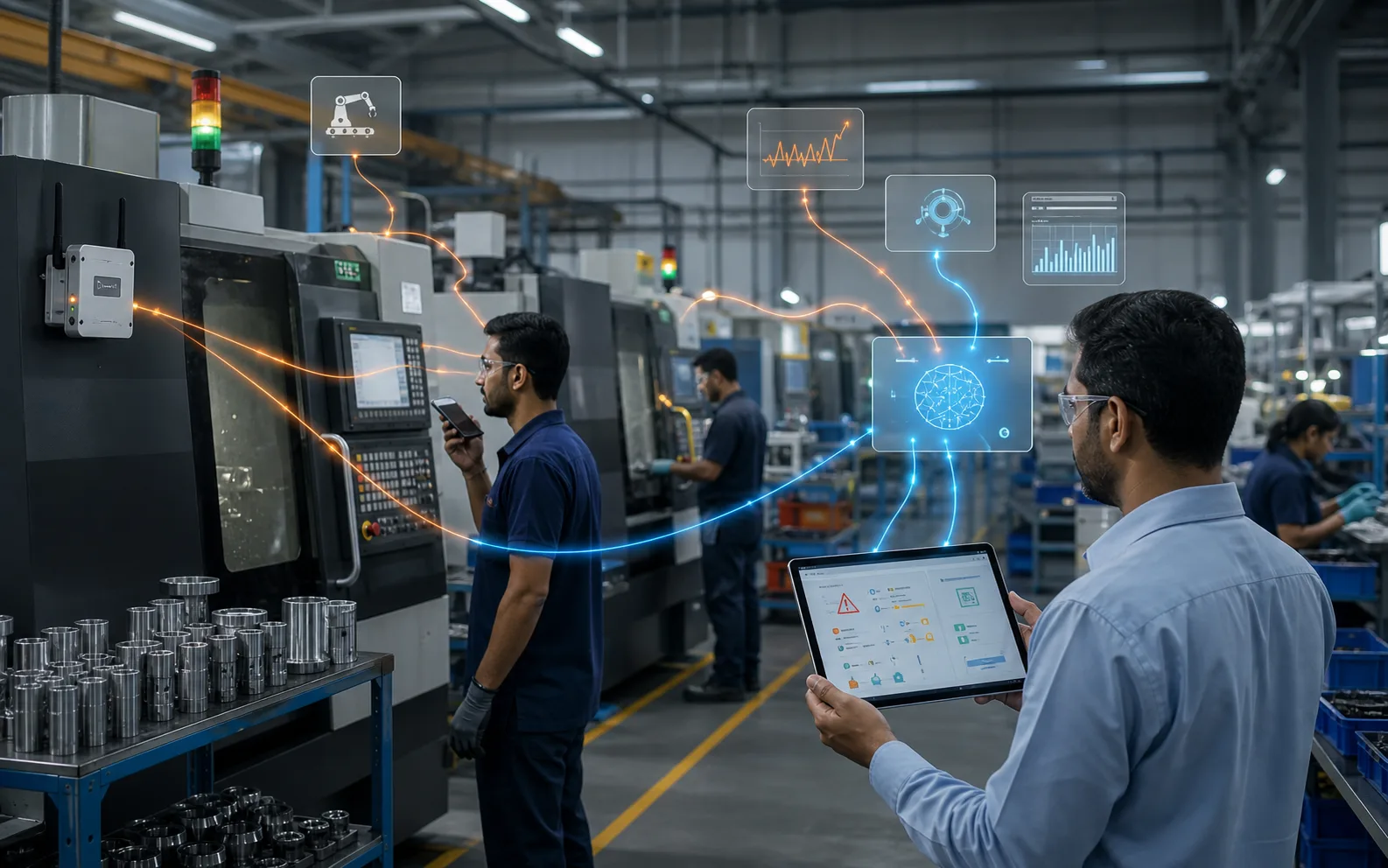
How Do I Know If an AI Tool Actually Works?
An AI tool works when it improves a real business outcome, not when the demo looks impressive. In manufacturing, that outcome may be fewer stockouts, faster reports, lower downtime, better delivery visibility, reduced scrap, cleaner planning, or quicker management decisions.
The challenge is that AI demos often look smooth. A tool can produce polished summaries, attractive dashboards, and confident recommendations. But the real test is whether it performs with your data, your workflows, your machines, your people, and your constraints.
Manufacturers should evaluate AI the same way they evaluate any serious operational investment: with evidence.
Start With a Clear Use Case
Before judging an AI tool, define the problem it must solve. “Improve efficiency” is too broad. “Reduce manual time spent preparing daily production reports” is clearer. “Flag material shortages before they delay production” is clearer. “Identify machines with rising downtime risk” is clearer.
A clear use case gives you something measurable. Without it, every AI tool can sound useful and none can be judged properly.
Test With Real Factory Data
A vendor demo may use clean sample data. Your factory data may include inconsistent item names, late entries, missing downtime reasons, and unusual order patterns. That is normal.
A useful AI tool should be tested with a controlled sample of your actual operational data. The goal is not to expose perfection. The goal is to see how the tool behaves in your real environment.
If the AI only works on ideal data, it may not be ready for your plant.
Look for Explainable Recommendations
A manufacturing AI tool should not only give an answer. It should show why.
If it says a material may run short, it should point to consumption, open orders, purchase lead time, and current stock. If it says a machine has breakdown risk, it should show downtime history, maintenance records, or usage patterns. If it flags a delivery delay, it should show the constraint.
Teams trust AI faster when they can inspect the reasoning.
Measure Before and After
A pilot should compare current performance with AI-assisted performance. How long did reporting take before? How many stock risks were missed? How fast were customer updates prepared? How many downtime alerts led to useful action?
The tool does not need to solve everything immediately. But it should show measurable improvement in the selected workflow.
Check Workflow Fit
Even accurate AI can fail if it does not fit the way people work. If alerts arrive in the wrong place, if approvals are unclear, or if users must jump between too many systems, adoption will suffer.
A good AI tool should fit into daily operations. It should support the roles already responsible for decisions: production, purchase, stores, quality, maintenance, sales, and management.
Where AICAN Optiwise Fits
AICAN Optiwise helps manufacturers evaluate AI through connected operations rather than isolated dashboards. When production, inventory, purchase, sales, finance, and reporting are linked, AI outcomes can be measured against real workflows.
AICAN focuses on practical value: better visibility, cleaner decisions, and measurable operational improvement. Learn more at About AICAN.
Founder’s Note
The question is not whether an AI tool sounds advanced. The question is whether your team becomes faster, clearer, and more confident after using it.
In manufacturing, useful technology earns trust on the shopfloor and in daily reviews, not only in presentations.
FAQ
What is the best way to evaluate an AI tool?
Run a focused pilot with real operational data and measure one or two clear outcomes.
Should I trust vendor demos?
Use demos for understanding, but validate performance with your own data and workflows.
What if the AI gives wrong recommendations?
Review why it failed. The issue may be poor data, unclear workflow rules, or a model limitation.
How long should an AI pilot run?
Long enough to cover real operating variation. For many focused use cases, a few weeks can reveal useful evidence.
Final Thought
A manufacturing AI tool works when it improves decisions in the real factory. Ask for evidence, test with real data, and measure outcomes before scaling.

Related Posts
Is AI Worth the Investment for My Factory?
Learn how to decide if AI is worth the investment for your factory by evaluating use cases, data readiness, costs, risks, ROI, and operational impact.
13 Jun 2026Read more →Manufacturing AI Mistakes to Avoid Before You Start
List manufacturing AI mistakes and controls for unclear use case, messy data, unsafe automation, no owner, weak security and unreviewed recommendations.
13 Jun 2026Read more →What's the Difference Between AI and Regular Automation?
Understand the difference between AI and regular automation in manufacturing, with practical examples for workflows, decisions, alerts, and predictive operations.
13 Jun 2026Read more →What Are the Risks of Using AI in Manufacturing?
Understand the risks of AI in manufacturing, including bad data, wrong recommendations, safety issues, security, job fear, over-automation, and implementation failure.
13 Jun 2026Read more →