
Can IoT Help Maintain GMP Compliance?
Learn how IoT can support GMP compliance discipline through real-time monitoring, alerts, equipment data, environmental tracking, audit trails, and ERP integration.
Can IoT Help Maintain GMP Compliance?
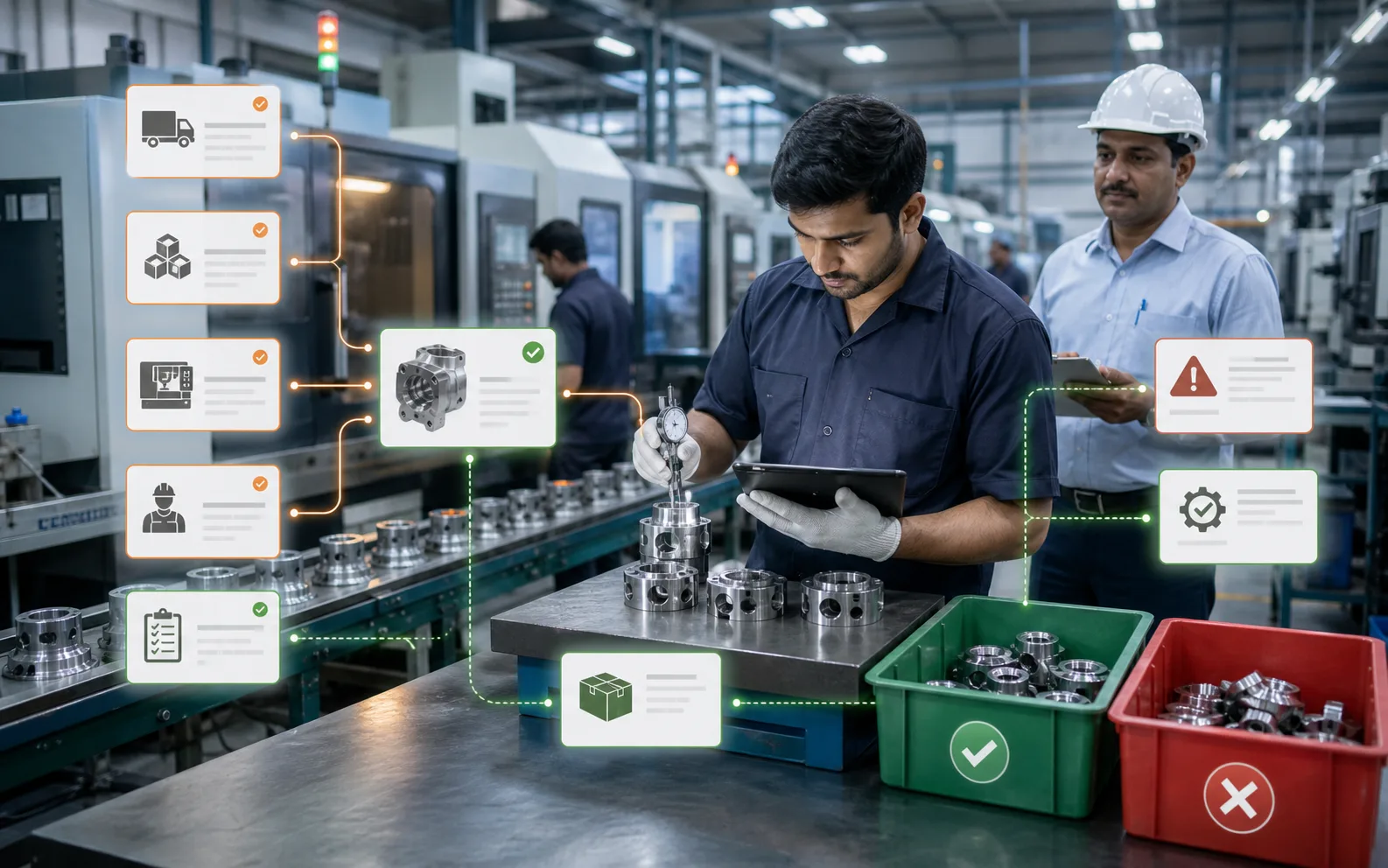
IoT can help maintain GMP compliance discipline by making important equipment, process, and environmental signals easier to monitor, alert, record, and review. It can support better visibility, faster response, and stronger evidence. But IoT does not make a pharma company compliant by itself.
GMP compliance depends on validated processes, SOPs, trained users, quality oversight, audits, documentation, and applicable regulations. IoT is useful when it supports those controls. It becomes risky when teams treat sensor data as a magic compliance layer without defining how the data will be used, reviewed, protected, and acted upon.
AICAN Optiwise helps manufacturers connect operational systems such as production, inventory, quality, maintenance, and reporting. IoT becomes more valuable when its signals are connected to ERP workflows rather than sitting in a separate dashboard nobody acts on.
What IoT can monitor in pharma factories
IoT sensors and machine integrations can capture many types of data depending on the equipment and process.
Common monitoring areas include:
- Temperature
- Humidity
- Differential pressure
- Machine runtime
- Machine stoppage
- Vibration
- Energy consumption
- Utility performance
- Clean room conditions
- Cold storage conditions
- Equipment operating parameters
- Door opening events where relevant
Not every parameter needs IoT. The right starting point is risk and usefulness: which signals affect quality, downtime, storage, investigation, or compliance-supporting records?
IoT helps by reducing blind spots
Manual checks happen at intervals. IoT can provide more frequent or continuous visibility. This helps teams detect excursions, abnormal machine behavior, or environmental drift earlier.
For example:
- A cold storage area crosses the defined temperature range.
- A clean room humidity trend starts moving toward the limit.
- A critical machine shows repeated stoppages.
- A utility parameter becomes unstable.
- A sensor alert triggers maintenance review.
These signals are useful only if the response workflow is defined. Someone must own the alert, review the event, document action, and escalate if needed.
Alerts should become workflows
A common IoT failure is alert fatigue. Systems generate notifications, but teams stop trusting them because too many alerts are irrelevant or unactioned.
For GMP-supporting use, alerts should be designed carefully.
Each alert should define:
- What condition triggers it?
- Who receives it?
- How quickly must it be reviewed?
- What action is expected?
- Should a deviation or investigation be opened?
- Is the affected batch, material, room, or equipment identified?
- How is the response documented?
IoT should create accountable workflows, not just noise.
IoT data should connect with ERP and quality records
Sensor data becomes more useful when linked to the operating record.
For example:
- Equipment runtime links to production batch records.
- Temperature excursions link to affected storage batches.
- Machine stoppage links to downtime records.
- Environmental readings link to room or area records.
- Maintenance alerts link to work orders.
- Quality review links to event history.
Without integration, IoT may show what happened but not connect it to the affected product, batch, equipment, or action. ERP helps provide that context.
Data integrity matters
If IoT data is used for GMP-relevant decisions, data integrity must be taken seriously. The company should review how data is captured, stored, protected, backed up, accessed, and reviewed.
Important questions include:
- Are sensor identities controlled?
- Are timestamps reliable?
- Can users alter records without traceability?
- Are audit trails available where needed?
- Are devices calibrated or verified according to SOP?
- Is data protected from unauthorized changes?
- Are exceptions reviewed?
- Is backup and retention handled properly?
These decisions should involve quality, production, maintenance, and IT teams.
IoT does not replace human review
Real-time monitoring is powerful, but human review is still essential. A sensor can detect a temperature excursion. It cannot decide the full quality impact alone unless the process and decision logic are formally defined and approved.
The quality team should define how IoT events are reviewed, when investigation is needed, and how records are closed.
This is especially important when IoT data affects product disposition, release decisions, storage suitability, or batch investigation.
Best starting points for IoT in pharma
The best first IoT projects are usually specific, measurable, and tied to an operational pain.
Good starting points include:
- Cold room temperature monitoring
- Clean room temperature and humidity monitoring
- Critical equipment runtime and downtime tracking
- Utility monitoring
- Preventive maintenance triggers
- Energy monitoring for high-consumption assets
- Storage condition alerts
Start with one or two high-value workflows. Prove that the team can respond to alerts properly before expanding across the plant.
Where Optiwise fits
Optiwise can help manufacturers connect IoT signals with ERP workflows such as maintenance, production, inventory, quality checkpoints, and reporting.
For pharma companies, this means IoT should not stay as a standalone screen. It should support action:
- Create alerts
- Inform maintenance
- Connect events to batches or equipment
- Support quality review
- Improve management visibility
- Reduce manual reporting delay
AICAN focuses on practical digital transformation, where technology must help the factory respond better, not just collect more data.
Founder’s Note
IoT is useful when it changes behavior. A sensor that only creates a dashboard is less valuable than a simple alert that prevents a real issue. At AICAN, we believe pharma digitization should connect data with responsibility. If a parameter moves, the right person should know, act, and leave a record. That is where IoT and ERP together become powerful. Learn more at About AICAN.
FAQs
Can IoT help maintain GMP compliance?
IoT can support GMP compliance discipline by monitoring equipment, environment, storage, and process signals. It helps with alerts, records, and visibility, but it does not guarantee compliance by itself.
What can IoT monitor in pharma manufacturing?
IoT can monitor temperature, humidity, pressure, machine runtime, stoppage, vibration, energy, utility performance, clean room conditions, and storage conditions depending on the process.
Should IoT connect with ERP?
Yes, where useful. ERP provides context such as batch, equipment, inventory, maintenance, quality status, and reporting. This makes IoT data more actionable.
Is IoT data subject to data integrity expectations?
If IoT data is used for GMP-relevant decisions, the company should review data integrity, audit trails, access control, calibration, validation, backup, and retention expectations with its quality team.
What is the best first IoT use case for pharma?
Cold room monitoring, clean room environmental monitoring, and critical equipment downtime tracking are often practical starting points because they solve visible operational problems.

Related Posts

Is AI Worth the Investment for My Factory?
Learn how to decide if AI is worth the investment for your factory by evaluating use cases, data readiness, costs, risks, ROI, and operational impact.
13 Jun 2026Read more →Manufacturing AI Mistakes to Avoid Before You Start
List manufacturing AI mistakes and controls for unclear use case, messy data, unsafe automation, no owner, weak security and unreviewed recommendations.
13 Jun 2026Read more →What's the Difference Between AI and Regular Automation?
Understand the difference between AI and regular automation in manufacturing, with practical examples for workflows, decisions, alerts, and predictive operations.
13 Jun 2026Read more →What Are the Risks of Using AI in Manufacturing?
Understand the risks of AI in manufacturing, including bad data, wrong recommendations, safety issues, security, job fear, over-automation, and implementation failure.
13 Jun 2026Read more →