
IoT and Manufacturing: New Software Engineering Opportunities
Explore IoT software engineering opportunities in manufacturing, including machine data, dashboards, predictive maintenance, ERP integration, and AI workflows.

IoT and Manufacturing: New Software Engineering Opportunities
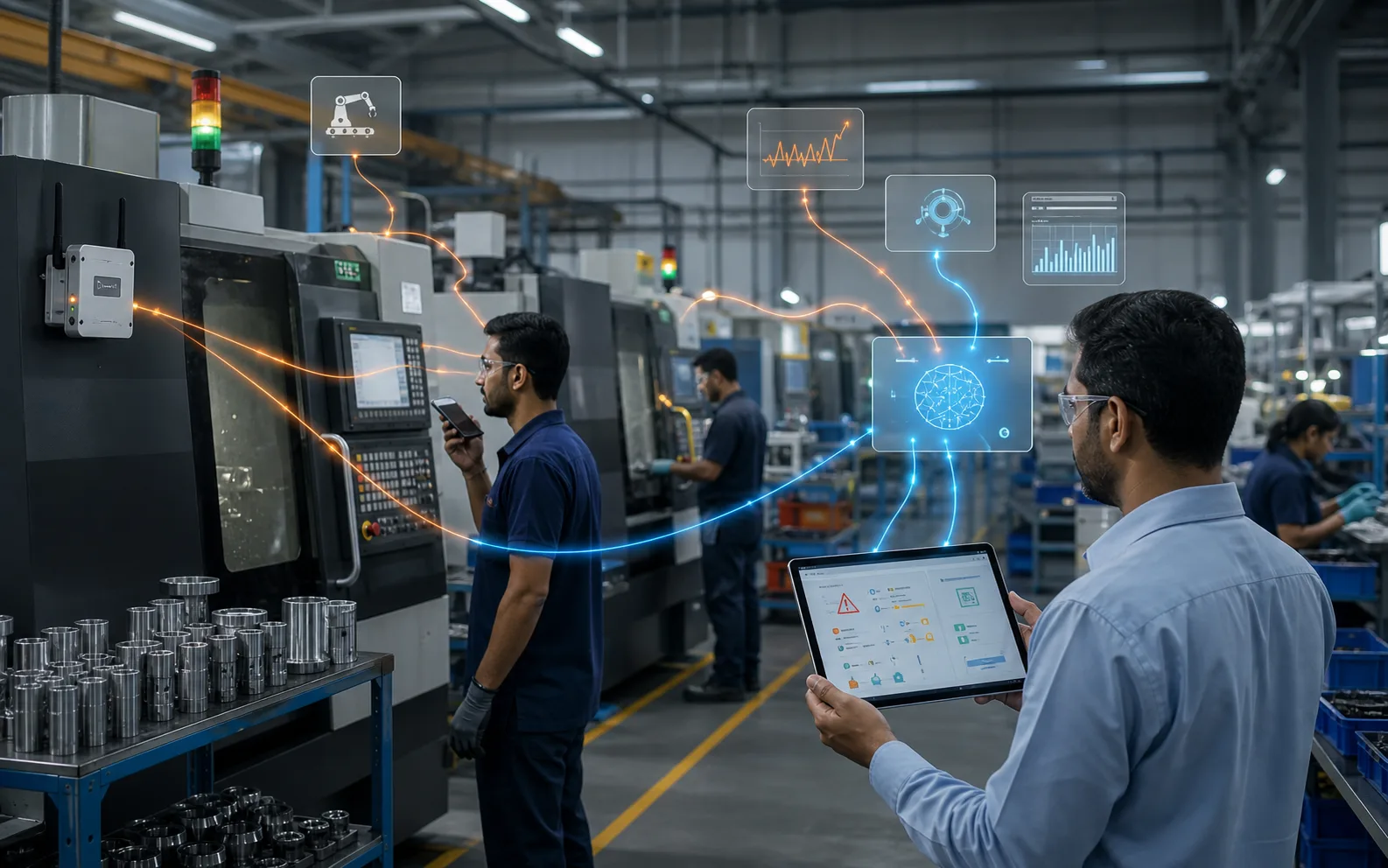
IoT is changing manufacturing by connecting machines, sensors, devices, and software systems. Instead of waiting for manual updates, factories can capture live data about production, machine health, energy use, downtime, temperature, vibration, and output.
This creates new opportunities for software engineers who can turn raw device data into useful decisions.
What IoT Means in Manufacturing
In manufacturing, IoT usually means connecting physical equipment to digital systems. A machine may send runtime data. A sensor may monitor temperature. A meter may track energy consumption. A barcode scanner may record material movement. A weighing scale may send batch weight directly into the system.
The value is not just collecting data. The value comes when the data helps people act faster.
Software Engineering Work in IoT
IoT software engineers may build device communication layers, data ingestion services, dashboards, alert systems, APIs, mobile apps, and integrations with ERP or MES platforms.
They may also work on data cleaning, storage, time-series databases, event processing, and reliability. Factory data can be noisy, delayed, or incomplete, so robust engineering matters.
Why ERP Integration Matters
IoT data becomes more useful when it connects to business workflows. Machine output should link to work orders. Downtime should link to production planning. Energy consumption should link to cost analysis. Quality readings should link to batch records.
Without integration, IoT becomes another isolated dashboard. With integration, it becomes operational intelligence.
AI and Predictive Use Cases
AI can help identify patterns in IoT data. It may flag abnormal machine behavior, predict maintenance needs, suggest schedule changes, or highlight quality risks.
But AI depends on reliable data. Software engineers who can build clean data pipelines and meaningful context around IoT signals will be valuable.
Skills Needed
Useful skills include backend development, APIs, MQTT or similar protocols, databases, cloud platforms, device integration, data engineering, security, and dashboard design. Understanding manufacturing processes makes the work far more effective.
Where AICAN Optiwise Fits
AICAN Optiwise connects manufacturing workflows across ERP, shopfloor visibility, and AI-assisted decision-making. IoT data becomes more valuable when it can feed into production, inventory, quality, and performance dashboards inside a connected system.
This is the direction modern manufacturing is moving: connected devices, connected data, and connected decisions.
FAQ
What is IoT in manufacturing?
It is the use of connected machines, sensors, and devices to capture operational data from the factory floor.
Are IoT jobs growing in manufacturing?
Yes. Manufacturers want better visibility, predictive maintenance, energy monitoring, and production control.
Do IoT engineers need manufacturing knowledge?
It helps a lot. Understanding workflows makes it easier to build systems that solve real plant problems.
Final Thought
IoT in manufacturing is not about sensors for the sake of sensors. It is about turning physical activity into usable information. That makes it one of the most practical software engineering opportunities in industry.

Related Posts
Is AI Worth the Investment for My Factory?
Learn how to decide if AI is worth the investment for your factory by evaluating use cases, data readiness, costs, risks, ROI, and operational impact.
13 Jun 2026Read more →Manufacturing AI Mistakes to Avoid Before You Start
List manufacturing AI mistakes and controls for unclear use case, messy data, unsafe automation, no owner, weak security and unreviewed recommendations.
13 Jun 2026Read more →What's the Difference Between AI and Regular Automation?
Understand the difference between AI and regular automation in manufacturing, with practical examples for workflows, decisions, alerts, and predictive operations.
13 Jun 2026Read more →What Are the Risks of Using AI in Manufacturing?
Understand the risks of AI in manufacturing, including bad data, wrong recommendations, safety issues, security, job fear, over-automation, and implementation failure.
13 Jun 2026Read more →