
Can IoT Monitor Textile Machines?
Learn how IoT can monitor textile machines, including loom status, spindle performance, runtime, stoppage, downtime reasons, output, and ERP production context.
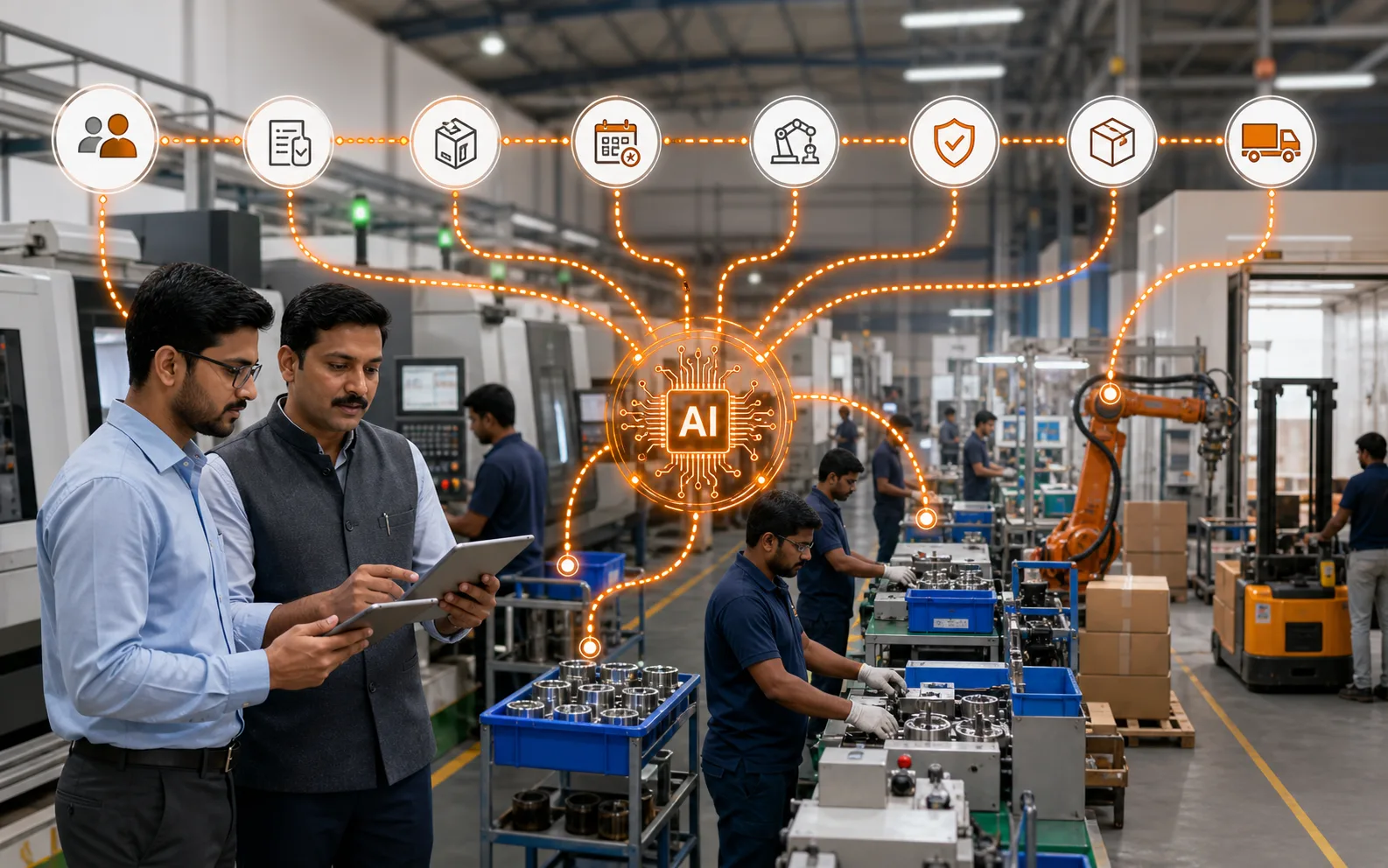
Can IoT Monitor Textile Machines?
Yes, IoT can monitor textile machines by capturing machine status, runtime, stoppage, speed, output, downtime, and performance signals from looms, spindles, processing machines, or garment production equipment.
For textile manufacturers, IoT becomes useful when machine data is connected to production context. A machine dashboard alone may show that a loom stopped. But the business also needs to know which order is affected, how much output is delayed, whether yarn is short, and whether dispatch is at risk.
That is why IoT works best with ERP.
AICAN Optiwise helps manufacturers connect production, inventory, quality, purchase, sales, finance, and reporting. IoT signals can add real-time machine visibility to this operating view.
What textile machines can IoT monitor?
Depending on the factory, IoT can monitor:
- Looms
- Spinning machines
- Knitting machines
- Dyeing machines
- Processing machines
- Cutting machines
- Stitching lines
- Compressors and utilities
- Finishing or packing equipment
The right starting point is the machine group that creates the biggest bottleneck, downtime, or production uncertainty.
What data can be captured?
IoT can capture different signals depending on machine type and sensor setup.
Common data points include:
- Running status
- Stoppage status
- Runtime
- Idle time
- Speed
- Output count
- Downtime duration
- Downtime reason where captured
- Energy consumption
- Machine alarms
- Shift-wise performance
This data helps managers see what is happening without waiting for manual reports.
IoT should connect with orders and WIP
Machine data becomes more powerful when linked to ERP.
For example:
- A loom stoppage links to a customer order.
- Output links to fabric quantity produced.
- Downtime links to a delay-risk dashboard.
- Quality defects link to machine or batch history.
- Maintenance alerts link to work orders.
Without ERP context, IoT may show machine behavior but not business impact.
Use IoT for downtime reduction
Textile machine downtime can quietly reduce output. IoT helps by making stoppages visible in real time.
Useful downtime analysis includes:
- Stoppage frequency
- Stoppage duration
- Machine-wise downtime
- Shift-wise downtime
- Repeated alarm patterns
- Maintenance-linked stoppages
- Output lost due to downtime
This helps maintenance and production teams focus on the machines causing the most disruption.
Improve production reporting
Manual production reporting often arrives late and may be incomplete. IoT can improve reporting accuracy by capturing machine output directly or more frequently.
This helps with:
- Plan vs actual output
- Machine utilization
- Shift performance
- Order progress
- Production delay alerts
- Capacity planning
Managers can act during the shift instead of reviewing yesterday’s problem today.
Do not start with every machine
A common mistake is trying to connect all machines at once. Start with the machines where visibility will create measurable improvement.
Good first projects include:
- Loom stoppage monitoring
- Spindle runtime monitoring
- Critical processing machine downtime
- Energy monitoring for heavy machines
- Line output monitoring in garment units
Start small, prove the workflow, then expand.
Where Optiwise fits
Optiwise can help connect IoT machine data with textile ERP workflows such as production planning, WIP, quality, maintenance, inventory, dispatch, and reporting.
A practical implementation can focus on:
- Machine status dashboards
- Order-linked output
- Downtime alerts
- Maintenance triggers
- WIP impact visibility
- Delay risk reporting
- Machine-wise performance reports
AICAN helps manufacturers use machine data for action, not just display.
Founder’s Note
IoT is useful when it gives the factory time to respond. At AICAN, we believe a machine signal should connect to an order, a delay risk, a maintenance action, or a production decision. That is when textile machine monitoring becomes more than a dashboard. Learn more at About AICAN.
FAQs
Can IoT monitor textile machines?
Yes. IoT can monitor textile machines for runtime, stoppage, speed, output, downtime, alarms, and energy consumption depending on machine and sensor setup.
Which textile machines can be monitored?
Looms, spinning machines, knitting machines, dyeing machines, processing machines, cutting machines, stitching lines, and utilities can be monitored where technically feasible.
Why connect IoT with ERP?
ERP adds order, material, WIP, quality, maintenance, and dispatch context to machine data, making it actionable.
Can IoT reduce downtime?
IoT can help reduce downtime by identifying stoppage patterns earlier. Teams still need maintenance and production processes to act on the data.
What is the best first IoT project for textile mills?
Loom stoppage monitoring, critical machine downtime tracking, or line output monitoring are practical starting points because they address visible production problems.

Related Posts

Is AI Worth the Investment for My Factory?
Learn how to decide if AI is worth the investment for your factory by evaluating use cases, data readiness, costs, risks, ROI, and operational impact.
13 Jun 2026Read more →Manufacturing AI Mistakes to Avoid Before You Start
List manufacturing AI mistakes and controls for unclear use case, messy data, unsafe automation, no owner, weak security and unreviewed recommendations.
13 Jun 2026Read more →What's the Difference Between AI and Regular Automation?
Understand the difference between AI and regular automation in manufacturing, with practical examples for workflows, decisions, alerts, and predictive operations.
13 Jun 2026Read more →What Are the Risks of Using AI in Manufacturing?
Understand the risks of AI in manufacturing, including bad data, wrong recommendations, safety issues, security, job fear, over-automation, and implementation failure.
13 Jun 2026Read more →