
What's the Learning Curve for Using an IoT Platform?
A practical guide for manufacturers on how long it takes teams to learn an IoT platform, what training is needed, and how to make adoption easier on the shop floor.
What's the Learning Curve for Using an IoT Platform?
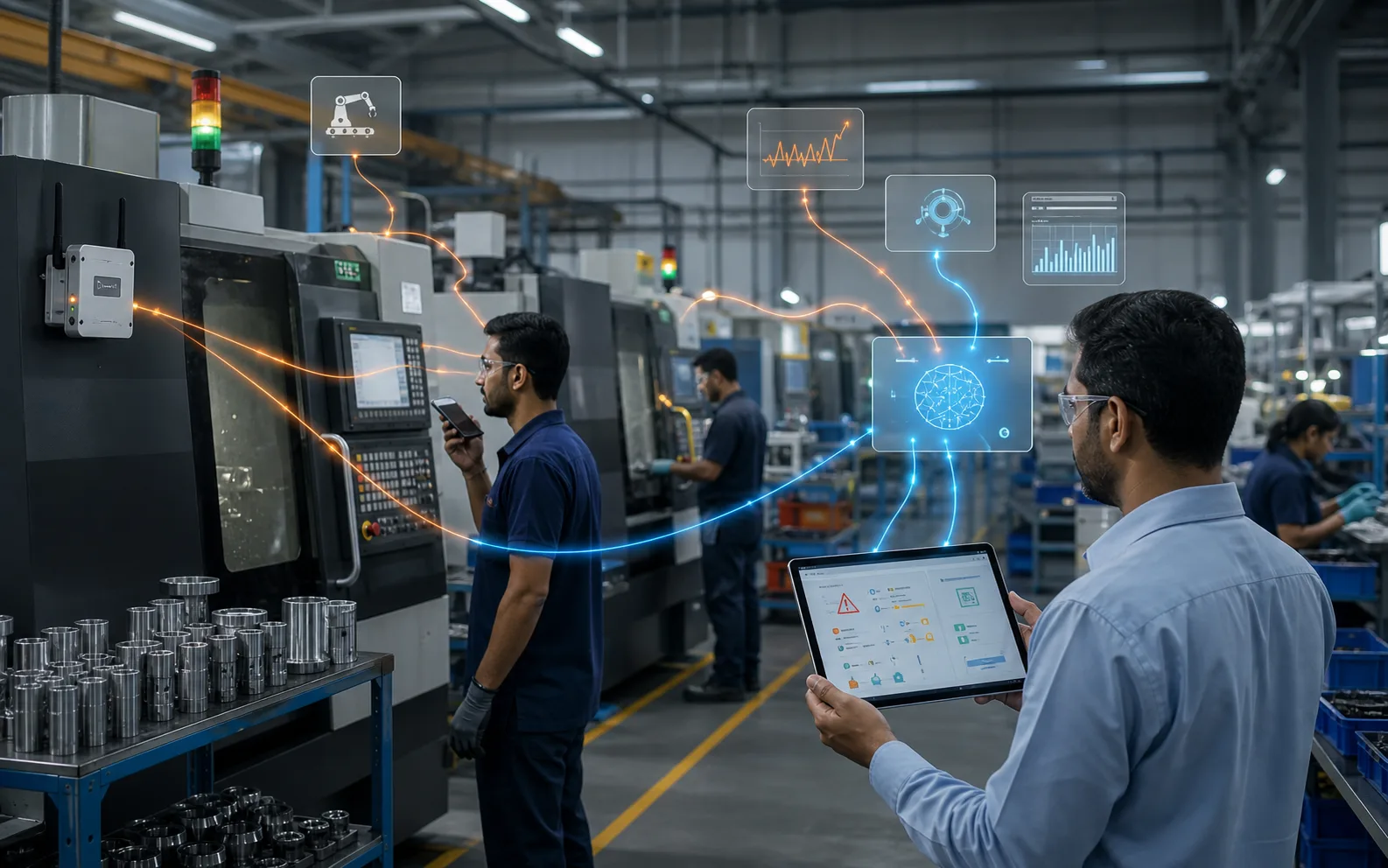
The learning curve for an IoT platform should not feel like learning a new engineering discipline. For a manufacturing team, the real question is simpler: how quickly can a supervisor, production planner, maintenance engineer, or owner look at the screen and make a better decision than they could yesterday?
That is the standard worth using.
Many manufacturers hesitate because they imagine IoT as something that needs data scientists, complex dashboards, and weeks of classroom training. In a large enterprise, that may sometimes be true. In a small or mid-sized factory, it should not be. A good IoT platform should meet the factory where it already is: machines running, orders pending, operators busy, and managers trying to understand what is actually happening before the day slips away.
For manufacturers evaluating systems like AICAN Optiwise, the learning curve is not only a software question. It is an adoption question. The platform has to fit into the rhythm of production, not become another task that everyone avoids.
The first week is about visibility, not mastery
The first useful stage of IoT adoption is usually simple visibility.
A plant team wants to see whether machines are running, idle, stopped, underperforming, or consuming more power than expected. They want to know which line is behind plan, where material is waiting, and whether yesterday's assumptions match today's facts.
In the first week, the team does not need to understand every report. They need to understand the core screen that answers everyday questions:
- Which machines are active right now?
- Which jobs are running late?
- Where did downtime happen?
- Which shift had avoidable delays?
- Which alerts need attention today?
If the platform is designed well, most shop-floor users should become comfortable with basic viewing and alert handling within a few days. The deeper value comes later, but the first win should arrive quickly. A slow first win creates doubt. A clear first win creates momentum.
Different users learn different parts of the system
One mistake companies make is trying to train everyone on everything. That usually creates confusion.
Operators do not need the same view as owners. Maintenance teams do not need the same view as finance. Production planners do not need every sensor value. A practical IoT rollout should separate learning by role.
For operators, the learning curve is usually about entering or confirming simple status information, responding to prompts, and understanding machine-level alerts.
For supervisors, it is about reading shift performance, identifying bottlenecks, comparing actual output against plan, and following up with the right person.
For maintenance teams, it is about reading patterns: repeated stoppages, abnormal power draw, unusual temperature, unexpected vibration, or recurring breakdown signals.
For owners and senior managers, it is about seeing whether production, inventory, delivery, and cost signals are moving in the right direction.
This role-based approach matters because it protects people from dashboard overload. When a system shows too much, users stop trusting it. When it shows the right information at the right level, learning becomes natural.
The hardest part is not clicking buttons
Most IoT platforms are not hard because the buttons are difficult. They are hard because they expose operational truths that were previously hidden.
A supervisor may discover that a machine is idle more often than assumed. A maintenance engineer may see that small stoppages add up to a full shift of lost time. A purchase team may realize that material shortages are not occasional surprises but recurring planning gaps.
That is where the real learning curve begins.
The team has to move from opinion-based discussion to data-based discussion. Instead of asking, “Why do we always lose time here?” they begin asking, “This machine lost 42 minutes between 11:00 and 1:00. What happened?”
That shift can feel uncomfortable at first. It also makes the system valuable.
A good implementation partner should prepare the team for this change. The goal is not to blame people. The goal is to make small losses visible early enough to fix them.
How long does it usually take?
For most small and mid-sized manufacturers, basic comfort can come in stages.
The first few days are for orientation: login, dashboard reading, alerts, and basic status visibility.
The first two weeks are for habit formation: using the platform in daily production reviews, maintenance follow-ups, and shift handovers.
The first month is where deeper patterns start becoming useful: recurring downtime, line imbalance, missed production targets, inventory delays, and power consumption trends.
By the second or third month, the stronger teams are no longer just viewing dashboards. They are changing routines around the data. They may adjust preventive maintenance schedules, change shift review formats, improve material readiness, or use historical data to plan delivery commitments more carefully.
The exact timeline depends on machine complexity, data quality, user discipline, and management involvement. But the important point is this: the platform should not require months before it gives the first operational benefit.
What makes learning easier?
The fastest IoT adoption happens when the platform is introduced through real factory routines.
Instead of a generic training session, use actual production examples. Review yesterday's downtime. Look at a real delayed order. Compare two shifts from the same machine. Pull up a live alert and discuss who should respond.
This makes the platform less abstract. People learn faster when the screen explains a problem they already care about.
A manufacturer should also keep the first rollout focused. Start with a few critical machines, a few core metrics, and a few users who will champion the system. Once those users are comfortable, expand to more machines and departments.
Trying to connect everything on day one can make the platform look bigger than it needs to be. A phased rollout gives the team time to build confidence.
What managers should watch during adoption
Management should not judge learning only by attendance in training sessions. The better signs are behavioral.
Are supervisors checking the dashboard before calling the operator? Are production meetings using actual numbers instead of memory? Are downtime reasons being captured more consistently? Are maintenance follow-ups becoming more specific? Are owners asking better questions because they can finally see the same data as the floor?
These are the signals that the platform is becoming part of the factory's operating system.
If people still maintain separate manual registers, WhatsApp updates, and Excel files for the same information, adoption is incomplete. The solution is not to force people with slogans. The solution is to make the platform more useful than the workaround.
Where AICAN Optiwise fits
AICAN Optiwise is built around the practical needs of manufacturers who want visibility without turning their factory into a software project. The aim is to connect machines, production, inventory, and business decisions in a way that plant teams can actually use.
For a team that is new to IoT, this matters. A system can be powerful and still fail if the first experience is confusing. The better approach is to begin with the most painful questions: Where are we losing time? Which orders are at risk? Which machines need attention? What is happening now that we normally discover too late?
That is where AICAN and About AICAN become relevant for manufacturers looking at IoT not as a technology purchase, but as an operating improvement.
Founder’s Note
Most factories do not reject technology because they dislike progress. They reject it when it feels disconnected from the pressure of daily production. An IoT platform should respect the people who run the plant. It should reduce confusion, not add another screen everyone has to tolerate. The best learning curve is the one where the team says, “This is showing us what we were already trying to understand.”
FAQs
How much training is needed for an IoT platform?
Basic users may need only a few focused sessions if the platform is configured around their actual role. Supervisors and managers usually need additional time to understand reports, trends, and exception handling.
Will operators struggle with IoT dashboards?
Operators struggle when dashboards are designed for management instead of the shop floor. Simple status screens, clear alerts, and local-language support where needed can make adoption much easier.
Should we train everyone at once?
No. Start with role-based training. Operators, supervisors, maintenance teams, and owners should learn the parts of the system they will actually use.
How do we know the team has adopted the platform?
You will see it in daily behavior. Meetings will use system data, downtime reasons will become clearer, follow-ups will become more specific, and manual duplicate reporting will reduce.
Can a small manufacturer adopt IoT without an IT team?
Yes, if the platform and implementation partner are chosen carefully. The system should be configured, supported, and explained in operational language, not only technical language.

Related Posts
Is AI Worth the Investment for My Factory?
Learn how to decide if AI is worth the investment for your factory by evaluating use cases, data readiness, costs, risks, ROI, and operational impact.
13 Jun 2026Read more →Manufacturing AI Mistakes to Avoid Before You Start
List manufacturing AI mistakes and controls for unclear use case, messy data, unsafe automation, no owner, weak security and unreviewed recommendations.
13 Jun 2026Read more →What's the Difference Between AI and Regular Automation?
Understand the difference between AI and regular automation in manufacturing, with practical examples for workflows, decisions, alerts, and predictive operations.
13 Jun 2026Read more →What Are the Risks of Using AI in Manufacturing?
Understand the risks of AI in manufacturing, including bad data, wrong recommendations, safety issues, security, job fear, over-automation, and implementation failure.
13 Jun 2026Read more →