
IoT Sensor Maintenance and Replacement Guide for Factories
Maintain IoT sensors with a register, environment checks, calibration or reference checks, drift symptoms, owner and replacement evidence.
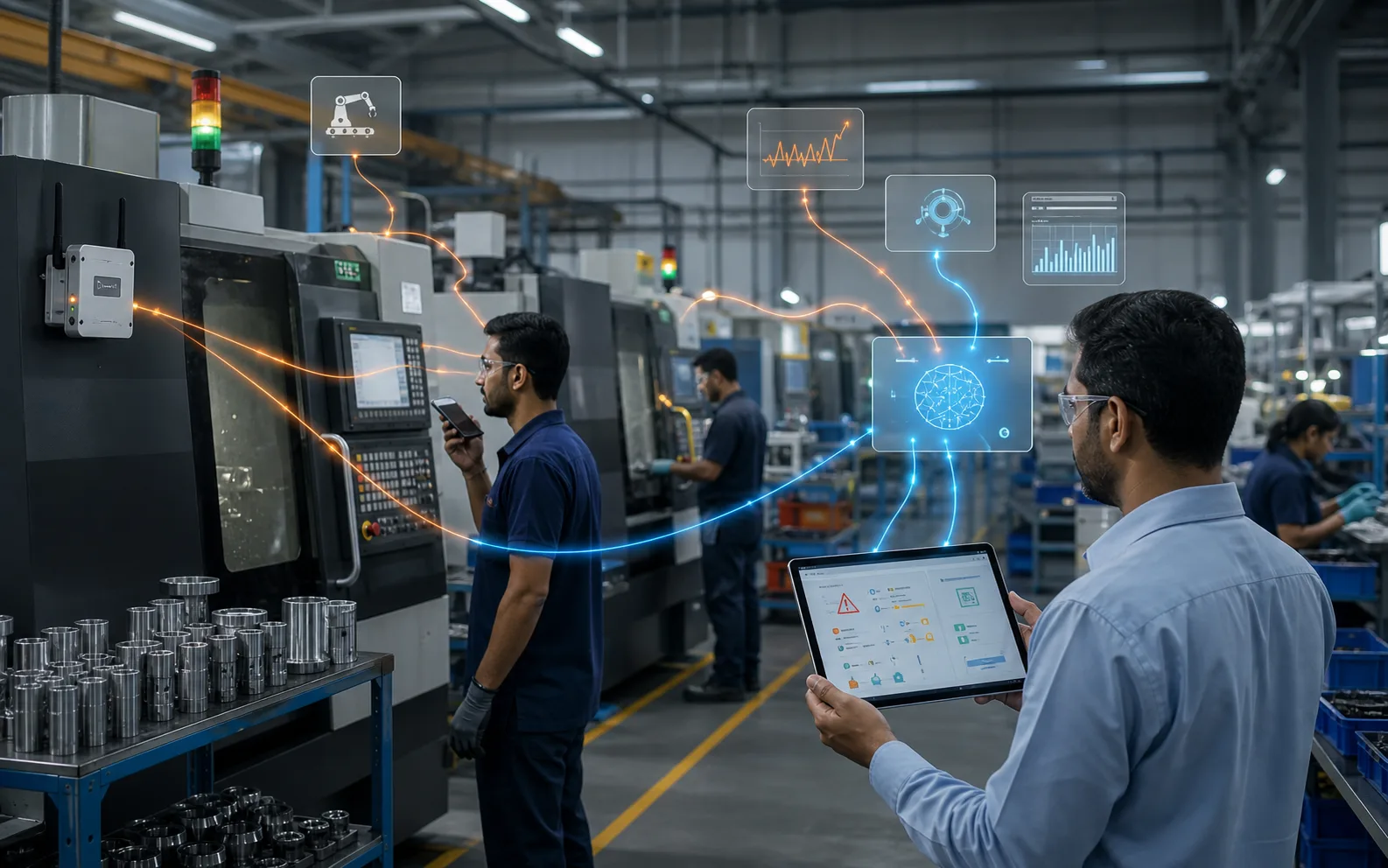
IoT data is only as reliable as the sensor and installation behind it. Dust, heat, vibration, loose wiring, panel changes and wrong placement can turn a useful signal into a misleading dashboard.
Optiwise keeps the maintenance conversation practical: identify the sensor, record the check, compare with a reference and show whether the report should be trusted.
Direct answer
IoT sensor maintenance needs a sensor register, environment check, reference measurement, drift symptom, owner and replacement evidence; the interval should come from the device maker and factory use.
Factory example
A vibration sensor begins reporting flat values during an active shift. Maintenance checks the device ID, cable, mounting point and reference reading. The sensor is replaced, and the report for that period is marked as partially unreliable before anyone uses it for machine-health decisions.
Implementation path in Optiwise
- Build a sensor register.
- Schedule reference checks based on environment and criticality.
- Record drift, replacement and report-trust decisions.
Worksheet for your factory
Use this as the working checklist before you change software settings, write SOPs or ask the team to follow a new report.
| Record | What to capture | Why it matters |
|---|---|---|
| Sensor register | Device ID, machine, signal and installation date | Makes ownership clear |
| Environment note | Heat, dust, vibration, moisture or panel condition | Explains failure patterns |
| Reference measurement | Manual meter, controller value or test run | Checks whether the sensor still matches reality |
| Drift symptom | Slow change, spikes, flatline or impossible value | Triggers review before reports are trusted |
| Maintenance owner | Person responsible for checking | Prevents orphaned hardware |
| Replacement evidence | Reason, date, photo or service note | Keeps the audit trail |
How Optiwise supports this workflow
- Connect sensor checks to machine and asset records so maintenance history stays with the equipment.
- Use IoT dashboards to detect flatlines, missing signals and impossible readings.
- Use no-code forms for inspection evidence, replacement notes and owner sign-off.
- Use machine analytics only after signal quality has been accepted for the period being reviewed.
Explore the connected Optiwise workflows for production, inventory, purchasing, quality, IoT, and AI agents.
Checks before you use the number for decisions
- Confirm the owner of the record and the person who reviews exceptions.
- Write the unit of measure, time period and source system beside every number.
- Mark missing, stale or manually corrected data instead of hiding it inside the final score.
- Keep approval evidence for changes that affect stock, production, quality or customer commitments.
Reference source
For general manufacturing ERP and MRP context, compare this workflow with Deskera MRP resources, then adapt the records to your own factory process.
FAQs
How often should IoT sensors be checked?
Use the device maker guidance, operating environment and criticality of the signal. A harsh shop-floor environment usually needs more frequent inspection than an office meter.
What is the first sign of sensor drift?
Look for values that move away from a trusted reference, sudden spikes, flatlines, impossible readings or a pattern that no longer matches the machine state.

Related Posts
Is AI Worth the Investment for My Factory?
Learn how to decide if AI is worth the investment for your factory by evaluating use cases, data readiness, costs, risks, ROI, and operational impact.
13 Jun 2026Read more →Manufacturing AI Mistakes to Avoid Before You Start
List manufacturing AI mistakes and controls for unclear use case, messy data, unsafe automation, no owner, weak security and unreviewed recommendations.
13 Jun 2026Read more →What's the Difference Between AI and Regular Automation?
Understand the difference between AI and regular automation in manufacturing, with practical examples for workflows, decisions, alerts, and predictive operations.
13 Jun 2026Read more →What Are the Risks of Using AI in Manufacturing?
Understand the risks of AI in manufacturing, including bad data, wrong recommendations, safety issues, security, job fear, over-automation, and implementation failure.
13 Jun 2026Read more →