
Is AI Really Automation or Just Better Software?
Understand the difference between AI, automation, and better software in factory management, and how manufacturers should use each practically.
Is AI Really Automation or Just Better Software?
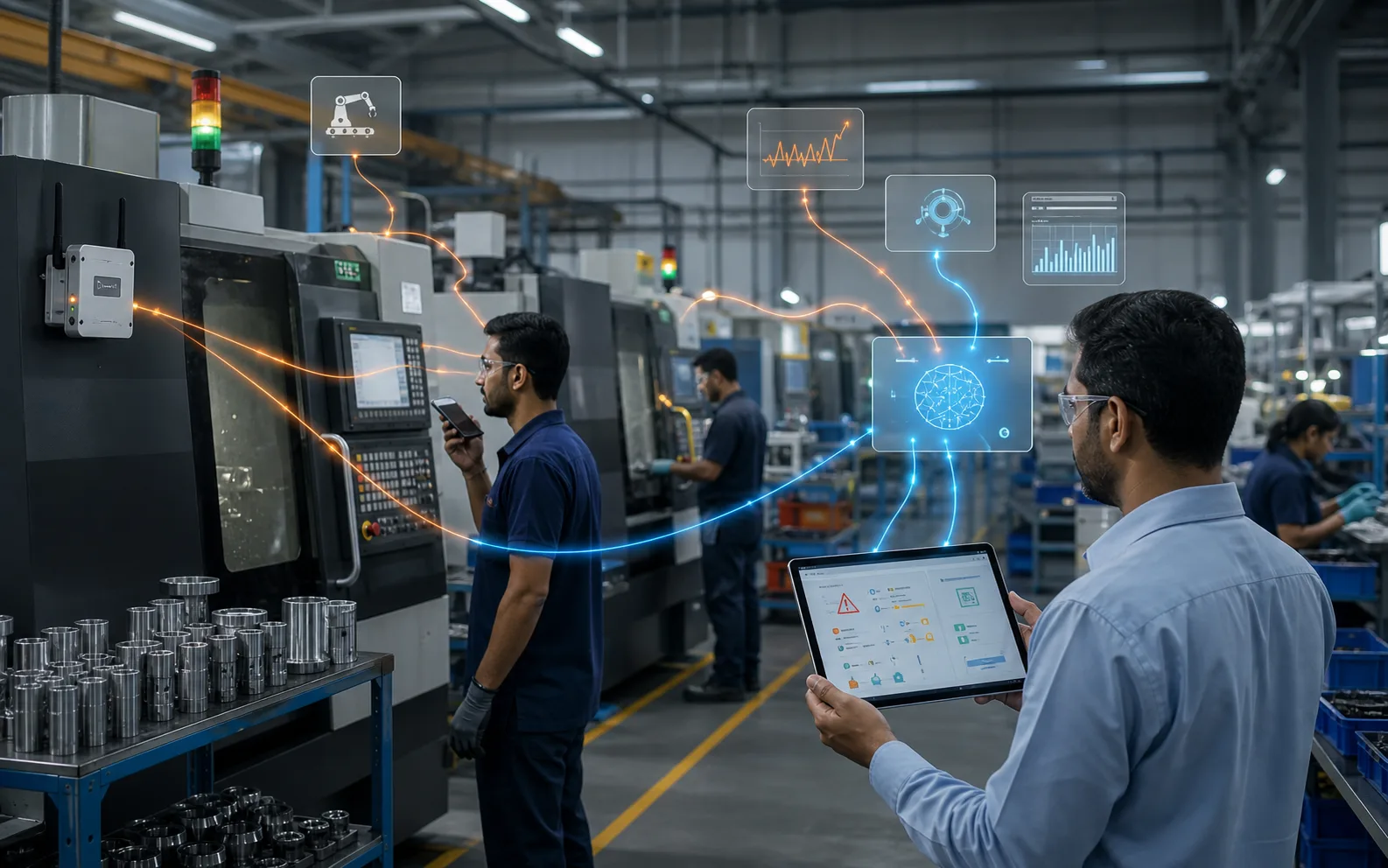
AI can be automation, but not all AI is automation. In factory management, AI often begins as better software: smarter alerts, pattern detection, recommendations, forecasts, and exception summaries. Automation happens when the system takes action with little or no human intervention.
This distinction matters because manufacturers sometimes expect AI to immediately run the factory by itself. That is rarely the best starting point. A more practical approach is to use AI first to improve visibility and decisions, then automate selected low-risk actions once trust is established.
AI driven factory management is most useful when it combines connected software, intelligent recommendations, and responsible automation.
What Better Software Does
Better factory software connects workflows, reduces manual entries, standardizes reports, improves visibility, and gives teams a shared operating system. It helps people work better, even without advanced AI.
For many factories, this alone is a major step because current work is scattered across Excel, phone calls, registers, and informal follow-ups.
What AI Adds
AI adds pattern recognition, prediction, anomaly detection, recommendations, and natural-language assistance. It can flag stock risk, identify defect trends, predict downtime, summarize exceptions, or suggest schedule changes.
AI helps the factory notice what humans may miss or notice too late.
What Automation Adds
Automation takes action: generating alerts, routing approvals, creating reorder suggestions, assigning tasks, triggering maintenance checks, or updating workflows based on rules.
Some automation is rule-based and does not need AI. Some automation becomes stronger when AI helps decide when action is needed.
Why Manufacturers Should Not Rush Full Automation
Full automation without process maturity can create mistakes faster. If data is wrong, automation may act on wrong information. If responsibilities are unclear, automated alerts may be ignored.
Start with decision support, then automate actions that are repeatable, low-risk, and measurable.
The Best Model Is Layered
First connect workflows. Then add AI insights. Then automate selected actions. This layered approach reduces risk and builds trust.
A factory does not become smarter by skipping the foundation.
Where AICAN Optiwise Fits
AICAN Optiwise brings together connected manufacturing software, AI workflows, reporting, production, inventory, purchase, sales, finance, and IoT readiness. This supports a practical path from visibility to intelligence to automation.
Explore aican.co.in and About AICAN to understand AICAN’s manufacturing-first philosophy.
Founder’s Note
AICAN’s founder-led view is that manufacturers should not be forced into buzzword decisions. Some problems need better workflow software. Some need AI. Some need automation. The right system should combine them in the right order.
Practical progress beats fashionable terminology.
FAQ
Is AI the same as automation?
No. AI identifies patterns and supports decisions. Automation performs actions. They can work together but are not identical.
Is better software enough before AI?
Often yes. Connected workflows and reliable data are usually required before AI becomes truly useful.
When should a factory automate?
Automate repeatable, low-risk actions after the process is stable and data is reliable.
Can AI work without automation?
Yes. AI can provide alerts, forecasts, and recommendations while humans take action.
Final Thought
AI is not just automation, and it is not just better software. It is a layer of intelligence that works best when built on connected operations and used with human judgement.
Next step: Explore AICAN Optiwise to see how AI driven factory management can combine software, intelligence, and automation responsibly.

Related Posts
Is AI Worth the Investment for My Factory?
Learn how to decide if AI is worth the investment for your factory by evaluating use cases, data readiness, costs, risks, ROI, and operational impact.
13 Jun 2026Read more →Manufacturing AI Mistakes to Avoid Before You Start
List manufacturing AI mistakes and controls for unclear use case, messy data, unsafe automation, no owner, weak security and unreviewed recommendations.
13 Jun 2026Read more →What's the Difference Between AI and Regular Automation?
Understand the difference between AI and regular automation in manufacturing, with practical examples for workflows, decisions, alerts, and predictive operations.
13 Jun 2026Read more →What Are the Risks of Using AI in Manufacturing?
Understand the risks of AI in manufacturing, including bad data, wrong recommendations, safety issues, security, job fear, over-automation, and implementation failure.
13 Jun 2026Read more →