
Is AI Manufacturing Technology Reliable Enough to Trust?
Learn when AI manufacturing technology is reliable, where it can fail, and how factories can build trust through data quality, controls, and phased adoption.
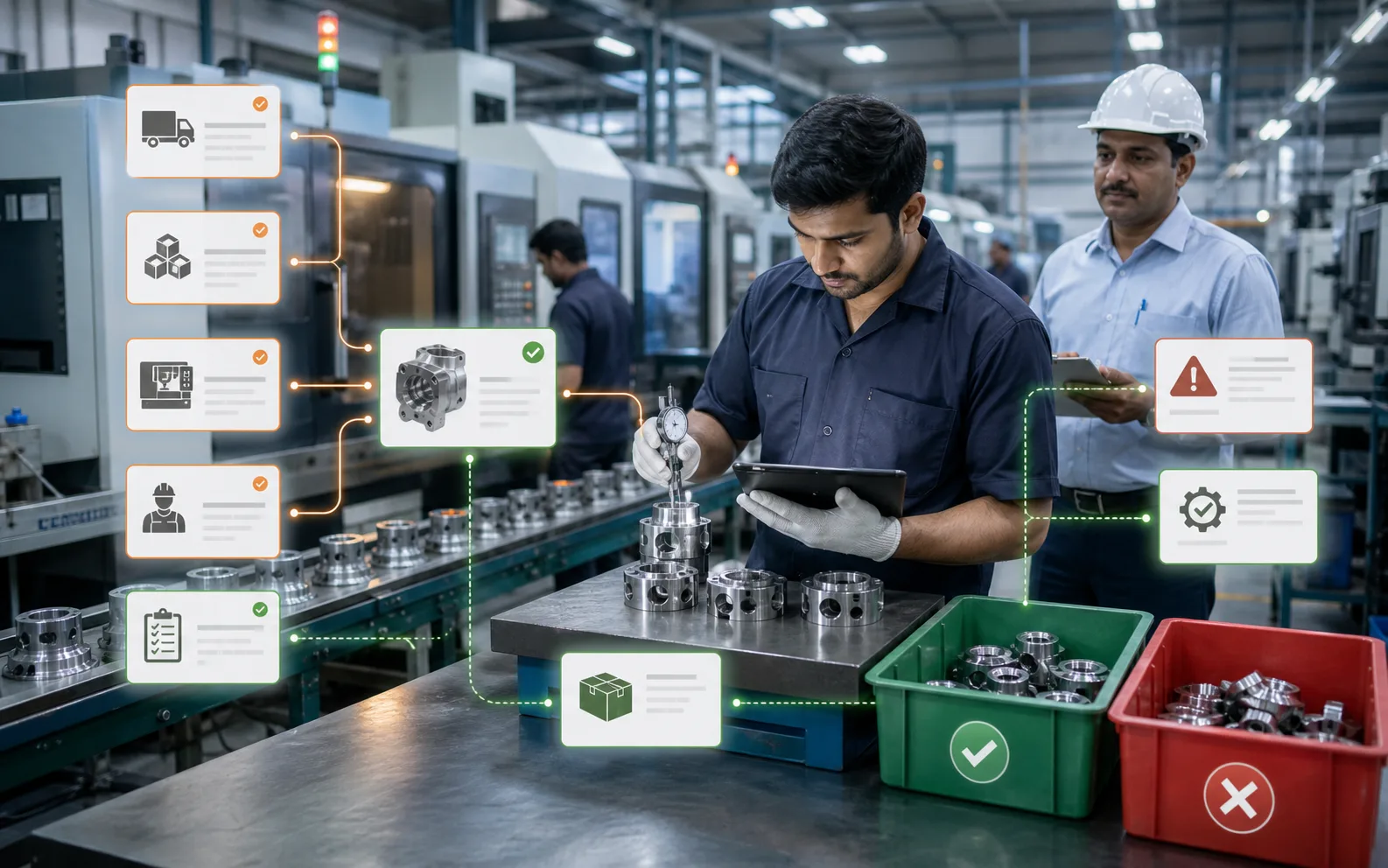
Is AI Manufacturing Technology Reliable Enough to Trust?
Manufacturers are right to ask whether AI can be trusted. A wrong recommendation in a factory is not a small inconvenience. It can delay production, create excess stock, affect quality, or disturb customer commitments. In manufacturing, reliability matters more than novelty.
The useful answer is not a simple yes or no. AI manufacturing technology is reliable enough when it is used for the right problems, connected to good data, monitored by people who understand the process, and introduced with clear controls. It becomes unreliable when companies expect it to make perfect decisions from incomplete, outdated, or inconsistent data.
Artificial intelligence in manufacturing should be treated like any serious operating system: it needs clean inputs, defined ownership, review processes, and gradual trust-building. The goal is not blind automation. The goal is better decision support.
Reliability Starts With Data Quality
AI can only interpret what the factory records. If inventory is wrong, production entries are delayed, machine downtime is not logged, or purchase lead times are guessed, the AI will produce weak recommendations. This does not mean AI is unreliable by itself. It means the factory’s operating data is not ready.
Before trusting AI outputs, manufacturers should check the quality of critical data: item masters, BOMs, stock balances, production orders, quality records, supplier lead times, machine logs, and dispatch commitments. Even small improvements in these areas can make AI insights more dependable.
Good AI adoption often begins as a data discipline project. Once the data becomes reliable, the intelligence becomes more useful.
Use AI First for Recommendations, Not Unsupervised Control
Factories should not begin by letting AI make high-risk decisions automatically. A better approach is to use AI for alerts, forecasts, recommendations, and exception detection while keeping people responsible for final decisions.
For example, AI can flag a likely stock shortage, but the purchase manager should verify urgency and vendor options. AI can identify quality trends, but the quality head should confirm root cause. AI can predict downtime risk, but maintenance teams should decide the actual action.
This human-in-the-loop approach builds trust gradually. Over time, low-risk actions can be automated once the team has confidence in the system.
Reliability Depends on the Use Case
Some AI use cases are easier to trust than others. Reporting assistance, anomaly detection, stock risk alerts, production delay warnings, and quality trend analysis are good starting points because humans can review them quickly.
More advanced use cases such as autonomous scheduling, predictive maintenance with machine sensors, or automated parameter adjustment require stronger data, deeper integration, and stricter controls. These can be valuable, but they should come after the factory has built confidence in simpler workflows.
A reliable AI roadmap moves from visibility to recommendation to controlled automation.
What Can Go Wrong?
AI can fail when it is trained on poor historical data, when business rules change but the system is not updated, when users ignore alerts, or when teams misunderstand recommendations. It can also create overconfidence if managers assume a dashboard is always correct.
The solution is governance. Define who reviews alerts, how exceptions are handled, how wrong recommendations are reported, and how data errors are corrected. AI should improve accountability, not remove it.
How to Build Trust in AI Systems
Start with one or two measurable use cases. Compare AI recommendations with actual results. Ask teams to review false positives and missed signals. Track whether the system improves decisions over time.
Trust grows when workers see that the system helps them avoid real problems. It disappears when the system creates extra work without clear value.
Where AICAN Optiwise Fits
AICAN Optiwise helps manufacturers build reliability by connecting operational workflows across production, inventory, purchase, sales, finance, reporting, IoT readiness, and AI. This connected base matters because AI cannot be reliable if every department works from separate files.
Optiwise supports practical AI adoption by giving teams one operating truth and then layering alerts and intelligence on top of it. Learn more at aican.co.in and About AICAN.
Founder’s Note
AICAN’s founder-led view is that manufacturers should trust AI through evidence, not hype. The system must prove itself in daily operations by helping teams catch issues earlier, reduce mistakes, and make better decisions.
Reliable AI is not magic. It is disciplined manufacturing data, connected workflows, and human judgement working together.
FAQ
Can AI make wrong decisions in manufacturing?
Yes, especially when data is incomplete or the use case is poorly defined. That is why manufacturers should begin with human-reviewed recommendations before moving to automation.
How do I know if an AI system is reliable?
Track whether its alerts and recommendations match real outcomes. Measure false positives, missed issues, and improvements in decision speed or accuracy.
Should AI control machines directly?
Only in mature environments with strong data, safety controls, and tested processes. Most factories should begin with decision support and alerts.
Is AI reliable for small manufacturers?
Yes, if implemented practically. Small manufacturers can use AI for visibility, inventory risk, reporting, and workflow alerts without needing complex automation from day one.
Final Thought
AI manufacturing technology is reliable when it is introduced with discipline. The safest path is not blind trust or total rejection. It is controlled adoption, measured outcomes, and steady improvement.
Next step: Explore AICAN Optiwise to see how connected workflows can create a reliable foundation for AI in manufacturing.

Related Posts
Is AI Worth the Investment for My Factory?
Learn how to decide if AI is worth the investment for your factory by evaluating use cases, data readiness, costs, risks, ROI, and operational impact.
13 Jun 2026Read more →Manufacturing AI Mistakes to Avoid Before You Start
List manufacturing AI mistakes and controls for unclear use case, messy data, unsafe automation, no owner, weak security and unreviewed recommendations.
13 Jun 2026Read more →What's the Difference Between AI and Regular Automation?
Understand the difference between AI and regular automation in manufacturing, with practical examples for workflows, decisions, alerts, and predictive operations.
13 Jun 2026Read more →What Are the Risks of Using AI in Manufacturing?
Understand the risks of AI in manufacturing, including bad data, wrong recommendations, safety issues, security, job fear, over-automation, and implementation failure.
13 Jun 2026Read more →