
Is My Factory Data Really Being Used for AI?
Learn how factory data is used for AI, what data matters, privacy concerns to check, and how manufacturers can use AI responsibly on the shop floor.
Is My Factory Data Really Being Used for AI?
Yes, factory data can be used for AI, but how it is used depends on the software, setup, permissions, and business rules.
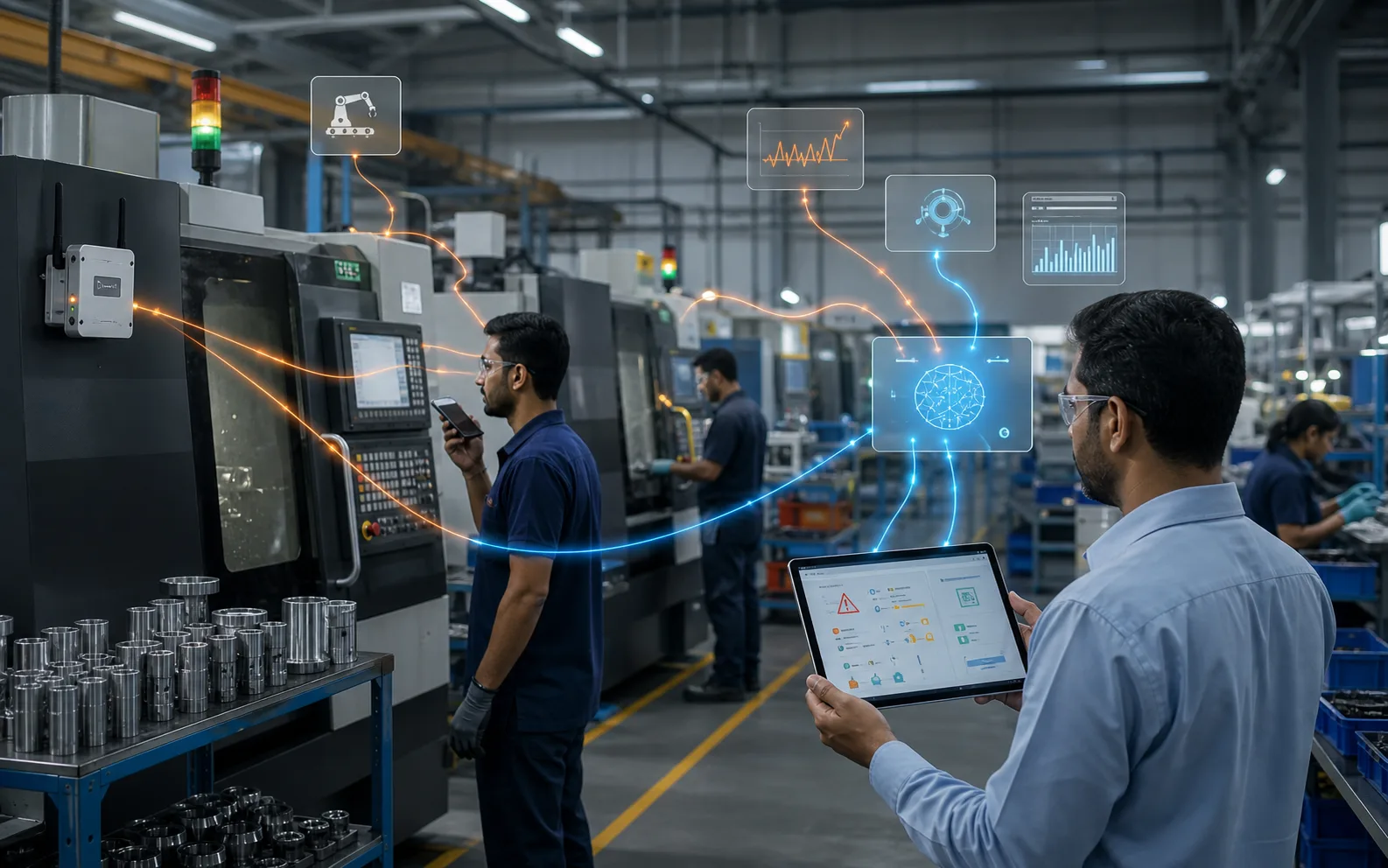
In a manufacturing environment, AI becomes useful only when it can learn from operational signals: production output, downtime, machine performance, inventory movement, quality checks, purchase delays, and dispatch commitments. But this also raises a fair question for owners, managers, and workers: what data is being collected, and who can see it?
Responsible AI starts with transparency.
What Factory Data Can AI Use?
AI can use many types of shop floor and business data.
This may include production plans, actual output, downtime reasons, rejection data, machine running hours, maintenance logs, operator updates, material availability, purchase status, sales commitments, and inventory movement.
The goal is not to collect data for the sake of it. The goal is to identify patterns that help the factory run better.
How AI Uses This Data
AI can use factory data to detect unusual delays, predict maintenance risk, flag material shortages, summarize production issues, identify quality patterns, and support scheduling decisions.
For example, if downtime repeatedly happens on a specific machine after certain conditions, AI may help highlight the pattern earlier than manual review.
What Workers Often Worry About
Workers may worry that factory data will be used only to monitor or punish them.
That concern should be addressed clearly. Data should be used to improve safety, quality, production planning, maintenance, and coordination. If performance review is part of the system, the company should be transparent about it.
Trust improves when people understand why data is collected.
Privacy and Access Controls Matter
Factory data should not be visible to everyone by default.
Good systems use role-based access. A supervisor may need production status. Finance may need valuation. Purchase may need material shortage signals. Management may need summary dashboards.
Sensitive data should be protected through permissions, audit trails, and clear policies.
AICAN Optiwise supports connected manufacturing workflows across production, inventory, purchase, sales, finance, reports, IoT readiness, and AI workflows, so data governance matters from the beginning.
AI Is Only as Good as the Data
If downtime reasons are entered incorrectly, production updates are delayed, or material movement is not recorded, AI recommendations become weaker.
This is why factory data discipline is important. AI does not replace accurate shop floor reporting. It depends on it.
Questions to Ask Before Using Factory AI
Ask these practical questions:
- What data is collected?
- Who can access it?
- Is data used to train shared models?
- How are permissions controlled?
- Are audit logs available?
- Can incorrect data be corrected?
- How are workers informed?
- What decisions will AI support?
These questions help prevent confusion later.
Where AICAN Optiwise Fits
AICAN Optiwise helps manufacturers use factory data as part of a connected operating system. Rather than leaving production, inventory, purchase, finance, and reporting in separate silos, Optiwise brings information together so AI can support practical decisions.
You can learn more about AICAN’s manufacturing-first approach at About AICAN.
Founder’s Note
Factory data should be treated with respect because it represents real work, real people, and real business risk.
AI should use data to make operations clearer and safer, not to create fear. The strongest systems are transparent about what they collect and why.
FAQ
Is factory data required for AI?
Yes. AI needs relevant operational data to generate useful alerts, predictions, and summaries.
Can AI work with poor factory data?
Not reliably. Clean and consistent data improves AI output.
Should workers know what data is collected?
Yes. Transparency improves trust and adoption.
What data controls should factories check?
Role-based access, audit logs, data policies, user permissions, and correction workflows.
Final Thought
Factory data can power useful AI, but it must be handled responsibly.
Manufacturers should use AI to improve decisions while protecting trust, access, and accountability. That is the practical, responsible direction AICAN supports with Optiwise.

Related Posts
Is AI Worth the Investment for My Factory?
Learn how to decide if AI is worth the investment for your factory by evaluating use cases, data readiness, costs, risks, ROI, and operational impact.
13 Jun 2026Read more →Manufacturing AI Mistakes to Avoid Before You Start
List manufacturing AI mistakes and controls for unclear use case, messy data, unsafe automation, no owner, weak security and unreviewed recommendations.
13 Jun 2026Read more →What's the Difference Between AI and Regular Automation?
Understand the difference between AI and regular automation in manufacturing, with practical examples for workflows, decisions, alerts, and predictive operations.
13 Jun 2026Read more →What Are the Risks of Using AI in Manufacturing?
Understand the risks of AI in manufacturing, including bad data, wrong recommendations, safety issues, security, job fear, over-automation, and implementation failure.
13 Jun 2026Read more →