
Is IoT Worth It for a Factory That Runs 24/7?
Learn why IoT can be valuable for factories that run 24/7, including downtime visibility, shift handover, maintenance, energy monitoring, quality control, and continuous operations.
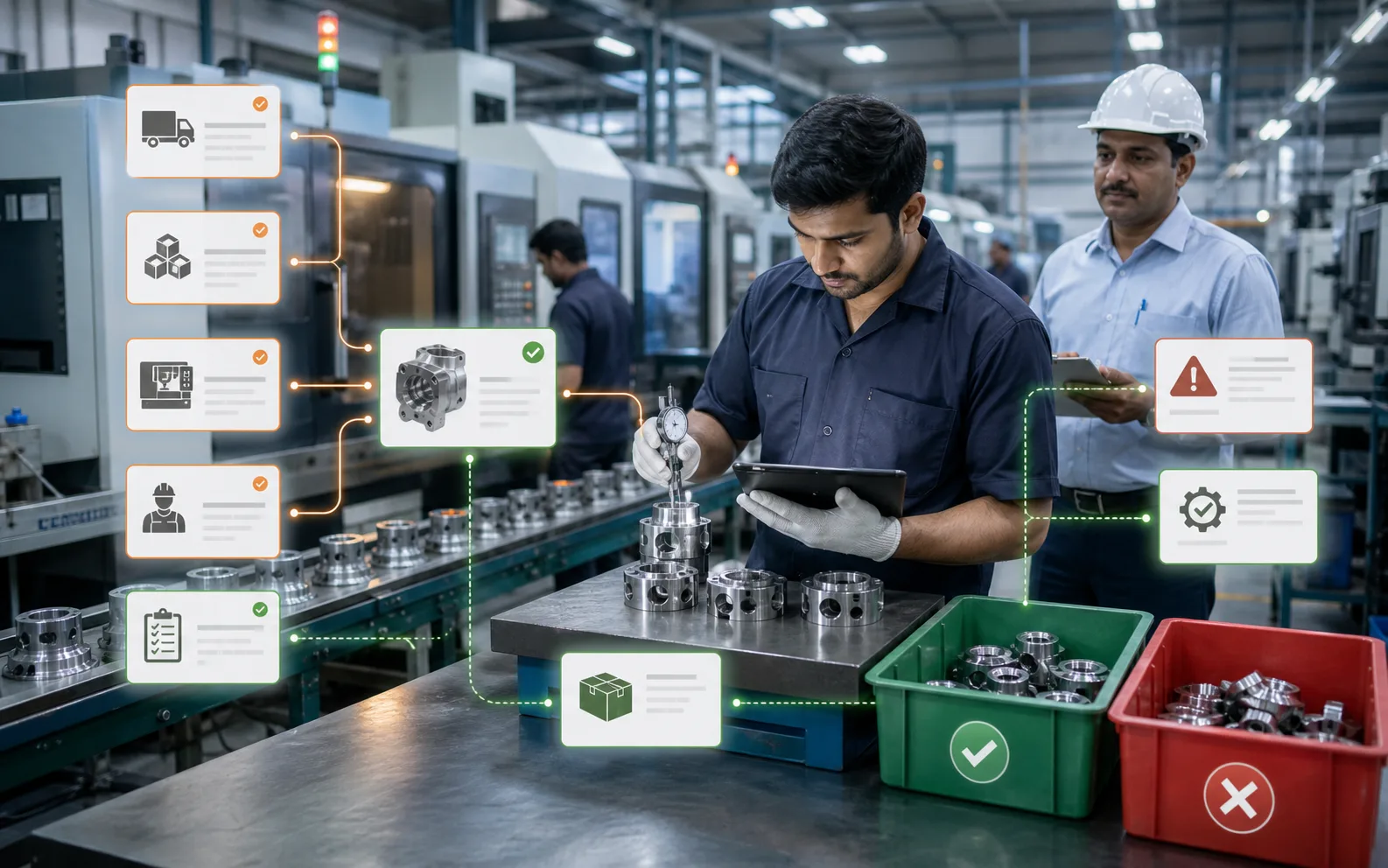
Is IoT Worth It for a Factory That Runs 24/7?
Yes, IoT can be especially valuable for a factory that runs 24/7.
Continuous operations create a different kind of pressure. The factory is always active. Machines run across shifts. Supervisors change. Operators change. Maintenance windows are limited. Energy cost is significant. Small stoppages accumulate quietly. Night-shift issues may not be fully visible to management until the next morning.
In a 24/7 factory, the cost of not knowing is high.
IoT helps by giving continuous visibility into machine status, production output, downtime, energy consumption, quality issues, maintenance needs, and shift performance. It does not replace people, but it helps every shift work with the same operational truth.
24/7 Factories Have Less Room for Blind Spots
A factory that runs one shift may have time to review issues at the end of the day. A 24/7 factory does not have the same breathing space.
If a machine stops during the night, the next shift may inherit the problem. If a quality issue starts at 2 AM, several hours of production may be affected before management sees it. If energy use spikes during non-peak supervision hours, cost increases silently. If shift handover is weak, the same problem may repeat.
IoT reduces blind spots by capturing events as they happen.
This helps teams answer:
- What happened during the previous shift?
- Which machines lost the most time overnight?
- Was production on plan across all shifts?
- Did maintenance respond to critical stoppages?
- Are quality issues concentrated in one shift?
- Is energy consumption abnormal during night operations?
Continuous operations need continuous visibility.
Downtime Adds Up Faster
In a 24/7 factory, downtime is expensive because every hour is planned capacity.
A one-hour stoppage may affect the current shift, the next shift, dispatch commitments, maintenance planning, and customer delivery. Repeated small stoppages can be even more damaging because they often go unnoticed.
IoT can track:
- Machine stoppage duration
- Downtime reasons
- Long stoppage alerts
- Micro-stoppage patterns
- Shift-wise downtime
- Repeated breakdowns
- Maintenance response time
This helps teams focus on the biggest losses instead of relying on memory or manual registers.
Shift Handover Becomes Stronger
Shift handover is one of the most important processes in a 24/7 factory.
If the outgoing shift does not communicate problems clearly, the incoming shift loses time. A machine may have a recurring issue. A tool may need attention. A material shortage may be pending. A quality hold may need follow-up. A maintenance call may be open.
IoT and connected dashboards can support better handover by showing:
- Production achieved
- Pending jobs
- Stoppages and reasons
- Quality issues
- Maintenance alerts
- Material shortages
- Machine status at shift end
- Open action items
This makes handover more evidence-based.
Night-Shift Visibility Improves Management Control
Night shifts often operate with fewer senior people on site.
This does not mean the team is less capable, but it does mean visibility becomes important. Owners and plant heads may want to know whether production is running normally without calling the supervisor repeatedly.
Remote dashboards and alerts can show critical issues without constant checking.
For example:
- Critical machine stopped for more than 20 minutes
- Production falling behind plan
- Energy consumption unusually high
- Quality rejection above threshold
- Material shortage blocking an urgent job
- Gateway or device offline
This helps management stay informed without micromanaging every shift.
Maintenance Planning Gets Better
24/7 factories often struggle to find maintenance windows.
If maintenance is purely reactive, breakdowns can disrupt production badly. IoT can help maintenance teams identify recurring stoppages, run hours, abnormal signals, and equipment patterns.
Useful maintenance visibility includes:
- Machine run hours
- Breakdown frequency
- Repeated fault patterns
- MTBF and MTTR
- Alarm history
- Maintenance response time
- Energy or vibration changes
- Critical machine health indicators
This helps teams plan maintenance more intelligently and protect continuous output.
Energy Monitoring Is More Valuable in Continuous Operations
Factories that run 24/7 often have high energy consumption.
IoT energy monitoring can show machine-wise and shift-wise energy use, idle consumption, peak demand patterns, compressor usage, utility waste, and energy per unit produced.
In continuous operations, even small energy inefficiencies can become large monthly costs.
Energy analytics can help identify:
- Machines consuming power while idle
- Utilities running unnecessarily
- Night-shift energy variation
- High consumption per unit
- Abnormal spikes
- Energy waste after changeover or cleaning
Energy visibility supports both cost control and sustainability.
Quality Control Across Shifts
Quality issues can vary by shift due to material changes, operator experience, machine condition, temperature, inspection load, or process discipline.
IoT and connected quality data can help identify whether rejection patterns are shift-specific, machine-specific, product-specific, or batch-specific.
This helps avoid unfair assumptions. Instead of blaming a shift, the factory can investigate the actual cause.
Quality analytics may show:
- Rejection by shift
- Rejection by machine
- Defects after changeover
- Supplier batch correlation
- Process parameter drift
- Quality hold duration
This is especially useful when production never stops.
24/7 IoT Must Be Reliable
If a factory runs continuously, the IoT system itself must be reliable.
Important design considerations include:
- Edge buffering during network outages
- Device health alerts
- Backup power for gateways where needed
- Clear support ownership
- Offline status indicators
- Maintenance-window planning for updates
- Role-based access across shifts
- Simple screens for operators
A fragile monitoring system can damage trust. Continuous operations need dependable visibility.
Where AICAN Optiwise Fits
AICAN Optiwise helps manufacturers connect production, inventory, purchase, finance, reporting, and operational visibility. For 24/7 factories, this connected view is valuable because problems move across shifts and departments quickly.
Optiwise can help teams manage shift performance, production progress, downtime, inventory movement, quality issues, and management reporting in a more structured way.
AICAN focuses on practical manufacturing digitization that supports real factory operations. You can learn more on the About AICAN page.
FAQ
Is IoT more useful for 24/7 factories than single-shift factories?
It can be, because continuous operations have less room for delayed information. Downtime, energy waste, quality issues, and shift handover problems can accumulate quickly.
Can IoT improve night-shift visibility?
Yes. Dashboards and alerts can show production status, stoppages, quality issues, energy use, and urgent exceptions during night operations.
Does IoT help with shift handover?
Yes. IoT can provide shift summaries, downtime reasons, production output, machine status, and open action items, making handover more accurate.
What should a 24/7 factory monitor first?
Start with critical machines, downtime reasons, shift output, maintenance alerts, energy consumption, and quality issues.
Can IoT reduce breakdowns in continuous operations?
IoT can help identify patterns and early warning signs, but maintenance action is still required. It supports better maintenance planning.
How does AICAN Optiwise help 24/7 factories?
AICAN Optiwise connects production, inventory, purchase, finance, reporting, and operations, helping continuous factories manage visibility across shifts and departments.
Founder’s Note
A 24/7 factory has a heartbeat that never fully stops.
At AICAN, we believe continuous operations need continuous clarity. Every shift should not have to rediscover the same problems. Every manager should not have to wait until morning to understand what happened overnight.
Good visibility helps teams protect the rhythm of production.
Final Thought
IoT is worth considering for 24/7 factories because it improves visibility across downtime, production, shifts, maintenance, energy, quality, and management reporting.
With AICAN Optiwise, continuous operations can become easier to monitor, easier to improve, and easier to manage across every shift.

Related Posts
Is AI Worth the Investment for My Factory?
Learn how to decide if AI is worth the investment for your factory by evaluating use cases, data readiness, costs, risks, ROI, and operational impact.
13 Jun 2026Read more →Manufacturing AI Mistakes to Avoid Before You Start
List manufacturing AI mistakes and controls for unclear use case, messy data, unsafe automation, no owner, weak security and unreviewed recommendations.
13 Jun 2026Read more →What's the Difference Between AI and Regular Automation?
Understand the difference between AI and regular automation in manufacturing, with practical examples for workflows, decisions, alerts, and predictive operations.
13 Jun 2026Read more →What Are the Risks of Using AI in Manufacturing?
Understand the risks of AI in manufacturing, including bad data, wrong recommendations, safety issues, security, job fear, over-automation, and implementation failure.
13 Jun 2026Read more →