
Is Manufacturing AI Easy to Use?
Learn whether manufacturing AI is easy to use, what makes AI user-friendly for factory teams, and how ERP-connected AI improves adoption.
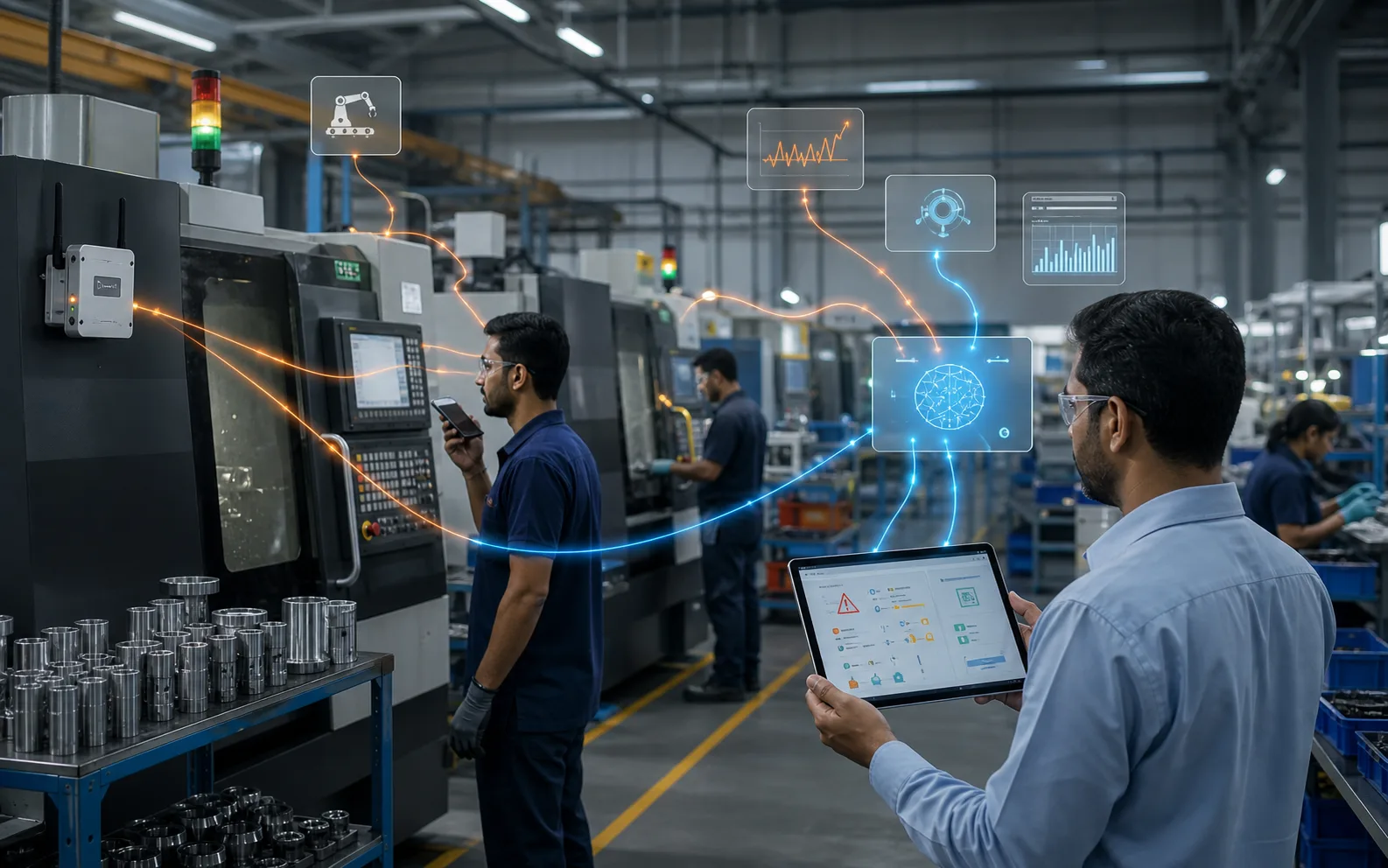
Is Manufacturing AI Easy to Use?
Manufacturing AI can be easy to use when it is built around real factory workflows. It becomes difficult when it is disconnected from daily work, full of technical language, or dependent on specialists for every action.
The best manufacturing AI should feel like practical help, not another complicated software layer.
Easy AI Starts With the User’s Job
A production supervisor does not want to study machine learning. They want to know which jobs are delayed, why output is low, and what needs attention.
A storekeeper wants to know which materials are short, which stock is ageing, and what entries need correction.
A quality engineer wants to know which defects repeat and where corrective action is needed.
AI becomes easy when it answers these real questions.
What Makes Manufacturing AI Hard to Use?
AI becomes hard when:
- Data must be manually exported every time
- Users need technical prompts
- Output is vague
- The tool is not connected to ERP
- Permissions are confusing
- Alerts are too frequent
- Recommendations are not explained
- Users do not know whether to trust the answer
- Training is weak
A technically powerful tool can still fail if factory teams avoid it.
What Makes AI Easy for Factory Teams?
Manufacturing AI becomes easier when it has:
- Simple dashboards
- Role-based views
- Clear alerts
- Natural language questions
- ERP-connected data
- Actionable summaries
- Human review options
- Local workflow context
- Mobile-friendly access
- Training built around real examples
The user should not need to understand AI models to use AI output.
ERP-Connected AI Is Easier Than Standalone AI
Standalone AI tools often require users to copy data, upload files, and explain context repeatedly.
ERP-connected AI can work with existing operational data. It already understands users, roles, transactions, and workflows.
This makes it easier to ask questions like:
- Which orders are delayed?
- Which materials are low?
- Which purchase orders are late?
- Which production jobs need attention?
- Which quality issues repeated?
Training Still Matters
Even easy AI needs training. Users should know:
- What AI can do
- What AI cannot do
- How to ask good questions
- How to review answers
- What data is sensitive
- When to escalate to a manager
Training reduces fear and builds trust.
AI Should Explain Its Output
Manufacturing teams need to understand why AI is giving a recommendation.
If AI flags a supplier, purchase should know whether the issue is late delivery, price change, or rejection. If AI flags a machine, maintenance should know whether the signal is vibration, temperature, downtime, or alarms.
Explainability makes AI easier to trust.
Start Simple
The easiest way to adopt AI is to begin with simple use cases:
- Report summaries
- SOP drafts
- Inventory ageing review
- Quality issue grouping
- Production delay summaries
- Training checklists
Once users trust AI in simple areas, the factory can expand.
Where AICAN Optiwise Fits
AICAN Optiwise is designed to make AI usable inside manufacturing workflows. It combines ERP, workflows, reports, IoT readiness, and AI agents across sales, purchase, inventory, production, shopfloor, quality, dispatch, and finance visibility.
Because AI works inside the manufacturing operating system, users do not need to start from blank prompts or disconnected data. They can use AI around the workflows they already manage.
Learn more at AICAN Optiwise and About AICAN.
Founder’s Note
AICAN’s belief is that AI should be usable by the people running the factory, not only by technical teams. If a storekeeper, supervisor, planner, or owner cannot use the system comfortably, the AI will not create value.
Optiwise is built to keep AI close to daily manufacturing work, so teams can use it without feeling like they are operating a separate technical platform.
FAQ
Is manufacturing AI difficult to learn?
It depends on the tool. AI built into familiar workflows is much easier to learn than standalone technical platforms.
Do users need coding skills?
No. Most manufacturing users do not need coding skills for AI-assisted reports, dashboards, summaries, or workflow support.
Why do AI tools fail adoption?
They fail when users do not trust them, do not understand them, or find them disconnected from daily work.
Is ERP-connected AI easier to use?
Yes, because it works with existing operational data and roles.
How should manufacturers train users?
Use role-based training with real factory examples.
Final Thought
Manufacturing AI is easy to use when it is built around the people and workflows of the factory. The more connected the system, the less effort users need to get value.
Next step: Explore AICAN Optiwise if your team needs AI that works inside manufacturing ERP, not outside it.

Related Posts
Is AI Worth the Investment for My Factory?
Learn how to decide if AI is worth the investment for your factory by evaluating use cases, data readiness, costs, risks, ROI, and operational impact.
13 Jun 2026Read more →Manufacturing AI Mistakes to Avoid Before You Start
List manufacturing AI mistakes and controls for unclear use case, messy data, unsafe automation, no owner, weak security and unreviewed recommendations.
13 Jun 2026Read more →What's the Difference Between AI and Regular Automation?
Understand the difference between AI and regular automation in manufacturing, with practical examples for workflows, decisions, alerts, and predictive operations.
13 Jun 2026Read more →What Are the Risks of Using AI in Manufacturing?
Understand the risks of AI in manufacturing, including bad data, wrong recommendations, safety issues, security, job fear, over-automation, and implementation failure.
13 Jun 2026Read more →