
How Do I Maintain GMP Compliance Digitally?
Learn how pharma manufacturers can support GMP compliance digitally through ERP workflows, audit trails, access control, batch records, quality checks, and document discipline.

How Do I Maintain GMP Compliance Digitally?
You maintain GMP compliance digitally by turning critical manufacturing and quality controls into structured, traceable, reviewable workflows. The software should help users follow the right process, capture the right records, restrict uncontrolled actions, and retrieve evidence when needed.
But it is important to be precise: software does not automatically make a company GMP compliant. GMP compliance depends on the company’s quality system, applicable regulations, validated processes, SOPs, training, audits, and management discipline. Digital tools support that system. They do not replace it.
For manufacturers moving from paper, registers, and spreadsheets, the goal should be practical digital control. Start with the workflows that create the biggest risk when handled manually: batch records, material status, quality checks, approvals, audit trails, expiry, and traceability.
AICAN Optiwise helps manufacturers connect these operating areas through ERP, so teams can move toward cleaner records and stronger visibility.
Start by mapping the controlled process
Digital GMP begins before software configuration. First, the company needs to define the process clearly.
For each important workflow, document:
- Who initiates the transaction?
- Who reviews it?
- Who approves it?
- What data must be captured?
- What documents or references are needed?
- What cannot happen without approval?
- What should be blocked automatically?
- What reports are required for review?
This exercise may feel slow, but it prevents a common mistake: digitizing a messy manual process exactly as it is. If the manual workflow is unclear, the digital workflow will also become unclear.
Use role-based access control
GMP discipline depends on accountability. In software, accountability begins with user access.
Each user should have access based on responsibility. A stores operator, production supervisor, quality reviewer, purchase user, finance user, and admin should not all have the same rights.
Role-based access should define:
- Who can create master data
- Who can edit approved records
- Who can approve or reject quality checks
- Who can release stock
- Who can close production batches
- Who can change formulas or BOMs
- Who can make corrections
- Who can view sensitive reports
Access control reduces accidental changes and makes digital records more trustworthy.
Build audit trails into critical records
An audit trail records the history of important actions. It should show who performed an action, when it happened, and what changed.
For GMP-supporting workflows, audit trails may be important for:
- Master data changes
- Formula or BOM changes
- Quality approvals
- Batch status changes
- Stock status changes
- Production entries
- Corrections or reversals
- User access changes
When evaluating ERP or any pharma software, do not accept audit trail as a checkbox. Ask to see it. The team should be able to review audit trail information without depending entirely on a technical backend.
Control material status digitally
Material control is a major part of pharma discipline. ERP should help ensure material status is visible and respected.
Typical material statuses include:
- Quarantine
- Under inspection
- Approved
- Rejected
- Hold
- Blocked
- Released
A digital system should make status visible to stores, production, quality, and dispatch. It should also help prevent inappropriate use of material based on configured controls.
For example, production should not unknowingly consume material that is still under inspection. Dispatch should not unknowingly ship finished goods that quality has not released.
Manage batch records digitally
Batch records are central to pharma manufacturing. A digital batch record should connect planning, material issue, production, actual consumption, output, quality checks, and final release.
A practical ERP-based batch record should capture:
- Product and batch number
- Approved BOM or formula version
- Material lots issued
- Actual consumption
- Production stage status
- Yield and wastage
- In-process checks
- Finished goods quantity
- Quality release status
- Traceability links
This creates a stronger record than separate spreadsheets because the batch story is connected to inventory and quality transactions.
Digitize quality checks carefully
Quality checks should be configured around the company’s actual SOPs. The software should not invent the quality system; it should support the defined one.
Common quality workflows include:
- Incoming material inspection
- In-process inspection
- Finished goods inspection
- Sample records
- Hold and release decisions
- Rejection reasons
- Retest or expiry tracking where applicable
- Quality reports
The quality team should be involved deeply in configuration and testing. If quality workflows are designed only by IT or finance, the system may miss important controls.
Keep SOPs, training, and validation aligned
Digital GMP is not only about screens. Users must be trained, SOPs must match the digital process, and validation expectations should be assessed according to the company’s regulatory environment.
Before go-live, review:
- Are SOPs updated to reflect digital workflows?
- Are users trained on their responsibilities?
- Are roles and approvals documented?
- Has the process been tested with real scenarios?
- Are exceptions and corrections handled properly?
- Are reports available for review?
- Is backup and access management planned?
For regulated environments, consult the quality team and applicable regulatory guidance for validation expectations.
Avoid these digital GMP mistakes
Companies often struggle because they treat digitization as software installation instead of process control.
Avoid these mistakes:
- Giving too many users admin access
- Allowing master changes without approval
- Keeping quality decisions outside the system
- Using ERP for billing only while batch records stay manual
- Not capturing batch-wise material issue
- Ignoring audit trail review
- Going live with dirty item masters
- Not training users on why the process matters
- Assuming software alone proves compliance
Digital GMP works only when the system and the quality culture move together.
Where Optiwise fits
Optiwise supports manufacturers by connecting core operational workflows: inventory, purchase, production, quality checkpoints, sales, finance, and reporting.
For digital GMP support, the focus should be on:
- Batch-wise material traceability
- Controlled stock status
- Production records tied to actual consumption
- Quality release visibility
- Role-based permissions
- Approval-oriented workflows
- Reports for management and review
AICAN helps manufacturers approach ERP as a practical operating system, not only as accounting software.
Founder’s Note
Digital GMP is not about making the factory look modern. It is about making important work harder to lose, harder to change casually, and easier to review. At AICAN, we believe good ERP should support discipline without making daily work painful. The best system is the one plant teams actually use correctly. Learn more about our approach at About AICAN.
FAQs
How do I maintain GMP compliance digitally?
Map controlled processes, define SOPs, configure role-based access, use audit trails, digitize batch records, connect quality checks, control material status, train users, and validate processes where required. Software supports compliance discipline, but the company remains responsible for compliance.
Can ERP help with GMP compliance?
Yes, ERP can support GMP discipline through traceable records, controlled workflows, batch tracking, quality status, audit trails, and access control. It does not guarantee compliance by itself.
What is the role of audit trail in digital GMP?
Audit trail helps record who changed what, when it changed, and what the previous and new values were. It supports accountability, investigation, and review.
Should quality workflows be inside ERP?
For many manufacturers, yes. At minimum, quality status and release decisions should connect with inventory, production, and dispatch so teams do not use or ship unsuitable stock.
What should be digitized first for GMP support?
Start with high-risk workflows: batch-wise inventory, material status, batch production records, quality checks, access control, approvals, expiry tracking, and traceability reports.

Related Posts
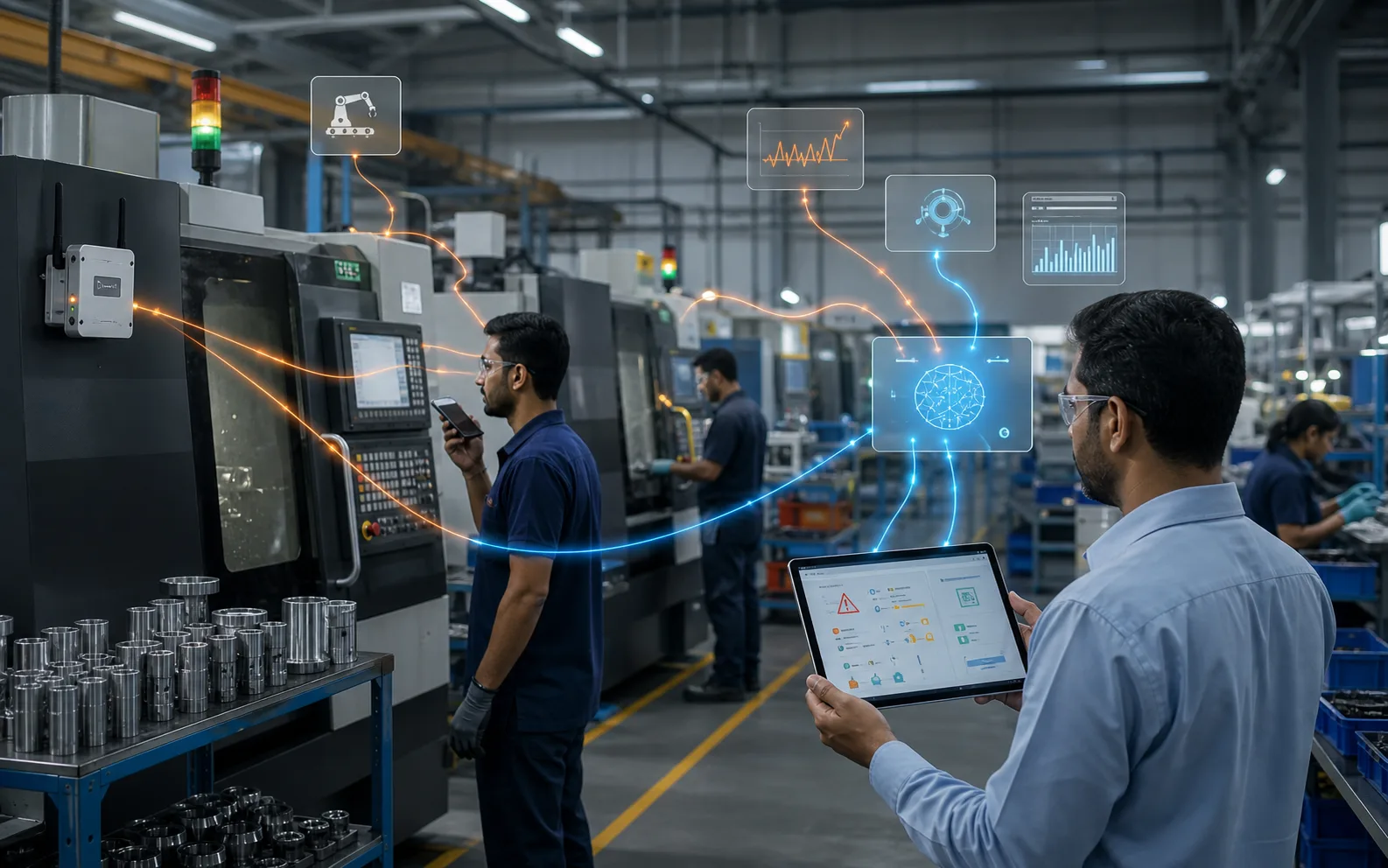
Is AI Worth the Investment for My Factory?
Learn how to decide if AI is worth the investment for your factory by evaluating use cases, data readiness, costs, risks, ROI, and operational impact.
13 Jun 2026Read more →Manufacturing AI Mistakes to Avoid Before You Start
List manufacturing AI mistakes and controls for unclear use case, messy data, unsafe automation, no owner, weak security and unreviewed recommendations.
13 Jun 2026Read more →What's the Difference Between AI and Regular Automation?
Understand the difference between AI and regular automation in manufacturing, with practical examples for workflows, decisions, alerts, and predictive operations.
13 Jun 2026Read more →What Are the Risks of Using AI in Manufacturing?
Understand the risks of AI in manufacturing, including bad data, wrong recommendations, safety issues, security, job fear, over-automation, and implementation failure.
13 Jun 2026Read more →