
Manufacturing Automation System | Optiwise
Learn what a manufacturing automation system is, where automation helps, common mistakes, ROI considerations, and how Optiwise connects automation with ERP, IoT, and AI workflows.
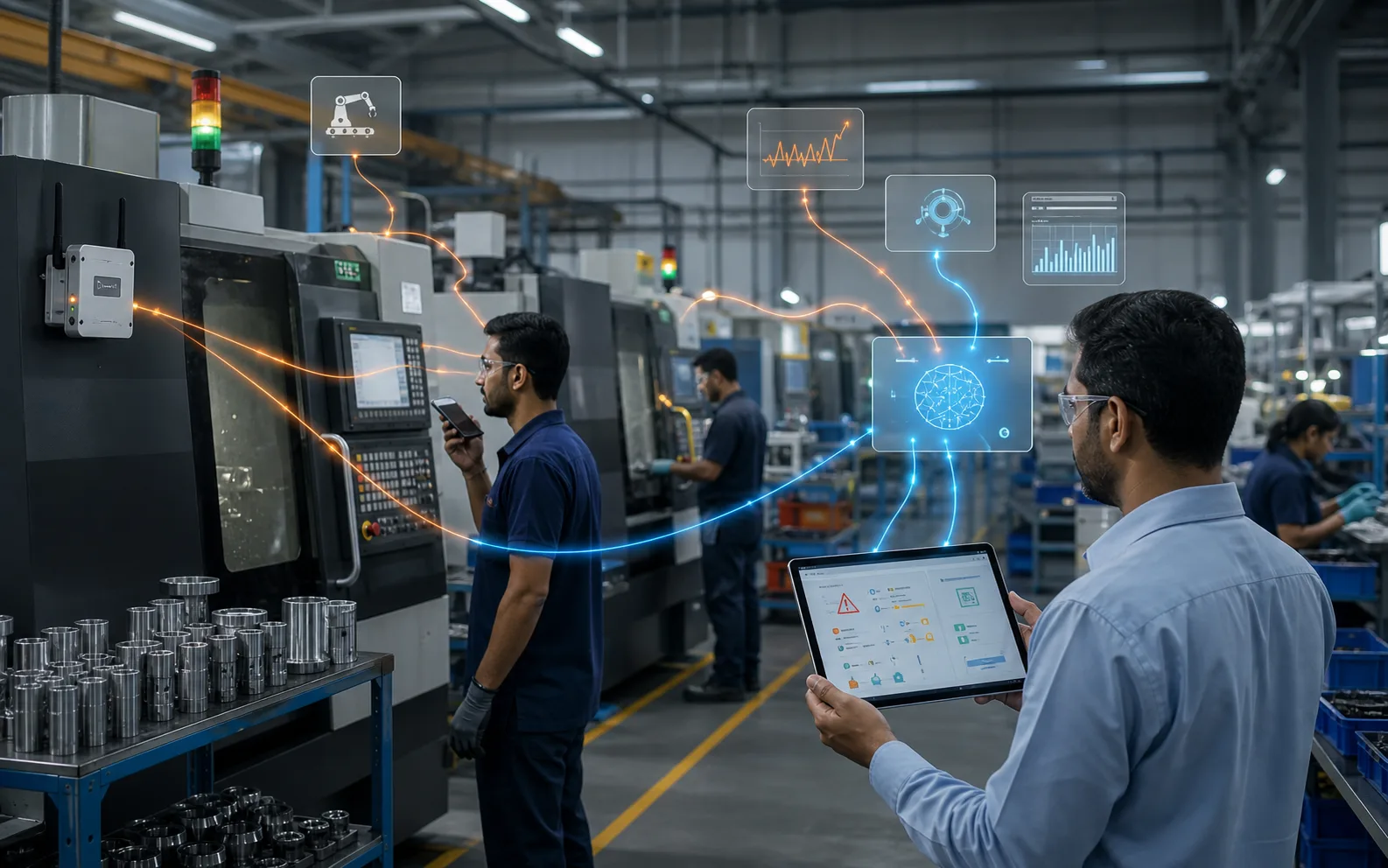
Manufacturing Automation System: How Factories Reduce Manual Work Without Losing Control
Automation is not only robots and expensive machines. In many manufacturing businesses, automation begins with smaller but powerful changes: automatic stock alerts, digital GRN, QR-based material tracking, production dashboards, approval workflows, machine data capture, and AI-assisted follow-ups.
The real purpose of a manufacturing automation system is simple: reduce manual dependency, improve speed, reduce errors, and make the factory easier to control.
But automation should not be done blindly. Automating a broken process only makes the broken process faster.
This guide explains manufacturing automation systems, examples, benefits, risks, and how AICAN Optiwise helps manufacturers connect automation with ERP, IoT, reports, and AI agents.
What Is a Manufacturing Automation System?
A manufacturing automation system uses software, machines, sensors, workflows, and digital controls to reduce manual work and improve production reliability.
It may automate physical operations, information flow, approvals, alerts, reporting, data entry, quality checks, inventory movement, or machine monitoring.
For MSME manufacturers, the first layer of automation is often digital workflow automation rather than full robotic automation.
Types of Manufacturing Automation
Process Automation
This automates repeat production or operational steps such as batching, machining, filling, cutting, inspection, or packing.
Workflow Automation
This automates information movement: purchase approvals, low-stock alerts, GRN updates, work order status, and dispatch readiness.
Data Automation
This captures and organizes data from transactions, QR scans, IoT devices, machines, and user actions.
Decision Automation
This uses rules or AI to suggest actions, highlight exceptions, or recommend follow-ups.
Benefits of Automation
Automation reduces manual errors, speeds up repetitive work, improves consistency, increases visibility, reduces dependency on memory, and helps managers respond faster.
It can improve production planning, inventory accuracy, quality control, machine utilization, dispatch readiness, and owner-level reporting.
Automation also creates better data. Better data supports better analytics and AI.
Where Automation Helps Most
Automation helps in areas with repeat work, frequent errors, time-sensitive decisions, or high coordination needs.
Examples include inventory alerts, purchase follow-up, GRN, barcode or QR tracking, production entry, WIP movement, quality checks, dispatch planning, maintenance alerts, and dashboard reporting.
Common Automation Mistakes
The first mistake is automating without process clarity.
The second mistake is buying hardware before fixing data and workflows.
The third mistake is expecting automation to replace training.
The fourth mistake is automating reports but not actions.
The fifth mistake is ignoring user adoption. If shopfloor teams do not use the system, automation remains a demo.
Automation and ERP
Automation becomes more useful when connected to ERP.
If machine output, GRN, inventory movement, production status, and quality checks are disconnected from ERP, teams still need manual reconciliation.
Connected automation ensures that operational events update the business system and dashboards.
ROI Considerations
Automation ROI may come from reduced labour effort, fewer errors, lower rework, faster dispatch, lower stockouts, improved machine utilization, better inventory control, and faster decisions.
This article is for general business understanding only and is not accounting, tax, legal, or financial advice. Automation investment and ROI decisions should be reviewed with qualified business and finance professionals.
How Optiwise Helps With Manufacturing Automation
Optiwise by AICAN helps manufacturers build automation on top of connected operations.
Optiwise can support CRM, purchase, smart GRN, inventory, QR tracking, BOM, production, WIP, quality, dispatch, reports, IoT integrations, workflows, and AI agents.
This means automation is not isolated. It becomes part of daily factory execution.
Practical Automation Roadmap
Start with high-friction areas: stock visibility, purchase follow-up, production status, quality records, and dispatch tracking.
Digitize transactions first. Clean item masters. Standardize workflows. Add QR or barcode tracking. Connect dashboards. Add IoT or machine signals where the business case is clear. Then layer AI for insights and follow-up.
Automation should make work simpler for the user, not only impressive for management.
Founder’s Note
At AICAN, we believe automation should start with factory reality. The best system is not the fanciest one. It is the one your team uses every day and your owner trusts during decisions.
Optiwise is built to connect ERP, IoT, workflows, and AI agents in a practical way for Indian manufacturing businesses.
FAQs
What is a manufacturing automation system?
It is a combination of software, workflows, machines, sensors, and controls that reduces manual work and improves manufacturing reliability.
Is automation only for large factories?
No. MSMEs can start with workflow automation, inventory alerts, QR tracking, digital GRN, and production dashboards.
What should manufacturers automate first?
They should start with repetitive, error-prone, and visibility-critical areas such as inventory, purchase, GRN, production status, quality, and dispatch.
Why should automation connect with ERP?
ERP integration ensures automated events update inventory, production, purchase, quality, dispatch, and reports without manual reconciliation.
How does Optiwise support automation?
Optiwise connects ERP workflows, IoT, QR tracking, reports, dashboards, and AI agents across purchase, inventory, production, quality, and dispatch.

Related Posts
Is AI Worth the Investment for My Factory?
Learn how to decide if AI is worth the investment for your factory by evaluating use cases, data readiness, costs, risks, ROI, and operational impact.
13 Jun 2026Read more →Manufacturing AI Mistakes to Avoid Before You Start
List manufacturing AI mistakes and controls for unclear use case, messy data, unsafe automation, no owner, weak security and unreviewed recommendations.
13 Jun 2026Read more →What's the Difference Between AI and Regular Automation?
Understand the difference between AI and regular automation in manufacturing, with practical examples for workflows, decisions, alerts, and predictive operations.
13 Jun 2026Read more →What Are the Risks of Using AI in Manufacturing?
Understand the risks of AI in manufacturing, including bad data, wrong recommendations, safety issues, security, job fear, over-automation, and implementation failure.
13 Jun 2026Read more →