
What Vendors Should I Consider for Manufacturing IoT?
Learn how to evaluate manufacturing IoT vendors, from cloud platforms and automation companies to ERP-connected solutions, system integrators, device providers, and AICAN Optiwise.
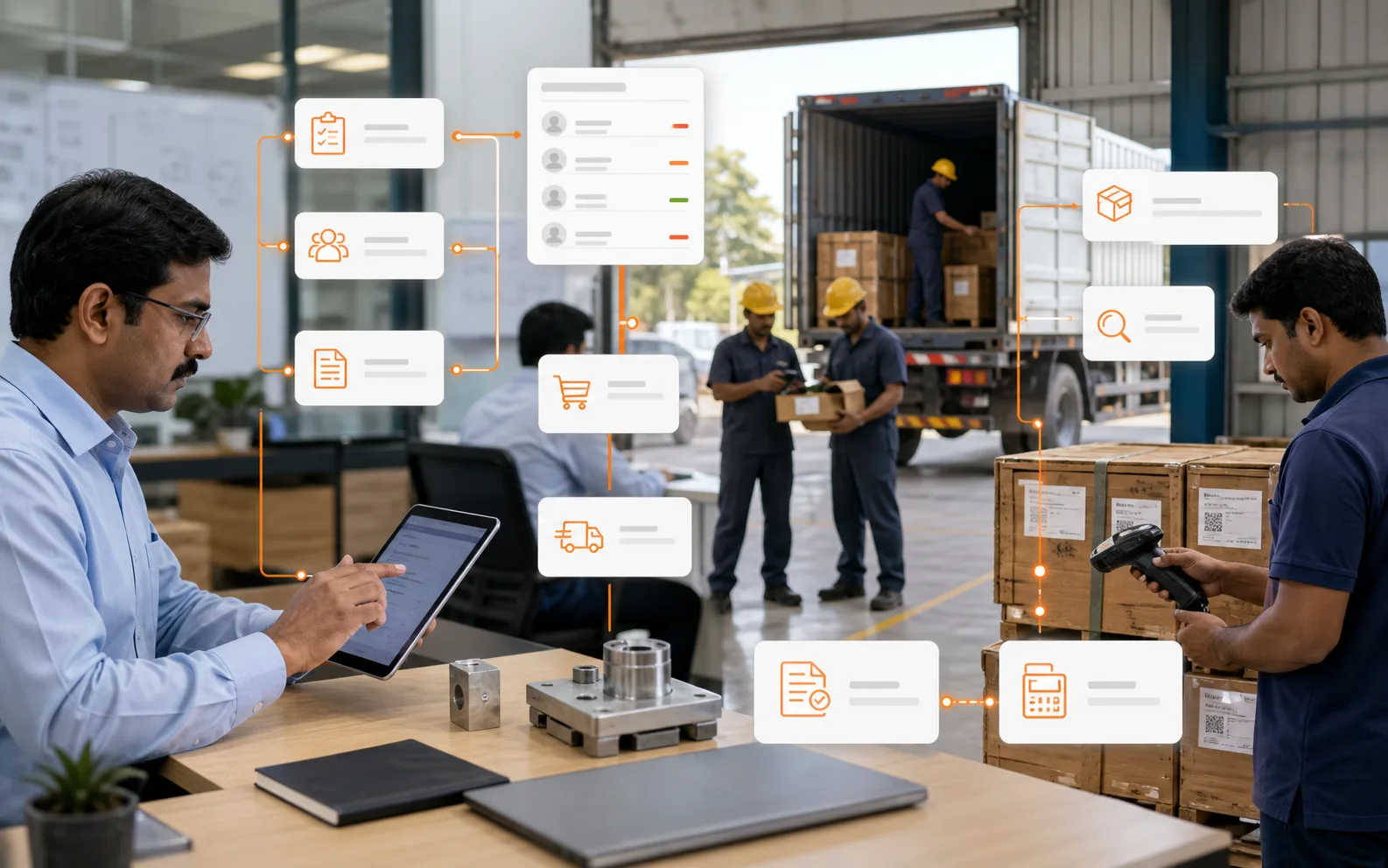
What Vendors Should I Consider for Manufacturing IoT?
The right manufacturing IoT vendor depends on what you are trying to solve.
A factory that wants cloud-scale industrial data storage may need a different vendor from a factory that wants machine retrofit sensors. A plant that already has strong automation infrastructure may need an industrial integration partner. A small or mid-sized manufacturer that needs production, inventory, purchase, finance, and shop-floor visibility may need a connected manufacturing platform like AICAN Optiwise.
So the better question is not, “Which IoT vendor is best?” The better question is, “Which vendor category fits my factory’s problem, budget, machines, team, and growth plan?”
Manufacturing IoT is not one product. It is a stack of hardware, connectivity, software, integration, dashboards, workflows, support, and change management.
Start With the Problem Before the Vendor
Before shortlisting vendors, define the business problem clearly.
Are you trying to:
- Monitor machine status?
- Reduce downtime?
- Track OEE?
- Improve production reporting?
- Monitor energy consumption?
- Connect old machines?
- Improve quality visibility?
- Enable remote factory monitoring?
- Integrate shop-floor data with ERP?
- Build a multi-plant data platform?
- Support predictive maintenance?
Different problems lead to different vendor choices.
For example, if your main need is connected manufacturing workflows, you should not choose only a sensor vendor. If your main need is deep cloud analytics, a simple dashboard vendor may not be enough. If your main need is to start affordably with production visibility, a large enterprise platform may be more complex than necessary.
Clarity protects the factory from buying the wrong category of solution.
Vendor Category 1: Manufacturing Platforms and ERP-Connected Solutions
Many manufacturers do not only need machine data. They need machine data connected with production planning, inventory, purchase, quality, maintenance, finance, and reporting.
This is where manufacturing platforms and ERP-connected systems matter.
A platform like AICAN Optiwise is useful when the factory wants operational visibility that connects with daily workflows. Instead of machine data sitting in a separate technical dashboard, production teams can use the data alongside work orders, material availability, quality records, procurement, and management reports.
This category is especially relevant for small and mid-sized manufacturers who need practical control rather than a large custom IoT program.
Look for:
- Production workflow support
- Inventory and purchase connection
- Role-based dashboards
- Downtime and reason tracking
- Reporting for owners and managers
- Ability to work with existing factory realities
- Implementation support
- Practical training
- Scalability by phase
Vendor Category 2: Cloud IoT Platforms
Cloud IoT platforms are useful when manufacturers need scalable data collection, storage, processing, device management, edge-to-cloud architecture, analytics, and integration with wider cloud services.
Examples include AWS IoT SiteWise and Microsoft Azure IoT Operations.
AWS describes IoT SiteWise as a managed service for collecting, storing, organizing, and monitoring industrial equipment data at scale. Microsoft describes Azure IoT Operations as a way to capture asset data, process it at the edge, and send it to the cloud with Azure Arc-enabled services.
These platforms can be powerful, especially for larger manufacturers, multi-site operations, or companies with strong internal IT and engineering teams. However, they may require integration partners, architecture design, data modelling, and custom application work.
Useful references:
Cloud platforms are strong foundations, but many factories still need an application layer that turns data into manufacturing workflows.
Vendor Category 3: Industrial Automation and IIoT Platforms
Industrial automation companies often provide IIoT platforms, edge systems, PLC integration, machine connectivity, and plant-level solutions.
Examples include Siemens Insights Hub and PTC ThingWorx through Rockwell Automation’s FactoryTalk InnovationSuite ecosystem.
Siemens positions Insights Hub around smart manufacturing and actionable insights from equipment and process data. Rockwell’s ThingWorx manufacturing page describes the platform as helping bridge IT and OT and enabling workforces to view, understand, and act on industrial data in real time.
Useful references:
These options can be strong where machine integration, industrial protocols, automation ecosystem compatibility, and advanced plant visibility are priorities.
Vendor Category 4: System Integrators
System integrators are often the people who make IoT work in the real factory.
They may handle PLC connectivity, sensor installation, gateway configuration, wiring, panel work, networking, data mapping, and integration between machines and software. Even if the software platform is strong, poor implementation can damage the project.
A good system integrator understands both OT and IT. They know that factory conditions are messy. They ask about production schedules, safety, electrical panels, machine documentation, network constraints, and maintenance ownership.
Evaluate integrators on:
- Experience with similar machines
- PLC and protocol expertise
- Electrical and panel safety discipline
- Documentation quality
- Testing process
- Support response
- Ability to work with software vendors
- Understanding of manufacturing operations
For many factories, the vendor is not one company. It is a combination of platform provider and integration partner.
Vendor Category 5: Sensor, Meter, and Gateway Providers
Hardware vendors provide the physical layer: sensors, meters, gateways, edge devices, barcode scanners, tablets, and communication modules.
This category matters when connecting older machines, utilities, energy meters, or process parameters.
Look for hardware that is:
- Industrial-grade
- Suitable for dust, heat, vibration, and electrical noise
- Compatible with your machine environment
- Easy to maintain
- Supported locally
- Capable of reliable communication
- Documented properly
- Suitable for future expansion
Cheap hardware may look attractive, but unreliable hardware creates bad data and support headaches. Industrial environments need dependable devices.
Vendor Category 6: Cybersecurity and Compliance Support
As factories connect more machines and systems, cybersecurity becomes more important.
Some manufacturers may need cybersecurity consultants, network specialists, or compliance advisors to help with secure remote access, device inventory, network segmentation, role-based access, and audit readiness.
This is especially important if the factory handles sensitive customer data, exports to regulated customers, or connects critical production systems.
IoT vendor selection should include security capability, not only dashboard design.
How to Build a Vendor Shortlist
A practical shortlist should include vendors that match your scale and problem.
Ask:
- What is our primary use case?
- Do we need hardware, software, integration, or all three?
- Do we need ERP-connected manufacturing workflows?
- Do we need cloud-scale infrastructure?
- Do we need deep PLC integration?
- Do we need local implementation support?
- Can our team manage the system after go-live?
- What will phase one include?
- What will expansion look like?
The best vendor for a large enterprise with an internal engineering team may not be the best vendor for a small factory that needs quick production visibility.
Questions to Ask Every IoT Vendor
Before choosing a vendor, ask direct questions:
- Which manufacturing problems do you solve best?
- What machines and protocols have you worked with?
- How do you handle legacy equipment?
- What happens if internet connectivity fails?
- How is data buffered and synced?
- How are users and permissions managed?
- Can dashboards be role-based?
- Can the system integrate with ERP or production workflows?
- Who supports hardware issues?
- Who supports software issues?
- What training is included?
- What is the expansion cost?
- What reports are available out of the box?
- Can we export our data?
- What does implementation look like week by week?
A confident vendor should answer these clearly.
Avoid Vendor Selection Mistakes
Common mistakes include:
- Buying sensors without a workflow plan
- Choosing a platform too complex for the team
- Choosing a dashboard that cannot integrate with production
- Ignoring support and training
- Not checking legacy machine compatibility
- Not clarifying data ownership
- Underestimating implementation work
- Choosing only on price
- Ignoring cybersecurity
- Running a pilot that cannot scale
Vendor selection should be based on fit, not brand name alone.
Where AICAN Optiwise Fits
AICAN Optiwise fits manufacturers who need practical operational control across production, inventory, purchase, finance, reporting, and shop-floor visibility.
For many small and mid-sized manufacturers, the biggest challenge is not only collecting machine data. It is turning that data into better daily decisions. Optiwise helps by connecting factory visibility with workflows that teams already need to manage.
AICAN focuses on practical manufacturing digitization, not oversized technology for its own sake. You can learn more about the company and approach on the About AICAN page.
FAQ
Which manufacturing IoT vendor is best?
There is no single best vendor for every factory. The right choice depends on your use case, machine environment, budget, team capability, integration needs, and growth plan.
Should I choose a cloud IoT platform or manufacturing software?
Choose based on your problem. Cloud platforms are strong for scalable data infrastructure. Manufacturing software is stronger when you need connected workflows for production, inventory, purchase, finance, and reporting.
Do I need a system integrator?
Often, yes. If your machines need PLC integration, sensor installation, gateway configuration, or panel work, a system integrator can be essential.
Should I choose the cheapest vendor?
Not necessarily. A cheap system that fails in factory conditions or lacks support can become expensive. Evaluate reliability, implementation, training, support, and scalability.
Can AICAN Optiwise work with IoT data?
AICAN Optiwise is designed to support connected manufacturing visibility and workflows. It can help manufacturers use operational data within production, inventory, purchase, finance, and reporting processes.
What should I ask before signing with a vendor?
Ask about implementation scope, machine compatibility, offline behaviour, support, training, integration, security, data ownership, expansion cost, and expected ROI.
Founder’s Note
Vendor selection should feel like choosing a long-term operating partner, not just buying software.
At AICAN, we believe manufacturers deserve solutions that understand factory realities. A good vendor should ask hard questions before selling: What machines do you have? What problem are you solving? Who will use the system? What decision will improve after go-live?
The right technology partner helps the factory become clearer, not more complicated.
Final Thought
Consider manufacturing IoT vendors by category: manufacturing platforms, cloud IoT platforms, automation and IIoT platforms, system integrators, hardware providers, and cybersecurity support.
Choose the vendor mix that fits your factory’s actual problem. For manufacturers who need connected workflows and practical operational visibility, AICAN Optiwise can be an important part of the IoT roadmap.

Related Posts
Is AI Worth the Investment for My Factory?
Learn how to decide if AI is worth the investment for your factory by evaluating use cases, data readiness, costs, risks, ROI, and operational impact.
13 Jun 2026Read more →Manufacturing AI Mistakes to Avoid Before You Start
List manufacturing AI mistakes and controls for unclear use case, messy data, unsafe automation, no owner, weak security and unreviewed recommendations.
13 Jun 2026Read more →What's the Difference Between AI and Regular Automation?
Understand the difference between AI and regular automation in manufacturing, with practical examples for workflows, decisions, alerts, and predictive operations.
13 Jun 2026Read more →What Are the Risks of Using AI in Manufacturing?
Understand the risks of AI in manufacturing, including bad data, wrong recommendations, safety issues, security, job fear, over-automation, and implementation failure.
13 Jun 2026Read more →