
How Do You Measure If Factory Automation Is Actually Working?
Measure factory automation success using downtime, output, quality, cycle time, schedule adherence, labor productivity, data accuracy, and ROI.
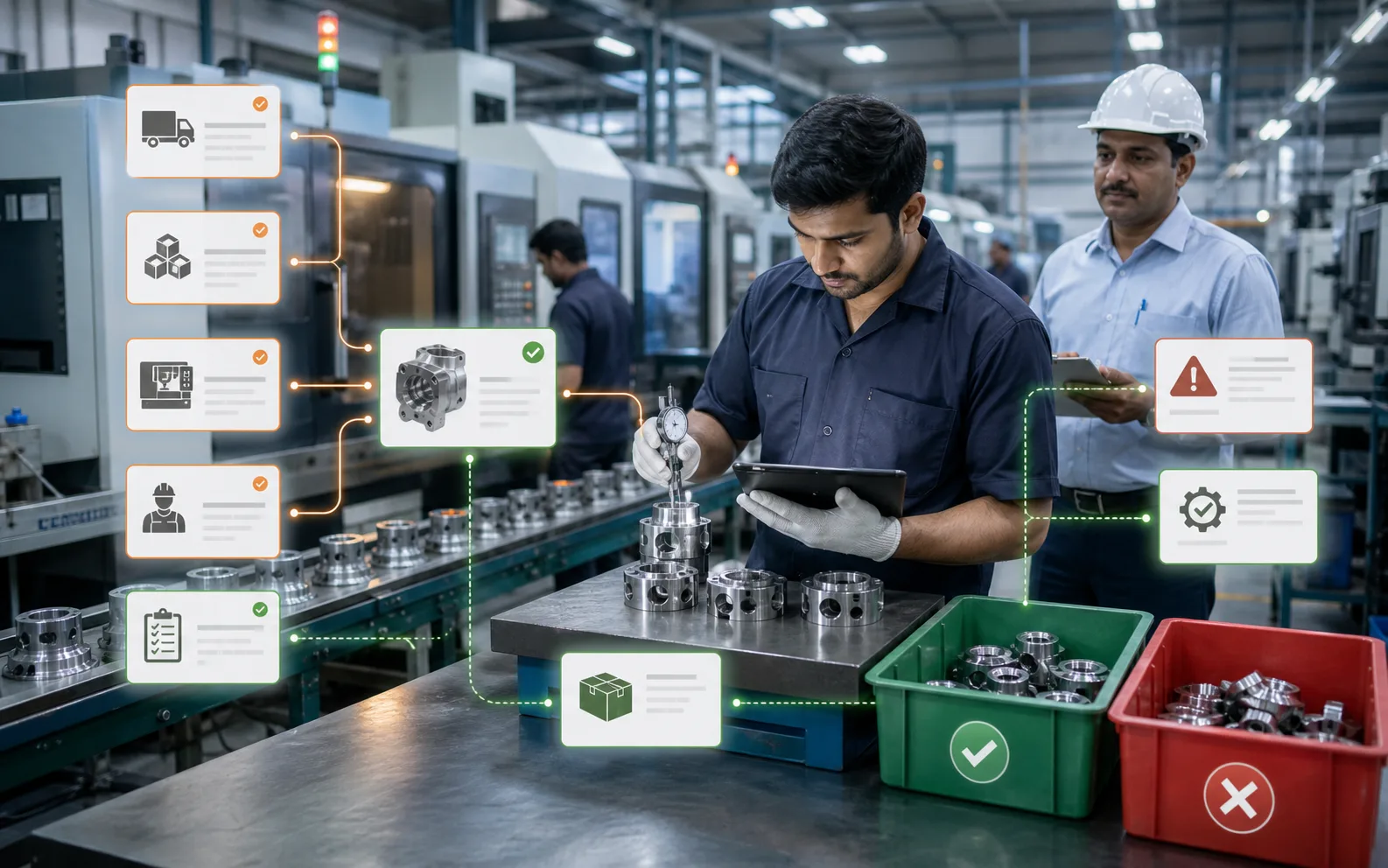
How Do You Measure If Factory Automation Is Actually Working?
Factory automation is working only if it improves measurable business and shop floor outcomes.
A new system may look impressive, but the real test is whether downtime reduces, output improves, quality becomes more stable, reports are faster, teams act earlier, and customers receive better commitments.
Automation should be measured against real problems.
Start With the Baseline
Before automation, measure the current state.
Track downtime, production output, scrap, rework, schedule adherence, manual reporting time, maintenance response, stockouts, and delivery delays.
Without a baseline, improvement is hard to prove.
Measure Downtime
Downtime reduction is often a key automation goal.
Track downtime frequency, duration, reason, machine, shift, and recovery time.
Measure Output and Productivity
Automation should improve output consistency.
Measure planned versus actual production, cycle time, machine utilization, and labor productivity.
Measure Quality
Track defects, rework, rejection rate, and quality issue recurrence.
AI can help detect patterns, but quality teams must act on them.
AICAN Optiwise helps manufacturers connect automation metrics across production, inventory, purchase, sales, finance, reports, and AI workflows.
Measure Adoption
Automation fails if users avoid the system.
Track whether users enter data on time, use dashboards, respond to alerts, and stop relying on parallel spreadsheets.
Measure ROI
Compare software and implementation cost with savings from reduced downtime, fewer errors, faster reporting, better scheduling, and improved delivery.
Where AICAN Optiwise Fits
AICAN Optiwise helps factories measure automation value in operational context. Since production, inventory, purchase, finance, and reporting are connected, impact can be reviewed across the business.
Learn more at About AICAN.
Founder’s Note
Automation should not be judged by how modern it looks. It should be judged by whether the factory runs better.
Measure what changes after the system goes live.
FAQ
What is the best KPI for automation success?
It depends on the goal, but downtime, output, quality, cycle time, and schedule adherence are common.
Should adoption be measured?
Yes. A system unused by teams cannot deliver value.
How soon can success be measured?
Some workflow improvements appear in weeks. Operational improvements may take months.
Can automation fail despite good software?
Yes, if data, training, ownership, or process fit is weak.
Final Thought
Factory automation works when it improves real operating performance.
Measure the before and after honestly. That is how manufacturers can separate useful transformation from technology noise, and it is how AICAN approaches Optiwise.

Related Posts
Is AI Worth the Investment for My Factory?
Learn how to decide if AI is worth the investment for your factory by evaluating use cases, data readiness, costs, risks, ROI, and operational impact.
13 Jun 2026Read more →Manufacturing AI Mistakes to Avoid Before You Start
List manufacturing AI mistakes and controls for unclear use case, messy data, unsafe automation, no owner, weak security and unreviewed recommendations.
13 Jun 2026Read more →What's the Difference Between AI and Regular Automation?
Understand the difference between AI and regular automation in manufacturing, with practical examples for workflows, decisions, alerts, and predictive operations.
13 Jun 2026Read more →What Are the Risks of Using AI in Manufacturing?
Understand the risks of AI in manufacturing, including bad data, wrong recommendations, safety issues, security, job fear, over-automation, and implementation failure.
13 Jun 2026Read more →